Roger Danuarta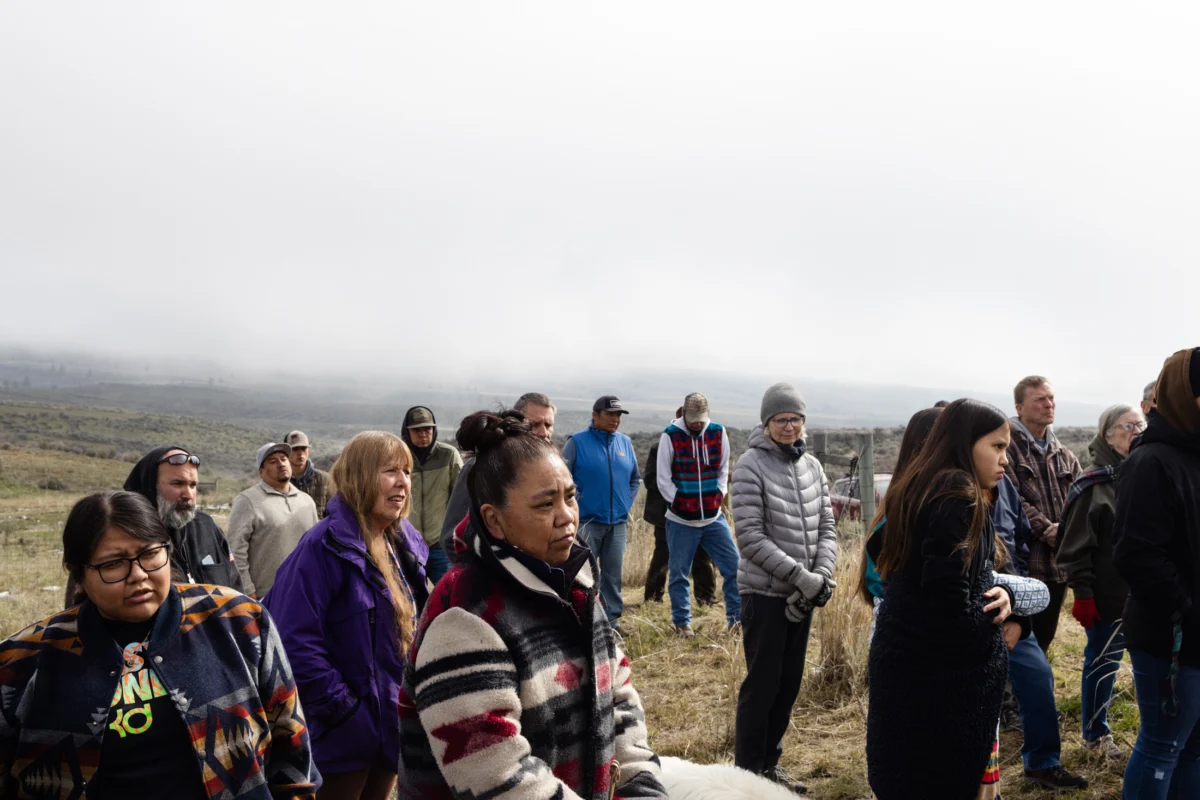
The planned Badger Mountain Solar Project, envisioned by the global energy developer Avangrid, a subsidiary of the Spanish multinational Iberdrola, would have occupied an expansive area straddling both private and public lands managed by the Washington Department of Natural Resources. For generations, these lands have served as vital ancestral territories, deeply embedded in the cultural and spiritual practices of the regional Indigenous peoples. Tribal nations possess inherent rights to access and utilize public lands for traditional practices, including the gathering of culturally significant foods and medicines, as well as the conduct of sacred ceremonies. An investigative report published in 2024 by High Country News and ProPublica brought to light how Avangrid’s proposed development directly threatened these constitutionally protected rights and ancestral connections.
In response to the withdrawal, Chairwoman Cindy Marchand of the Colville Tribes conveyed the community’s profound relief and satisfaction. "The Colville Tribes is very happy to hear that the proposed solar project on Badger Mountain has been withdrawn," Chairwoman Marchand stated in an emailed statement. She further elaborated, "While the Colville Tribes certainly appreciates the value of renewable energy such as solar power, sacred sites must remain pristine to pass down to future generations. We appreciate Avangrid Power LLC’s decision to withdraw this project and we trust that they can find a more appropriate site." Her remarks underscored the complex balance many Indigenous communities face, supporting the transition to clean energy while steadfastly protecting their irreplaceable cultural landscapes.
Avangrid’s precise motivations for the withdrawal remain officially unclarified. Formal permitting records suggest that the decision might have been influenced not by Indigenous rights considerations directly, but rather by significant construction delays impacting critical grid infrastructure elsewhere in the region. Avangrid itself declined to offer a detailed explanation to reporters, and the Department of Natural Resources also refrained from commenting on the matter. This ambiguity highlights the intricate and often opaque nature of large-scale energy project development, where economic viability, regulatory hurdles, and stakeholder advocacy converge.
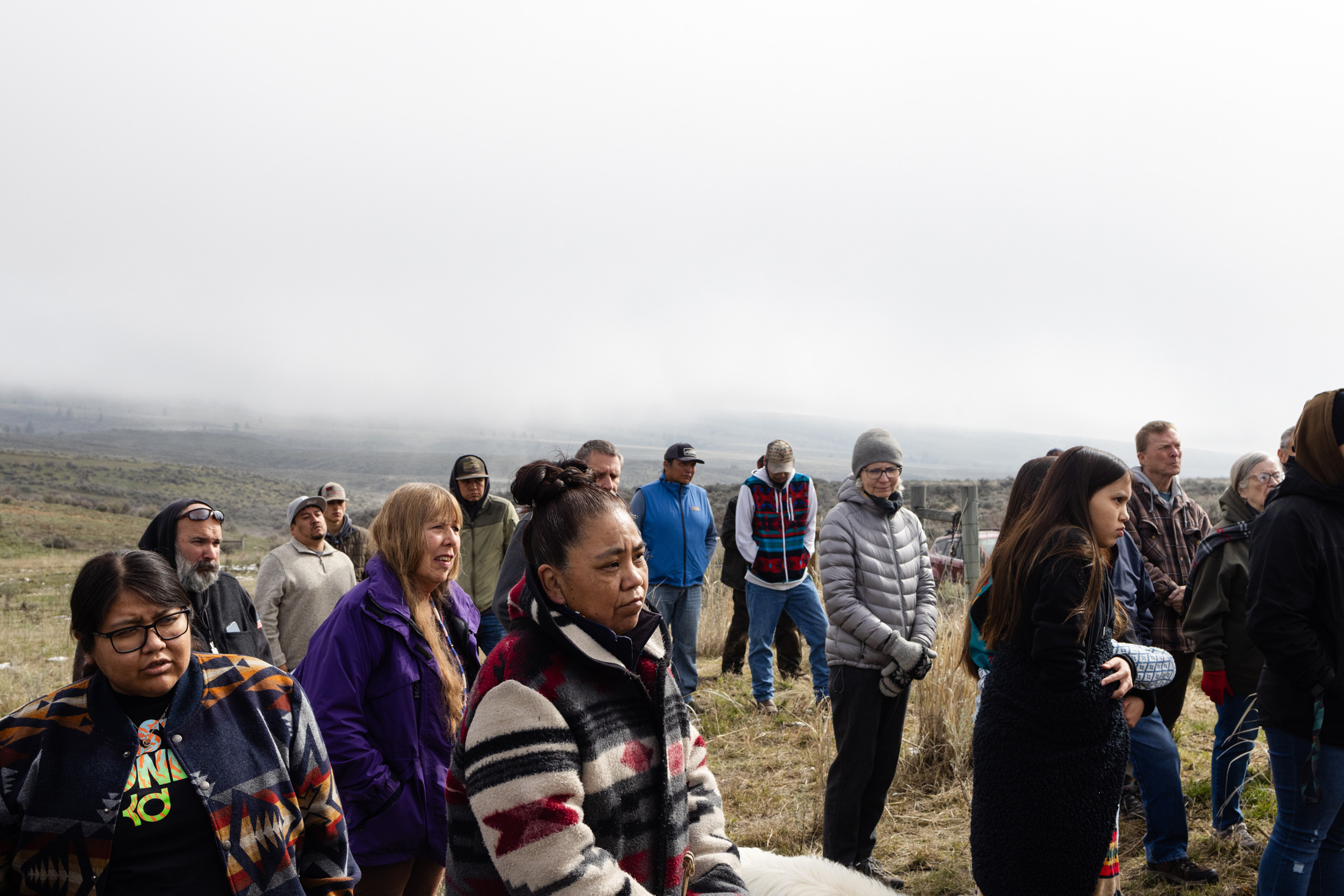
The withdrawal follows a sustained period of robust Indigenous advocacy and public scrutiny. After the impactful investigation by High Country News and ProPublica, members of the Wenatchi-P’squosa, one of the twelve constituent Confederated Colville Tribes, organized a powerful demonstration on Badger Mountain in 2024. This grassroots movement underscored a crucial distinction: while the Wenatchi-P’squosa people are broadly supportive of renewable energy initiatives, they vehemently oppose their placement on sites of profound cultural significance, such as Badger Mountain. The demonstration was meticulously orchestrated by the Wenatchi Advisory Group, an independent entity dedicated to advising the Colville Tribal Business Council on matters specifically pertaining to its Wenatchi-P’squosa constituents, ensuring their distinct voice was heard.
The public outcry and direct engagement from tribal nations seemingly prompted Avangrid to temporarily halt its development plans. The company announced a "pause" in the project, stating an intention to reconsider tribal input and broader public responses. This period of reconsideration underscored the critical role of the public comment process, often one of the few formal avenues available for tribal nations and concerned citizens to voice their concerns and advocate for their rights concerning large-scale land development projects. In the United States, federal and state laws, including the National Historic Preservation Act and various environmental statutes, mandate consultation with tribal governments, but the efficacy and depth of such consultations can vary widely, often requiring persistent advocacy from Indigenous communities.
The formal permitting process, overseen by the Washington State Energy Facility Site Evaluation Council (EFSEC), revealed further complexities. At a state energy permitting meeting earlier this month, Avangrid had initially sought yet another year-long extension to pause its permitting activities, aiming to keep the project active within the state’s regulatory framework. The stated reason for this request revolved around substantial construction delays affecting the Bonneville Power Administration (BPA), a federal agency that markets wholesale electricity and operates a vast high-voltage transmission system across the Pacific Northwest. Specifically, Avangrid cited issues with BPA’s Cross-Cascades North transmission line, a crucial infrastructure project designed to enhance power delivery from eastern Washington to the burgeoning Seattle metropolitan area. Mark Eilers, Avangrid’s senior director of business development, informed the meeting attendees that BPA’s anticipated construction timeline for this vital line had been pushed back by an additional four years, now projecting completion in 2032. While not explicitly stated as the direct cause for the withdrawal, the implication was clear: such a significant delay in grid connectivity would severely impact the economic viability and operational timeline of a new solar facility.
During the same EFSEC meeting, Kurt Beckett, the council’s chair, acknowledged the objections raised by the Yakama Nation and the Colville Tribes regarding the solar project’s potential environmental and cultural impacts. While he noted efforts to "minimize as much of that noise" in the public forum, he affirmed the legitimate existence of these tribal objections, adding that they should be duly considered in the state’s permitting decisions. This statement reflects a growing, albeit sometimes slow, recognition within regulatory bodies of the profound and unique perspectives that Indigenous communities bring to land-use planning and environmental justice issues.
Just five days after Avangrid’s request for an extension, the company submitted a formal request to completely withdraw its proposal, a project that had been in development since at least 2019. EFSEC formally announced the withdrawal, stating that it would proceed to close out existing financial arrangements and notify all interested parties and agency partners. This swift change of course, from seeking an extension to a full withdrawal, suggests a complex interplay of factors, potentially including the economic pressures of grid delays coupled with the mounting and sustained pressure from tribal nations and their allies.
Despite the lack of explicit corporate acknowledgment regarding Indigenous rights as the primary driver, the Wenatchi Advisory Group expressed immense satisfaction with the outcome. "We are very, very happy that they chose to go this route with us, ’cause it is a very sacred site to us," remarked Steven Wynecoop, vice chair of the Wenatchi Advisory Group and grandson of its esteemed founder, Matthew Dick. Wynecoop elaborated on the mountain’s enduring significance, stating, "Generations, we’ve been going to that mountain for plenty of reasons: medicines, foods like roots and berries," further noting that families continue to conduct sacred ceremonies there. This profound connection underscores why the protection of such sites is not merely about historical preservation but about the continuation of living cultural practices and spiritual identity.
Wynecoop shared a cherished family anecdote that beautifully illustrates this deep, multi-generational bond with Badger Mountain. He recounted a story often told by his grandfather, Matthew Dick, from when Dick was a young boy. His family was gathering traditional medicines on Badger Mountain when they were approached by landowners, a white couple who were captivated by Matthew’s brother, Uncle Terry. Terry, in his overalls, was innocently fishing in a puddle with a stick and string. "They thought he was just adorable," Wynecoop recounted, mirroring his grandfather’s frequent retelling at ceremonies. The couple, charmed, offered a portion of Badger Mountain to Matthew’s grandmother in exchange for adopting Terry. "Which, of course, she turned them down," Wynecoop added with a chuckle. The punchline, always delivered by his grandfather, encapsulated the family’s enduring spirit: "Yeah, now here we are — no Badger Mountain, but we got Terry!" This poignant tale highlights not only the family’s deep roots but also the historical context of land ownership and cultural resilience in the face of external pressures.
The withdrawal of the Badger Mountain Solar Project serves as a powerful case study in the global challenge of accelerating renewable energy deployment while simultaneously safeguarding Indigenous rights, cultural heritage, and environmental justice. As nations worldwide strive to meet ambitious climate goals, the need for new energy infrastructure, including vast solar and wind farms and extensive transmission lines, will inevitably bring development to sensitive landscapes. This case underscores the increasing imperative for energy developers to engage in genuine, respectful, and early consultation with Indigenous communities, recognizing their sovereign rights and profound traditional ecological knowledge. It also highlights the growing influence of tribal advocacy and investigative journalism in shaping development outcomes, reinforcing the principle that a just transition to a green economy must be equitable, culturally sensitive, and truly sustainable for all. The outcome on Badger Mountain signals a potential precedent, demonstrating that economic imperatives, while significant, do not always outweigh the deep cultural and spiritual value of ancestral lands.