

 Joko Susilo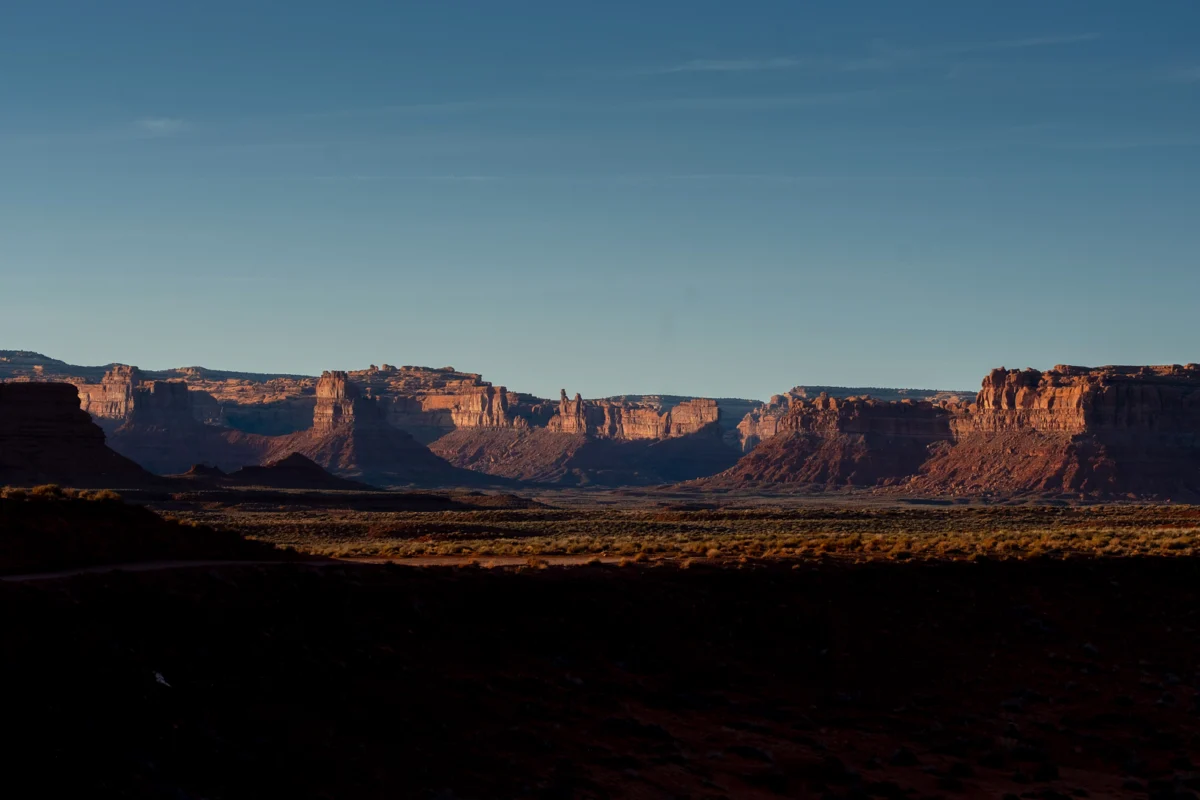
The serene, rugged expanse of Cedar Mesa in southeastern Utah, adorned with thick piñon and juniper, harbors an irreplaceable tapestry of human history and natural wonder, now facing an existential threat after unprecedented reductions to its protected status. At its heart lie sites like the Ancestral Puebloan "Et Al" village, inhabited until the early 13th century, a testament to a sophisticated pre-Columbian civilization. Here, archaeologists have unearthed a two-story "great house," echoing the monumental architecture of New Mexico’s renowned Chaco Canyon, alongside two kivas, shrines, and other vital structures that speak to a vibrant community life. Further north, the Owens site, another "great house" complex featuring an impressive great kiva – a large, circular subterranean chamber used for major ceremonial gatherings – underscores the significance of these pueblos as central hubs for the broader Cedar Mesa community. These elaborate settlements dwarf their contemporary counterparts, signifying their critical role in the region’s ancient social and spiritual fabric.
Radiating outwards from both the Et Al and Owens sites are enigmatic linear swales, meticulously constructed by human hands, extending in remarkably straight lines for over a mile across the challenging terrain. While their precise function remains a subject of archaeological debate, these "roads" are widely believed to be more than mere pathways; they likely served ceremonial or symbolic purposes, physically and spiritually connecting communities, guiding pilgrims to sacred mountains, or marking prominent landforms. The enduring power of these connections spans generations and millennia, evidenced by the discovery of Hopi pottery from the 15th century along the Et Al "roads"—centuries after the Ancestral Puebloans had migrated from Cedar Mesa. This finding profoundly illustrates that the descendants of the original inhabitants returned, maintaining a profound spiritual and cultural link to their ancestral homeland. Such intricate relationships highlight that these ancient structures cannot be understood in isolation; they are an inextricable part of the region’s expansive cultural and natural landscape, each element imbued with meaning through its connection to the whole.

This rich heritage, however, has become the focal point of a contentious battle over public lands policy in the United States. In 2016, recognizing the immense cultural and ecological value of the area, President Barack Obama, at the unified request of five sovereign tribal nations with deep ancestral ties to the region – the Hopi Tribe, Navajo Nation, Ute Mountain Ute Tribe, Ute Indian Tribe of the Uintah and Ouray Reservation, and Zuni Tribe – established the landscape-scale Bears Ears National Monument. This landmark designation protected thousands of archaeological sites, unique geological formations, and the vital surrounding lands across Cedar Mesa and beyond. A mere year later, the monument’s fate swung dramatically when President Donald Trump, in an unprecedented move, significantly reduced the boundaries of both Bears Ears and the nearby Grand Staircase-Escalante National Monument. While President Joe Biden subsequently restored these protections, the ongoing political tug-of-war took another dramatic turn on July 13, when former President Trump renewed and broadened his attack, issuing proclamations that slashed Bears Ears and Grand Staircase-Escalante by approximately 90% each. This action stripped federal protections from more than 2.9 million acres of public lands, including nearly all of Cedar Mesa and the invaluable Et Al and Owens sites, escalating a long-standing debate over land use, conservation, and tribal sovereignty.
The scale of these recent cuts far exceeds previous reductions. At Grand Staircase-Escalante, Trump’s order removed an staggering 1.69 million acres from national monument status. This unilateral decision revives the prospect of extensive coal mining on previously leased areas within the fossil-rich Kaiparowits Plateau, a region renowned for its unparalleled paleontological discoveries. It also reopens the door for uranium extraction in the historic Circle Cliffs mining district and potential oil and gas drilling across vast stretches of the formerly protected area. Beyond direct resource extraction, the proclamations simultaneously eased restrictions on motorized travel, vegetation clearing, and livestock grazing within the significantly diminished remnants of both monuments, signaling a broader push towards industrial access and commercial activity.
Perhaps most egregious to advocates for Indigenous rights, Trump’s order also unilaterally terminated the Bears Ears Commission, a groundbreaking, first-of-its-kind inter-tribal body that represented the five tribal nations instrumental in the monument’s establishment and the development of its management plan. This commission embodied a new era of co-management, granting Indigenous voices a direct role in protecting lands central to their cultural identity. In a move widely perceived as a deliberate affront to tribal sovereignty, federal agencies, following the White House’s directive, reportedly removed the five tribes’ seals from official signage at what little remains of Bears Ears, a symbolic act that deepened the sense of betrayal and disrespect among tribal communities.

The administration purportedly issued these proclamations under the authority of the 1906 Antiquities Act, a foundational conservation law empowering presidents to designate federal land to protect natural landmarks, archaeological sites, and "other objects of historic or scientific interest." However, legal scholars widely assert that the Act grants presidents the power to establish national monuments but does not explicitly provide the authority to unilaterally rescind or substantially reduce their boundaries; that power, they argue, is reserved for Congress. This fundamental legal question is now poised to reach the U.S. Supreme Court, as a cascade of lawsuits filed by tribal nations, environmental groups, and conservation advocates makes its way through the judicial system, setting the stage for a landmark decision that could redefine presidential authority over public lands for generations.
Adding to the administration’s contentious stance, the proclamations argue that national monument status was rendered unnecessary because the lands in question were already protected by other existing federal laws and regulations. This assertion, however, rings hollow when viewed against the backdrop of the administration’s broader policy agenda. In its relentless pursuit of "energy dominance," the White House has simultaneously sought to dismantle or diminish many of those very same rules and regulations. A particularly troubling maneuver, for instance, aims to incapacitate Section 106 of the National Historic Preservation Act, a crucial piece of legislation that theoretically safeguards cultural sites from destructive development and mandates consultation with tribes whose ancestral lands and sacred sites may be impacted. The selective application of protection arguments while simultaneously undermining the mechanisms of protection highlights a fundamental contradiction in the administration’s approach.
Beyond its openly destructive deregulatory agenda, the administration’s legal justification for the monument cuts reveals a profound misunderstanding of the region’s intricate landscape and deep history. The argument hinges on the claim that the original boundaries encompassed too much land, thereby failing to comply with the Antiquities Act’s requirement that designations be confined to the "smallest area compatible with the proper care and management of the objects to be protected." This "reductionist approach" was mirrored in a recent lawsuit by the state of Utah, which acknowledged the presence of "objects" worthy of protection but insisted they were distinct from the surrounding landscapes and should be protected on an individual basis.

Trump’s redrawn boundaries rigidly adhere to this narrow interpretation, drawing arbitrary lines around only the most prominent or well-known landmarks and historic sites, while dismissively categorizing everything else as merely "generic topographic and geologic features." In Grand Staircase-Escalante, for example, the administration annihilated virtually all of the monument’s vast western side, preserving only a tiny square and a similarly sized strip near the community of Big Water. This sliver of land was retained because it yielded the fossilized bones of Sarabosaurus dahli, a newly discovered taxon of the ancient sea-going dinosaur Turonian mosasaurid. Yet, paleontological evidence clearly demonstrates that this ancient creature and its contemporaries were not confined to such a minuscule area; critical fossils abound across hundreds of thousands of acres of the Kaiparowits Plateau. The fact that this broader, fossil-rich landscape also holds immense reserves of coal, oil, and gas, and consequently lost its protections, underscores the perceived economic motivations behind these boundary changes.
Bears Ears, similarly, has been drastically reduced to two primary units, Shásh Jáa and Indian Creek, along with a handful of tiny, discrete units extending national monument status to iconic Ancestral Puebloan sites like Doll House, Moon House, and the Citadel. Ironically, the proclamation also preserves the Scorup Cabin, once inhabited by "Mormon Cowboy" A.J. Scorup, and an oil well drilled in 1926—an old oil well now supposedly protected from oil and gas development, a peculiar twist in the narrative of "energy dominance."
This fragmented, object-centric approach stands in stark contrast to the original intent and historical application of the Antiquities Act. Had President Theodore Roosevelt, the Act’s progenitor, followed such narrow logic when he first established Grand Canyon National Monument in 1908, he would not have protected the original 800,000 acres. Instead, he would have designated a multitude of much smaller "units," each containing a singular landmark—Havasu Falls, Mather Point, Vishnu Temple, or Bright Angel Point, for example. Roosevelt, however, possessed a far deeper and more nuanced understanding of the American West than the current administration. He recognized that sacred and significant landscapes are profoundly more than the mere sum of a handful of discrete "objects." One cannot conceptually extract the Vishnu Temple from the Grand Canyon; such so-called discrete "objects"—be they landforms, ancient dwellings, or other cultural sites—are intrinsically inseparable from the larger landscape itself. To attempt to separate them is to strip them of their context, their meaning, and their very essence. Therefore, to truly protect them, as the Antiquities Act unequivocally authorizes the president to do, one must also protect the expansive landscapes that define, connect, and give meaning to these "objects."

This holistic concept has previously received the imprimatur of the U.S. Supreme Court. Following Roosevelt’s designation of the Grand Canyon National Monument, a mining interest with claims within the canyon sued, challenging the President’s authority. The justices ultimately ruled against the mining interests, affirming in their opinion that the law empowered the president to "establish reserves embracing ‘objects of historic or scientific interest.’" The entire Grand Canyon, as stated in Roosevelt’s proclamation, was indeed "an object of unusual scientific interest."
President Obama brought this holistic concept to fruition on an even grander scale with the establishment of Bears Ears, aiming to protect not only prominent archaeological sites like Et Al but also the intricate network of "roads," ceremonial shrines, ancient agricultural fields, and natural landforms that surround and define them. In these cases, the "objects of historic and scientific interest" are far more than isolated landmarks; the land itself—particularly the Ancestral Puebloan sites, with their profound synthesis of natural form and human community—makes this abundantly clear. As Santa Clara Pueblo artist, architect, and scholar Rina Swentzell eloquently wrote in a 1991 paper on Ancestral Puebloan architecture, "Here, the human landscape is meaningless outside the natural context—human constructions are not considered out of their relationship to the hills, valleys, and mountains." Swentzell further articulated that the material village "constitutes one place within the whole. The web of human existence is interlaced with what happens in the larger natural context and therefore flows into the adjacent spaces, hills, and mountains." The current administration’s actions represent a direct challenge to this deeply rooted understanding of landscape, culture, and heritage, setting the stage for a prolonged and defining legal battle over the soul of America’s public lands and the interpretation of its most foundational conservation laws.







