Roger Danuarta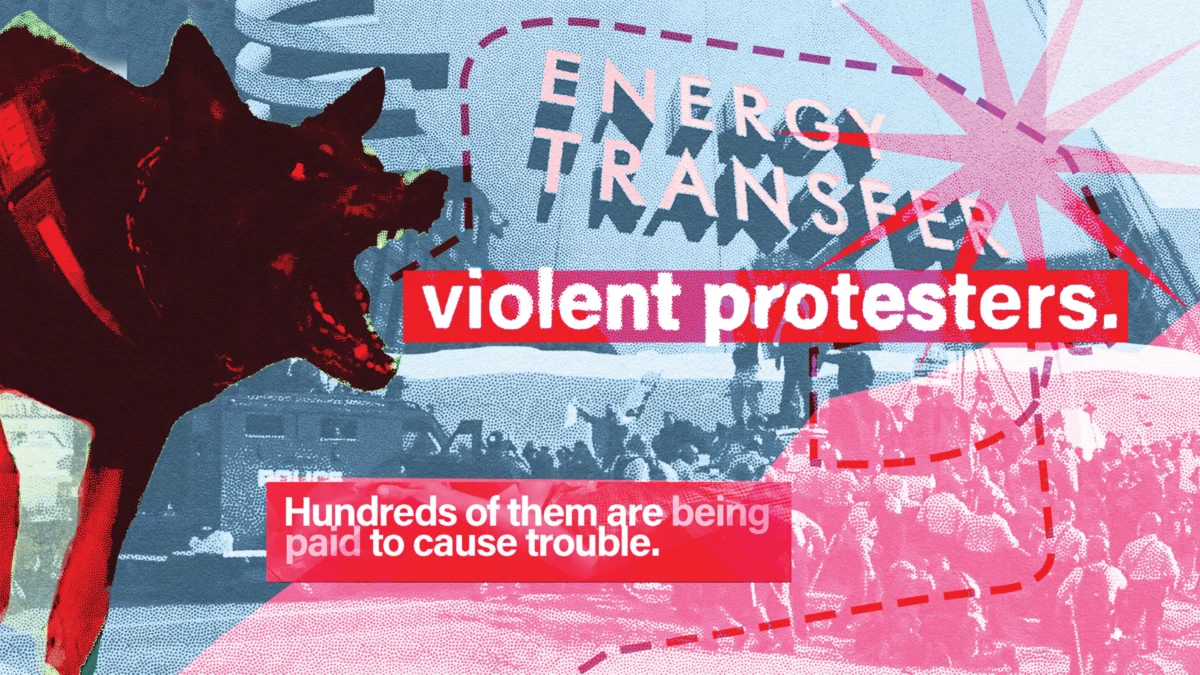
A decade after the fervent protests against the Dakota Access Pipeline (DAPL) ignited a national debate, the echoes of that contentious era still reverberate through the quiet, rolling hills of North Dakota, particularly in the twin cities of Bismarck and Mandan. Conversations in local establishments, from dimly lit dive bars to bustling breakfast spots, often reveal a persistent, deep-seated resentment towards the "water protectors" who converged on Morton County in 2016. "Disgusting eco-terrorists is what I call all them," one bar patron remarked last April, expressing sentiments that ranged from calls for masked vigilantes to suggestions of violence reminiscent of the Wounded Knee massacre. These visceral reactions are not merely a product of the cultural clash between a largely Indigenous protest movement and the predominantly white, insular rural communities; they are, in significant part, the engineered outcome of a sophisticated, covert propaganda campaign orchestrated by the pipeline’s parent company, Energy Transfer.

Never-before-published documents reveal that Energy Transfer, then known as Energy Transfer Partners, engaged the private security firm TigerSwan to safeguard its multi-billion-dollar project. Beyond physical protection, TigerSwan’s mandate extended to a comprehensive "information operation" designed to manipulate public opinion. The firm strategically leveraged social media, particularly Facebook, to identify and exploit existing social and racial fault lines between the Standing Rock movement and the surrounding communities, aiming to erode support for the protests and bolster the pipeline’s narrative. This digital warfare was a critical component of a broader corporate public relations offensive, a ground war for narrative control waged as thousands of pipeline opponents, many from outside the region, poured into this typically quiet corner of the American West.

The origins of this intense corporate counter-narrative can be traced back to a critical juncture in early September 2016. The preceding April, members of the Standing Rock Sioux Tribe, along with allied tribal nations, established a modest encampment to oppose the pipeline’s proposed route across their ancestral lands and beneath the Missouri River, a vital source of drinking water. As construction commenced in August, Indigenous communities from across the Great Plains and beyond joined the burgeoning movement, initiating peaceful blockades and pursuing legal challenges. The situation escalated dramatically on the Friday before Labor Day weekend when the Standing Rock Sioux Tribe filed a court document detailing newly identified sacred gravesites along the pipeline’s path. The very next morning, bulldozers, protected by security guards and dogs, moved into these sensitive areas. The ensuing confrontation, captured on camera, showed security dogs lunging at protestors, their mouths reportedly bloody. The viral footage sparked international outrage, transforming the localized protest into a global phenomenon, drawing Indigenous leaders, environmental activists, anarchists, and ordinary citizens from around the world to North Dakota.

In the wake of this public relations disaster, Energy Transfer turned to TigerSwan. Founded in 2008 by James Reese, a former commander of the elite U.S. Army special missions unit Delta Force, TigerSwan embodied the post-9/11 counterinsurgency doctrine, which emphasized winning "hearts and minds" as much as armed force. Its mission for Energy Transfer, therefore, encompassed not just protecting physical infrastructure but also safeguarding the corporate brand. Robert Rice, a virtual reality evangelist with no apparent public relations background, was tasked with overseeing TigerSwan’s information operation. Rice’s strategy focused on sowing discord within the movement itself and discrediting the protestors’ claims. He researched alternative threats to the tribe’s water supply, sought to amplify dissenting voices within the tribal community, and collected images of injured security dogs to portray protestors as violent. His stated goal, as documented in a September 2016 email, was to "get the truth out first, and weaken the automatic support the Tribe is getting," then "reveal the deceptions, which will generate fractures between the Tribes and the third party activists that are interfering." Rice attempted the difficult feat of undermining the Indigenous-led movement without appearing explicitly anti-Native American, an impossible needle to thread given the nature of the conflict.

TigerSwan’s digital campaign came alive through a Facebook page launched by Rice called "Netizens for Progress and Justice." The content, though often unsophisticated, was highly effective, particularly within a local population already feeling anxious, angry, and ignored by mainstream media. Videos and posts on the page depicted pipeline opponents as "eco-terrorists," criminals, and paid provocateurs, often contrasting these images with claims of law enforcement being the true victims. For instance, an aerial video of the protest camps was annotated with labels like "Abandoned cars," "Discarded tents," and "Human Waste Pits," presenting a narrative of chaos and environmental neglect by the protestors. In November 2016, Rice explicitly noted his team was "doing heavy targeting in the ND area mostly to focus on increasing the fracturing and creating doubt." This content resonated widely, with hundreds of thousands of people liking, sharing, or commenting, contributing to the burgeoning landscape of online polarization that has come to define American public discourse.

This period coincided with the 2016 U.S. presidential election, where Donald Trump, an investor in both Energy Transfer and Phillips 66 (a part-owner of DAPL), successfully campaigned on a platform that often dismissed environmental regulations and mainstream media as "fake news." His combative rhetoric found a massive audience on social media, creating a fertile environment for disinformation. On November 9, 2016, the same day Trump declared victory, TigerSwan launched "Netizens for Progress and Justice." Its inaugural video, asserting that widely circulated information about Standing Rock was false, claimed peaceful demonstrators were mixed with violent, paid protesters who attacked police, and that sacred lands and water supplies were not at risk. This post alone garnered 1.8 million views and 1,400 comments. While some protestors did engage in confrontational acts, the narrative heavily distorted the reality of police violence and the genuine environmental and cultural concerns driving the movement. The repeated assertion of "paid protestors," while having a sliver of truth in some individuals receiving support for camp infrastructure or legal defense, painted a misleading caricature of a movement driven by mercenary motives rather than deep-seated convictions.

The propaganda efforts were not confined to TigerSwan. A network of other public relations and opposition research firms, including DCI Group, MarketLeverage, Off The Record Strategies, and Delve (working for the National Sheriffs’ Association), also engaged in pro-pipeline messaging. This concerted effort aimed to shape public perception, often distributing content with inflammatory headlines questioning the funding of the protests. The strategy of creating "digital influence mercenaries" was to identify and exploit existing anxieties within the local population, effectively triggering an echo chamber that amplified fear-based convictions. As Professor James Forest, an expert on counterterrorism and propaganda, explains, the goal is to "gather information about the kind of population that you’re trying to influence… What you’re looking for are seams that you can fracture."

The Bismarck-Mandan area, with its self-perception as "North Dakota nice" yet underlying racial biases against Native Americans and a strong sense of insularity, proved particularly susceptible. Decades of historical tensions, including events like the 1890 Wounded Knee massacre and the legacy of assimilationist boarding schools, provided deep-seated "seams" to exploit. The influx of "strangers" disrupted local life, fueling anxiety among ranchers like Doug Hille, who resorted to carrying weapons for personal protection against perceived threats. Local residents, already protective of law enforcement, felt that media coverage unfairly sided with protestors, especially as online videos of police confrontations went viral. The creation of local Facebook groups like "DefeND BisMan," initially intended for residents to vent about protest-related disruptions, became prime targets for Rice’s operations, creating an "in-group" silo that excluded competing narratives.

The consequences of this targeted disinformation campaign were profound and long-lasting. Community relations between Standing Rock tribal members and residents of Bismarck and Mandan deteriorated significantly, leading to reduced interaction and lingering distrust. For Energy Transfer, the propaganda proved to be a strategic success. The Dakota Access Pipeline continues to transport over half a million barrels of oil daily under the Missouri River, despite having leaked at least a dozen times along its route. The divisions sown in Morton County resurfaced powerfully in late 2025, when Energy Transfer successfully sued three Greenpeace organizations, alleging they orchestrated the protests. The jury, drawn from the very region targeted by TigerSwan’s propaganda, delivered an overwhelming $345 million judgment against Greenpeace, effectively jeopardizing the environmental nonprofit’s U.S. operations. As Kandi White, a Mandan, Hidatsa, and Arikara Nation member deeply involved in the pipeline fight, observed, "People in Bismarck in general were lied to. There’s a misinformation campaign about what was really happening down there."

The methods employed by TigerSwan also extended beyond North Dakota. As the DAPL construction neared completion, "Netizens for Progress and Justice" spawned "DefendIowa," targeting a new resistance camp called Little Creek and a solidarity march planned by Bold Iowa. Undercover infiltrators like Joel McCollough provided real-time intelligence to Rice, allowing the propagandist to create hyper-targeted Facebook videos and attempt to "unravel" relationships within the protest community. McCollough even suggested illegal tactics like hacking email accounts and spreading rumors, though Rice typically demurred from such direct criminal acts. The goal, however, was clear: sow distrust and division, even by offering bribes for "the real story" from within the camps, knowing that the mere offer would foster paranoia.

Despite moments of amateurish execution, such as using the same actor to portray different "concerned citizens" in Pennsylvania and Louisiana, the cumulative effect of these campaigns was significant. The propagandists’ influence waned as local communities grew weary, with some, like Kay LaCoe, a prominent local voice in DefeND BisMan, later realizing they had been "played." Yet, the damage was done. Sikowis Nobiss, who helped establish Little Creek camp, lamented the "long-term mental health issues on people, making some of us more paranoid, causing division."

Looking ahead, the tactics perfected during the Dakota Access Pipeline conflict are now being adapted for the next generation of infrastructure battles: the construction of data centers that power artificial intelligence. "Water protectors" are increasingly mobilizing against these facilities, which demand massive amounts of water and energy, recognizing the parallel ecological impacts and the potential for new narrative wars. As Kandi White notes, "AI helps the propaganda machine. And so it’s, like, never-ending. We don’t have the ability or the convenience, the luxury, to sit back and take the time to reflect, because then we’re on to the next thing." The ongoing struggle for truth and influence, epitomized by the 2024 U.S. election where social media was again flooded with content, often favorable to the MAGA movement, underscores the enduring challenge. Doug Crow Ghost, director of the Standing Rock Sioux Tribe’s Department of Water Resources, emphasizes that the 10-year anniversary of Standing Rock is not a celebration, as "we are in a movement, and we’re not even halfway anywhere. The narrative is still being spun." The fight over who controls the narrative, and how information is disseminated, remains as critical as ever, with the lessons of the Dakota Access Pipeline propaganda war serving as a stark warning for the future of public discourse in an increasingly digital world.