Roger Danuarta
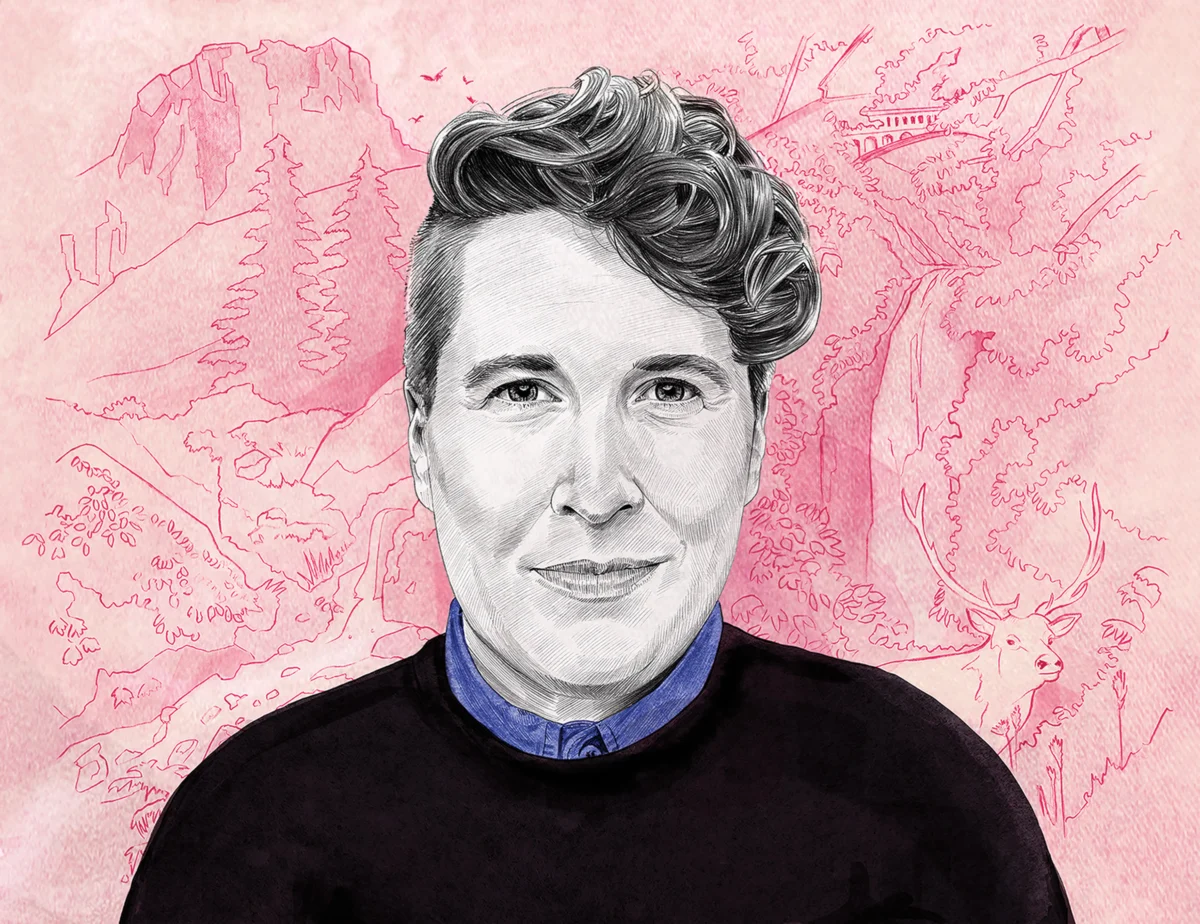
The Pacific Northwest, a region of unparalleled ecological diversity and dramatic geological history, serves as both the literal and metaphorical bedrock for Keown Vaux’s expansive vision. Having moved throughout the region before settling in Yakima, Washington, the poet acknowledges a profound indebtedness to this landscape, which she credits with fostering her unique literary voice. For Keown Vaux, writing "expansively" is a direct reflection of the region’s vastness and variety. It embodies a refusal to be confined to a single perspective, mirroring the breathtaking transitions found across the Pacific Northwest: from the misty bays and powerful oceans of the coastline to the towering, pine-clad peaks of the Cascade Range, then eastward to the arid desertscapes of Yakima, the fertile wheat fields of Walla Walla and the Palouse, and finally, the awe-inspiring, cataclysmically carved Columbia River Gorge. This geographical kaleidoscope, she explains, is essential to her sense of orientation and identity; the constant presence of active volcanoes, like Mount St. Helens, serves as a visceral reminder of nature’s immense power, providing a crucial anchor for her understanding of place and self.
This deep connection to the land informs her poetic methodology, which eschews traditional persona poems in favor of exploring "flashpoints of interest" – moments of intense emotional or intellectual resonance that allow her mind to embark on an uninhibited journey. Keown Vaux revels in poetry’s inherent paradox: its rigorous structure simultaneously offers boundless opportunities for creative disruption. She likens this dynamic to a "clown car" or "700 raccoons in a trenchcoat," a whimsical yet accurate description of how her poems can contain multitudes of ideas and emotions within a seemingly coherent form. This stylistic approach allows her to balance the sincere with the absurd, creating a rich tapestry that honors and interrogates the very essence of her origins.

A hallmark of Keown Vaux’s work is her audacious use of dark humor, a deliberate strategy she employs to make challenging and often grim topics more accessible to her audience. She views humor as a "Trojan horse," enabling readers to engage with difficult truths that might otherwise be too confronting. During public readings, her jocular delivery often elicits unexpected laughter, even at poems dealing with somber themes like the flushing of a child’s goldfish. This response, she notes, validates her approach, confirming the physiological power of humor in processing distress. Keown Vaux draws a direct link between this gallows humor and the unique experience of living in the Pacific Northwest, particularly in the shadow of active volcanoes. The ever-present knowledge of nature’s raw, destructive potential – the understanding that one’s existence is fragile and subject to forces beyond control – cultivates a particular mindset. Rather than internalizing this existential dread, her poetry externalizes it, inviting readers to collectively ponder mortality and impermanence. She explains that laughter, in the face of overwhelming odds, triggers a vasovagal nervous system response, offering a vital coping mechanism when survival feels impossible. If death is a frequent visitor in her verses, it is because she perceives it as an integral, vibrant component of life itself, demanding acknowledgment rather than avoidance.
Children, with their unfiltered perceptions and innate curiosity, play a pivotal role in Keown Vaux’s exploration of life and death. She recounts how children, sensing her openness, often gravitate towards her with their candid observations and unsettling discoveries. In the poem "Boa Constrictors are Addicted to Hugs," and through anecdotes about children eager to "tour everything dead in the yard," Keown Vaux highlights their unvarnished approach to mortality. These interactions, far from being morbid, are portrayed as profoundly fascinating and necessary. Children, she suggests, possess an intuitive need to process the cycle of life and death, a need that adults often suppress. Her willingness to engage at this "precipice" with them underscores a central tenet of her work: confronting uncomfortable realities is not only natural but essential for both personal and collective understanding.
Ultimately, Sad Man Happy Hour serves as a profound guide for navigating what often feels like the precipice of the world. Despite the pervasive sense of global unease – from the accelerating climate crisis and geopolitical instability to ongoing pandemics and societal fragmentation – Keown Vaux’s poetry offers a powerful antidote: a tenacious, almost defiant hope. Her poem "Zero Gravity" encapsulates this spirit, with the speaker declaring, "still, I plan; / a garden plot rented for the summer / where my seeds will grow." This sentiment extends throughout the collection, as seen in "Fair Fever, Catch It!," where, despite the overarching threat of global warming, people continue to engage in quintessentially human acts like carving butter sculptures and witnessing the birth of calves at state fairs. These seemingly small, ordinary acts become potent symbols of enduring humanity and resilience. Keown Vaux acknowledges the dire challenges facing the world but firmly holds onto optimism for future phases. Her most urgent message resonates as a timeless reminder: "We need a reminder that we should not lose our humanity when we think we are losing our world." In an era defined by uncertainty, Keown Vaux’s collection stands as a testament to the enduring power of the human spirit to find beauty, meaning, and hope amidst the chaos, urging us all to keep planting seeds, keep laughing, and keep living.