Rocky Gerung
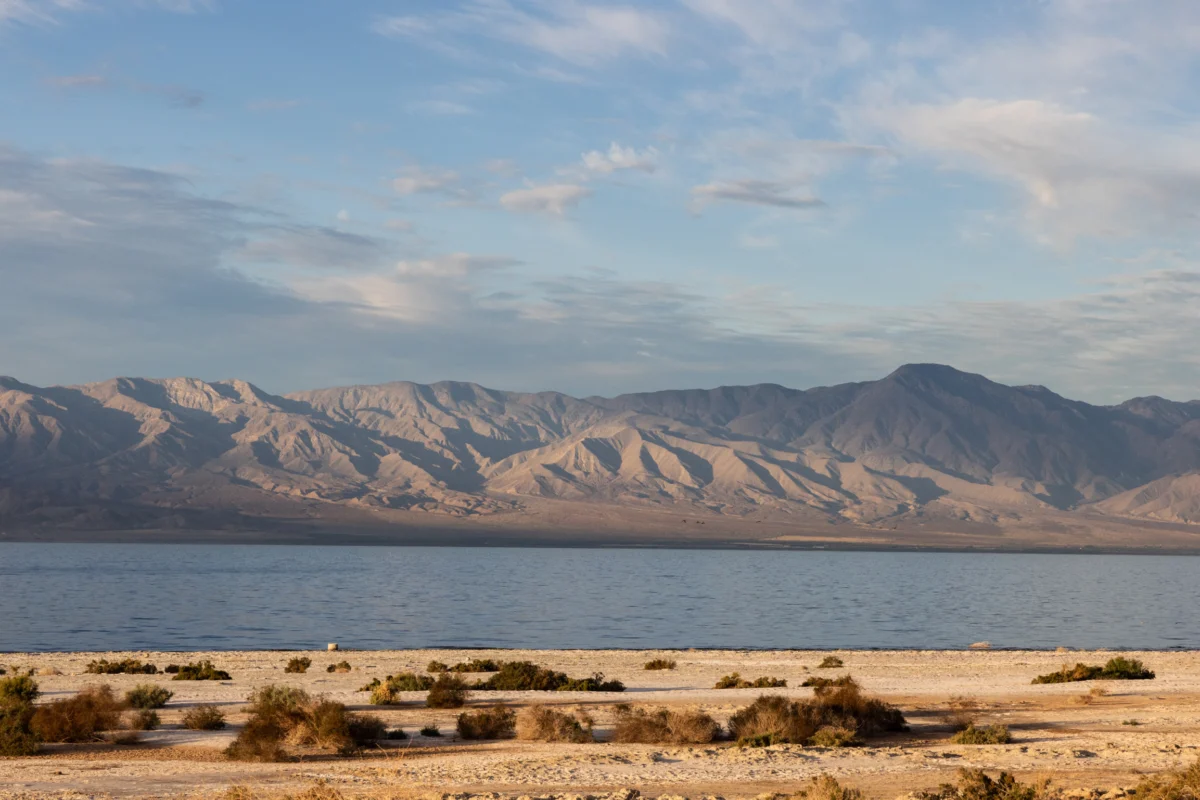
Residents of Imperial County, California, are accustomed to a persistent, unpleasant odor reminiscent of rotten eggs, a byproduct of the Salton Sea. This vast, saline lake, an unintended consequence of a Colorado River overflow in the early 20th century, once thrived as a popular resort destination in the 1950s. However, its tourism heyday has long since passed, and decades of agricultural runoff have saturated its waters with pollutants including lead, chromium, and legacy DDT. In recent years, diverted water supplies and intensifying drought, exacerbated by climate change, have significantly accelerated the lake’s evaporation. This receding shoreline exposes increasingly larger expanses of the lakebed, along with the toxic chemicals it harbors. The region’s characteristic strong winds then carry this hazardous dust directly into the surrounding communities, many of which are home to Latino farmworkers and Indigenous populations. In these communities, one in four children now suffers from asthma, and pediatric hospitalization rates are double the state average, underscoring a severe public health crisis.
"The Salton Sea has always been part of our region’s identity," states Luis Olmedo, executive director of Comite Civico del Valle, a local environmental justice organization. He has witnessed firsthand the shoreline’s retreat and the airborne dissemination of dust. "For families dealing with asthma and other respiratory conditions, these environmental issues are part of everyday life," he adds.
Yet, beneath the Salton Sea lies one of the world’s most substantial geothermal energy reserves. The superheated brine, situated thousands of feet below the lakebed, is rich in critical minerals, including battery-grade lithium, earning the area the moniker "Lithium Valley." Currently, three major projects focused on extracting geothermal power and lithium are progressing from planning stages to active construction, with full-scale production anticipated in the coming years.

A proposed permitting reform bill, the Bipartisan American Affordability and Jobs Act, aims to expedite the development of both clean energy and fossil fuel projects by streamlining regulatory processes and reducing bureaucratic hurdles. This legislation, currently under consideration, could significantly alter how industrial developments are reviewed, litigated, and monitored, particularly in frontline communities across the nation. The Salton Sea serves as a poignant example of the central tension surrounding permitting reform: the drive to accelerate clean energy solutions at a national level must be balanced with robust environmental safeguards to prevent further burdening already vulnerable populations.
Comite Civico del Valle, which has established air-monitoring networks in the Salton Sea region, supports permitting reform that advances clean energy development. However, Olmedo emphasizes, "but not at the expense of public health, environmental protections, or community participation." He elaborates, "Clean energy should improve people’s lives, not repeat past mistakes."
Both lithium and geothermal power are recognized as vital components for the global transition to clean energy. However, environmental advocates caution that without adequate safeguards, their development could exacerbate existing health crises for the region’s approximately 180,000 residents and intensify ecological threats to the fragile lakebed ecosystem. These industrial operations would necessitate substantial amounts of Colorado River water, a resource already over-allocated and the sole source of drinking and irrigation water for the valley. Each gallon diverted for industrial cooling towers or conserved to meet regional drought mandates represents a gallon less reaching the lakebed, accelerating shoreline retreat and exposing residents to even higher concentrations of airborne toxins. Projections indicate that without intervention, the lake is expected to drop roughly 20 feet from its early 2000s levels by 2030, losing 60% of its volume and exposing an additional 100 square miles of dry lakebed to the prevailing winds.
"This is not about symptoms on a dusty day—it raises concerns about children’s respiratory health for years to come," explains Jill Johnston, an associate professor of environmental and occupational health at the University of California, Irvine. Her research has established a correlation between increased dust events and slower lung function growth in children living closest to the Salton Sea. "The concern is how pollution from future industrial development could add to existing exposures and affect respiratory health," she notes.

The permitting reform bill, poised for a vote in the Senate, proposes to shorten environmental review timelines, reduce public comment periods, and potentially weaken environmental protections under cornerstone legislation such as the National Environmental Policy Act, the Endangered Species Act, the National Historic Preservation Act, and the Clean Air and Water Acts. If a project’s permitting review escalates to the federal level, residents and advocacy groups like Comite Civico del Valle would face significantly curtailed opportunities for public input and legal recourse in cases where projects might adversely affect the community.
For environmental justice advocates like Olmedo, the core question surrounding permitting reform is not the importance of clean energy for vulnerable populations—that is undisputed. Rather, it is whether the federal government’s acceleration of these projects will break from a historical pattern of environmental harm or if it will once again leave these communities, some of the poorest in California, to bear the disproportionate consequences. "Despite revisions [to the bill], we remain concerned about provisions that could weaken environmental review, limit legal challenges, and reduce accountability," Olmedo states. "Permitting reform should eliminate unnecessary delays, not weaken the protections communities depend on."
If enacted, the legislation could diminish the limited legal tools currently available to the community for safeguarding its air and water resources. The proposed federal bill includes provisions that could effectively codify existing federal permits, making it exceedingly difficult for future administrations or courts to overturn them, even in the face of new scientific evidence. Although a recent amendment introduced an exception allowing agency intervention for immediate threats to "human health" or "the environment," legal experts point out that the threshold for such intervention is exceptionally high, requiring definitive proof of urgent, direct harm to override a permit freeze.
This potential federal override threatens to compound the existing challenges faced by Salton Sea communities, according to Aaron Mintzes, deputy policy director for Earthworks. His organization, alongside Comite Civico del Valle, filed a lawsuit in 2024 demanding that developers adhere to environmental laws, a case that has seen subsequent appeals. One proposed geothermal power plant, dubbed Hell’s Kitchen, located near the southeastern shore of the Salton Sea, is currently undergoing state and federal environmental review. Final federal approvals are anticipated by May 2027, nearly a decade after the site was initially secured. Despite local opposition and legal scrutiny, county officials have already granted the project’s primary permits under the California Environmental Quality Act, with remaining state-level air and water permits in their final review stages.

"For the Salton Sea, the bill would lock in the Army Corps of Engineers Clean Water Act permit, effectively preventing California or Imperial County from ever changing the permit," Mintzes explains. Under the proposed legislation, state environmental regulators and county officials would be barred from implementing stricter regulations in the future, even if regional air and water quality deteriorates over time. "Were there ever a problem," he adds, "no one could make changes unless they can meet a high evidentiary burden."
The erosion of regulatory recourse also extends to tribal sovereignty. While last-minute amendments to the bill removed language that made tribal consultations optional, legal experts express concern that the current text still undermines meaningful, collaborative engagement between tribes and federal agencies. In the Salton Sea region, Indigenous tribes, including the Cahuilla, Kwaaymii, Kamia, Kumeyaay, and Quechan peoples, have consistently advocated for formal inclusion in development discussions, highlighting concerns that large-scale energy projects pose a threat to ancestral burial grounds and sacred sites. The National Historic Preservation Act mandates that federal agencies consult with tribes to identify and protect culturally significant landscapes before issuing permits. Weakening this mandate removes one of the few statutory protections for sacred grounds and other cultural sites, a pattern that tribal communities are observing across the American West, from conflicts over oil and gas leasing near Chaco Canyon to uranium mining near Mount Taylor and foreign mining claims in New Mexico’s Pecos River basin.
"There are just so few levers out there that enable us to be part of the discussion, the consultation, upfront discussion before projects are built," stated Mark Macarro, president of the National Congress of American Indians, during a briefing on November 6th. "When things get cynically packaged like this and purport to be this greater good for a policy in the United States to help affordability and help green energy and things like that, that’s when things get dangerous for us."
As the Senate debated the bill on November 9th, the policy discussions surrounding legal hurdles and permit timelines took on a starkly different reality for those living in California’s Imperial Valley. For residents around the drying Salton Sea, the potential passage of the Senate bill signifies a fundamental shift in who bears the risks of America’s energy transition. The lithium beneath the lakebed holds the promise of a clean energy future, but residents of the Imperial Valley may continue to pay the price with chronic headaches, sudden nosebleeds, and high rates of pediatric asthma, conditions that they, along with health experts like Johnston, attribute to the toxic dust emanating from the lake. "Imperial Valley can help lead the clean energy transition, but development must include environmental accountability and lasting community benefits," Olmedo asserts. "Our community should not have to choose between economic development and environmental protection. We deserve both."