Joko Susilo
Nearly two years after the U.S. Forest Service issued a cease-and-desist order for an unauthorized cabin constructed in the remote reaches of Idaho’s protected Sawtooth National Forest, the structure continues to stand, casting a long shadow over the very agency now overseen by Michael Boren, the tech magnate whose company was linked to its construction. The controversy highlights a complex interplay of land ownership disputes, federal oversight, and ethical questions surrounding a high-ranking public official’s past and present responsibilities.
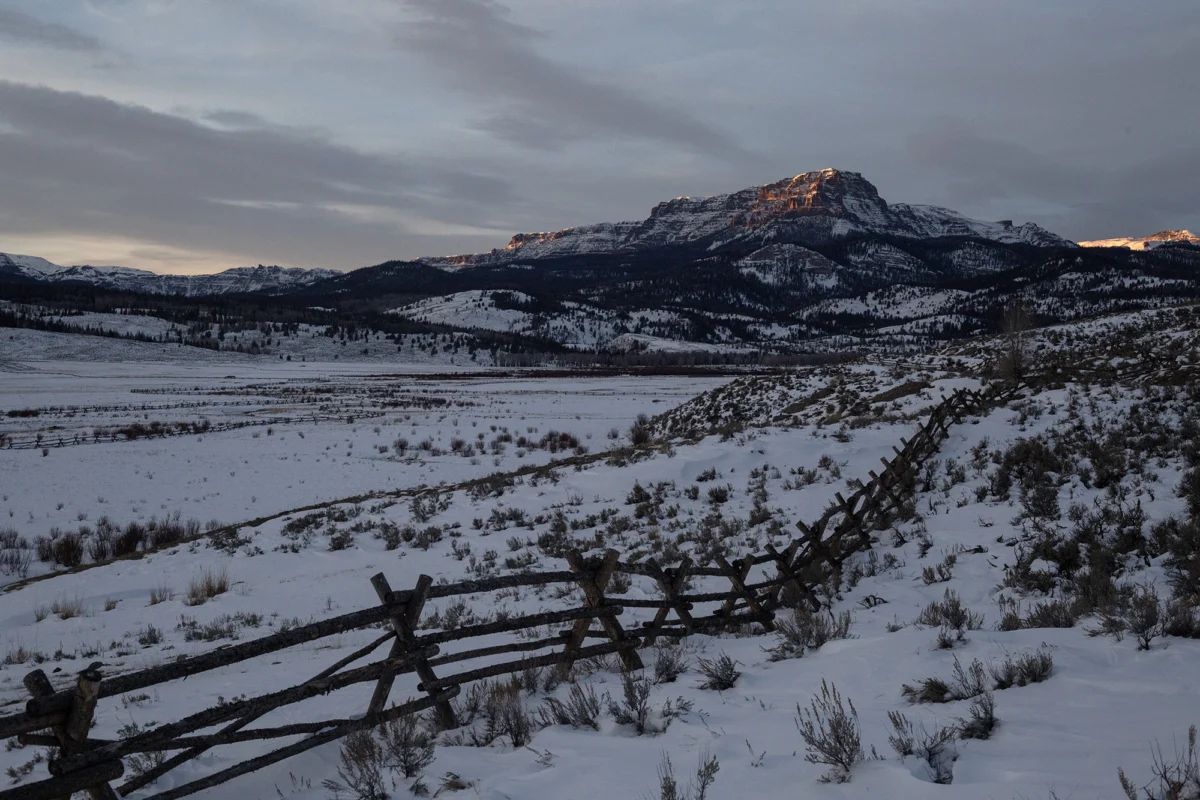
The saga began in the fall of 2024 when an unauthorized cabin, an unfinished log structure, appeared deep within the Sawtooth National Recreation Area, a federally protected expanse within the larger Sawtooth National Forest. In November of that year, the U.S. Forest Service, responsible for managing approximately 193 million acres of public land, dispatched a stern cease-and-desist letter to Galena Mines LLC, a Boise-based company formed in 2020. At the time, Michael Boren was listed as the sole manager of Galena Mines LLC, which held historic mining claims in the Sawtooths. The agency’s investigation determined that the cabin was built nearly a mile north of where Galena Mines’ patented claims were officially located according to federal records. Kirk Flannigan, the area ranger for the Sawtooth National Recreation Area, unequivocally ordered Galena Mines and Boren to remove the cabin by July 1, 2025, and submit a restoration plan within 45 days, to be completed by August 1, 2025. "Because there is no authorization for the surface disturbance and construction of the cabin that has occurred on [Forest Service] land, the cabin must be removed and the area restored to its natural condition," Flannigan wrote, warning of potential legal action or removal at the company’s expense should they fail to comply.
The core of the dispute lies in conflicting land surveys that have historically defined the boundaries of Galena Mines’ patented claims. Patented mining claims, unlike unpatented claims, grant full ownership of both surface and mineral rights, but their precise demarcation is critical, especially within federally managed and protected areas like the Sawtooths. In 2003, a previous owner of the claims commissioned surveyor Kim Leavitt, who concluded the claims were situated along Germania Creek, approximately one mile north of the locations depicted on Bureau of Land Management (BLM) maps. However, a joint Forest Service and BLM survey conducted in 2004 by federal land surveyor Randall Peppersack explicitly refuted Leavitt’s findings. Peppersack’s report stated, "In fact, Mr. Leavitts [sic] location is approximately 1 mile north of the original location and approximately 2000 feet lower in elevation. The location of the Dezdon Lode and Millsite are incorrectly displayed on the Leavitt Record of Survey." The BLM’s official mineral and land records database continues to show the claims in a more remote, less accessible spot, a mile south of where the cabin was ultimately constructed. Yet, in November 2020, just before Galena Mines was established, Boren commissioned surveyor Mark Phillips of Galena Engineering Inc. to conduct another survey. Phillips’ findings mirrored Leavitt’s, placing the patented claim a mile north of the federal agencies’ assessment, precisely where the cabin now stands.
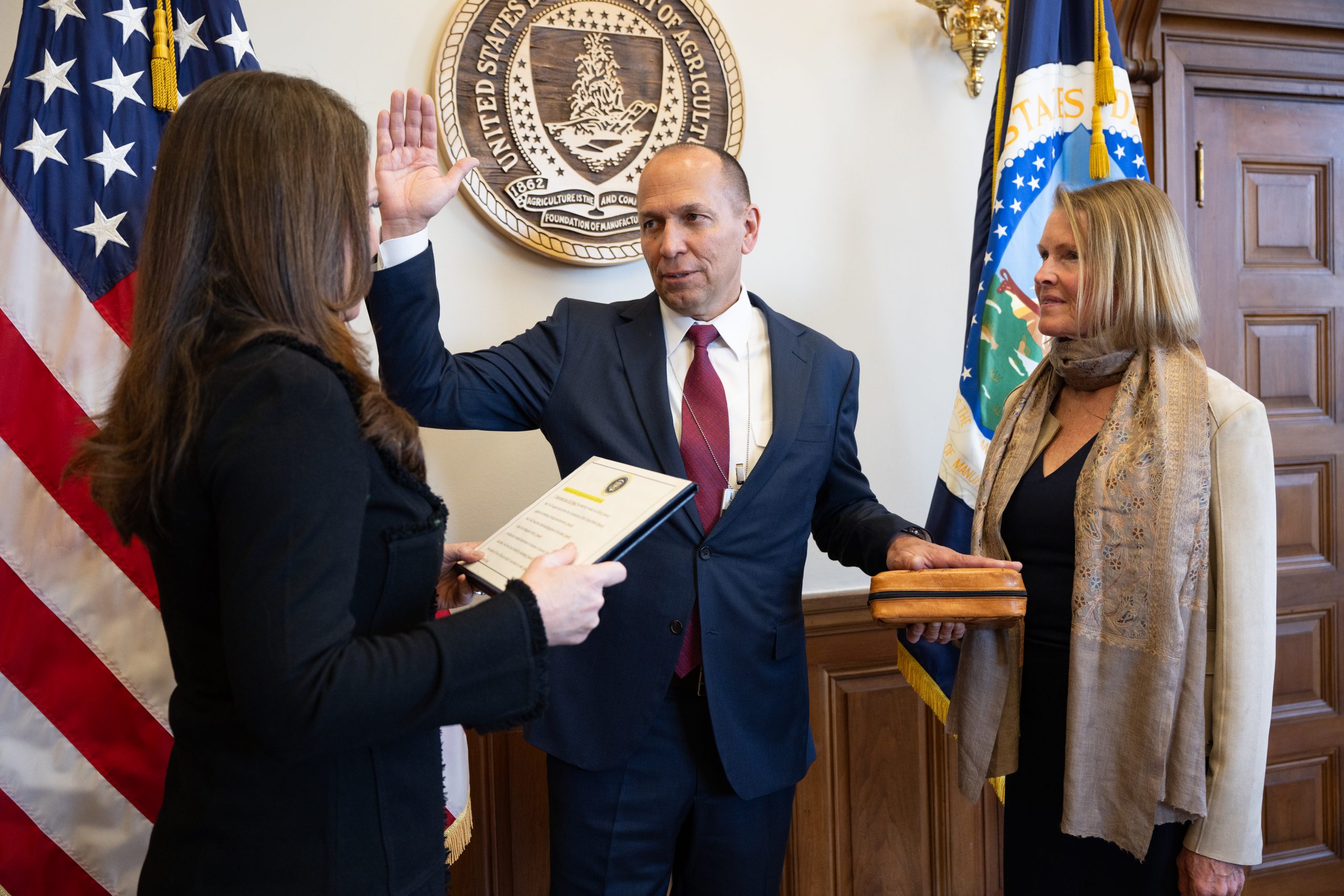
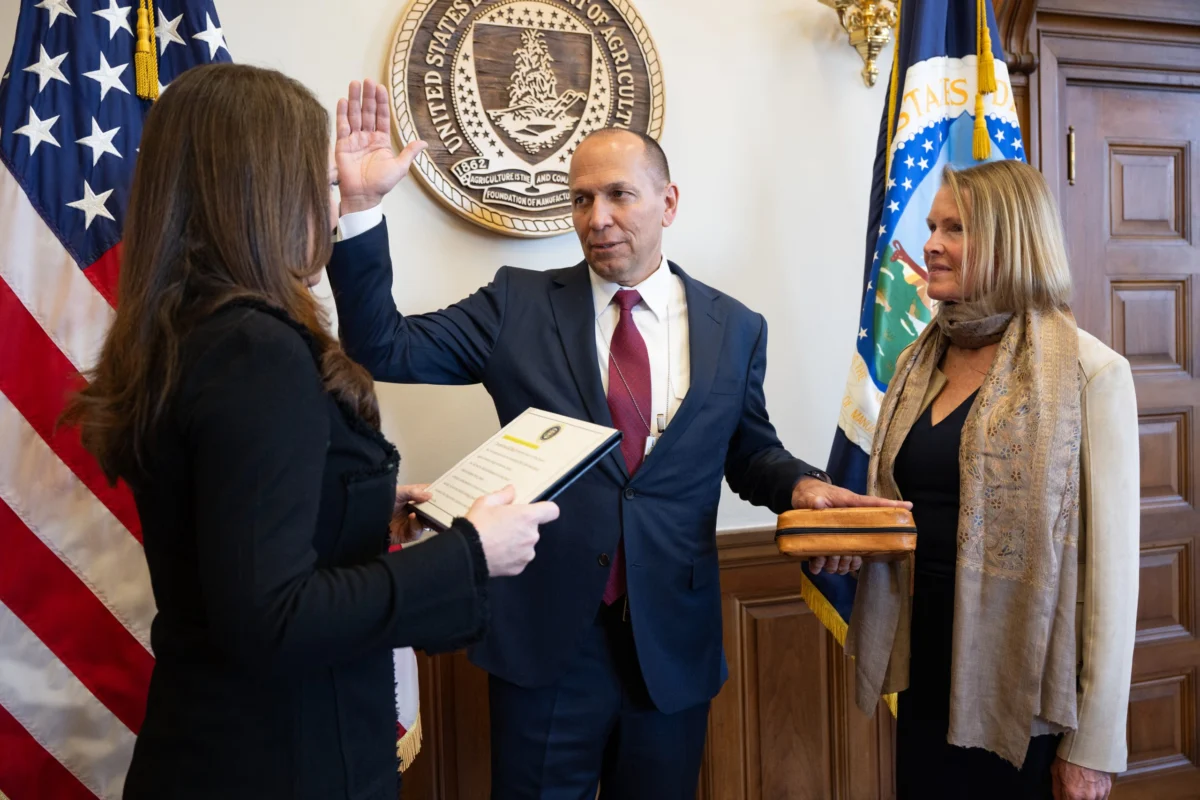
The controversy intensified significantly following Michael Boren’s nomination by then-President-elect Donald Trump for the critical role of Undersecretary of Agriculture for Natural Resources and Environment. This position, which Boren was sworn into in January 2026, places him directly in charge of the U.S. Forest Service, the very agency that had issued the cease-and-desist order to his company. Boren, known for past disagreements with public land management agencies, found himself in a remarkable position of oversight. Following his appointment and Trump’s return to the White House, the Forest Service’s stance on the cabin appears to have executed a complete reversal. Where once there were clear demands for removal and restoration, the USDA now largely dismisses the Forest Service’s original assessments of the claim boundaries. A USDA spokesperson recently pointed to the two independent surveys (Leavitt’s and Phillips’ for Boren) as "official" surveys of record, contending that "The USFS does not conduct official land surveys of patented mining claims; it contracts the Bureau of Land Management surveyors with appropriate expertise." The spokesperson further asserted that "To our knowledge, BLM has not conducted a survey of the relevant parcel. Mr. Peppersack’s comments do not constitute an official survey and were not recorded as such," effectively sidelining the federal government’s own earlier findings. The USDA now states that "No action can be taken until an official federal survey is completed," creating an indefinite delay in enforcement.
The situation has also raised serious ethical questions regarding Boren’s financial disclosures. In April 2025, just months after his nomination, Boren signed an ethics agreement and submitted a financial disclosure form, neither of which listed Galena Mines LLC. Ethics experts, such as Craig Holman, a government affairs lobbyist for Public Citizen, argue that ethics rules mandate the disclosure of all outside corporate posts held within the previous two years. The USDA spokesperson maintained that Boren’s disclosure was "accurate" because "neither he nor his family had ownership of Galena Mines at the time of the initial financial disclosure or any subsequent time," claiming the Boren family ceased ownership in May 2024. However, internal Forest Service emails show agency officials discussing the cabin issue directly with Boren in November 2024, contradicting the May 2024 ownership cessation claim. Furthermore, Idaho business records indicate Boren remained the LLC’s manager until late February 2025, a month after his nomination, at which point his daughter, Amanda Boren, assumed the management role. These discrepancies fuel concerns about transparency and potential conflicts of interest, particularly given Boren’s direct authority over the Forest Service.
The shifting agency stance has coincided with notable leadership changes within the Sawtooth National Forest. Kirk Flannigan, the Ranger who issued the original cease-and-desist, departed his Forest Service post in June 2025 for a position as administrator of Blaine County, Idaho. Similarly, Jake Strohmeyer, a 30-year veteran of the agency and former Sawtooth National Forest supervisor, left his role in early 2025 for a job at the Idaho Department of Lands. Adding another layer of complexity, in November 2025, Amanda Boren, now manager of Galena Mines LLC and board director of the private property rights group Sawtooth Conservation and Recreation Alliance (of which her father was a past board member), emailed top Forest Service brass. In her letter, she endorsed Michael Fuller, then the acting area ranger of the Sawtooth National Recreation Area, for the permanent ranger post, while simultaneously criticizing Flannigan’s performance. "Ranger Fuller seems to be able to get more done in 3 months with a staff of 9 people than the previous ranger was able to get done in 12 months with a staff of over 30," Amanda Boren wrote to Forest Service Chief Tom Schultz. This communication, combined with her father’s current position, raises questions about potential influence on Forest Service personnel decisions and enforcement actions.
Advocacy groups have been vocal in their condemnation of the situation. Aaron Murphy, co-founder of American Hunters and Anglers, located the cabin and posted video footage of the seemingly unfinished structure to social media, criticizing the lack of enforcement. While the USDA spokesperson dismissed the video as "maliciously false and therefore libelous," they claimed the cabin was built as a "warming hut on private land for public use as needed," intended for winter emergencies, despite footage showing the door boarded over. The larger implications of this unresolved dispute extend beyond a single cabin. It touches on fundamental principles of public land management, the rule of law, and the integrity of federal agencies. The Sawtooth National Recreation Area is a treasured landscape, valued for its pristine wilderness and recreational opportunities, where strict regulations govern development. The perceived inability or unwillingness of the Forest Service to enforce its own orders, particularly when a high-ranking official is involved, risks eroding public trust in federal land management and setting a precedent that could undermine conservation efforts across the nation’s vast public lands. The demand for an "official federal survey" now appears to be a bureaucratic impasse, effectively delaying any resolution indefinitely and leaving the unauthorized structure firmly entrenched on public land.