Rocky Gerung
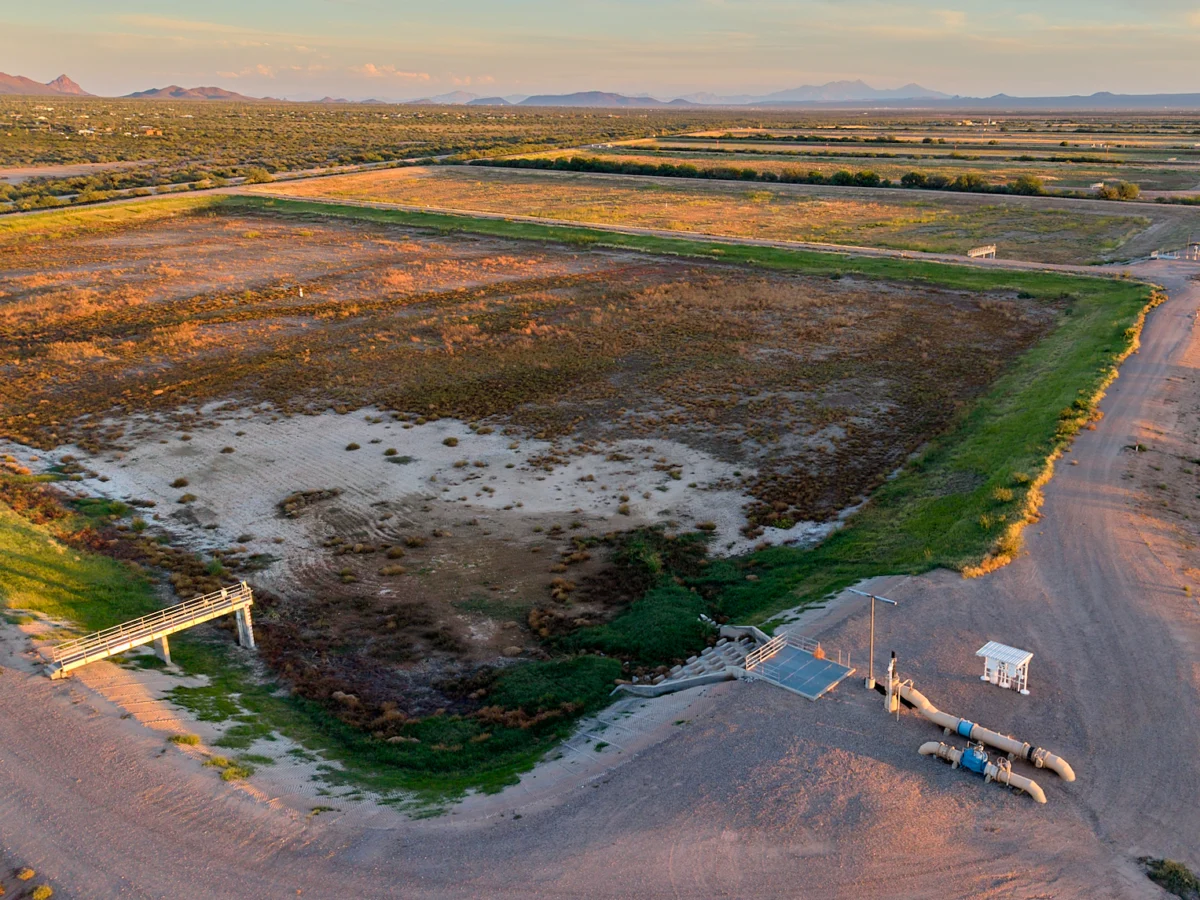
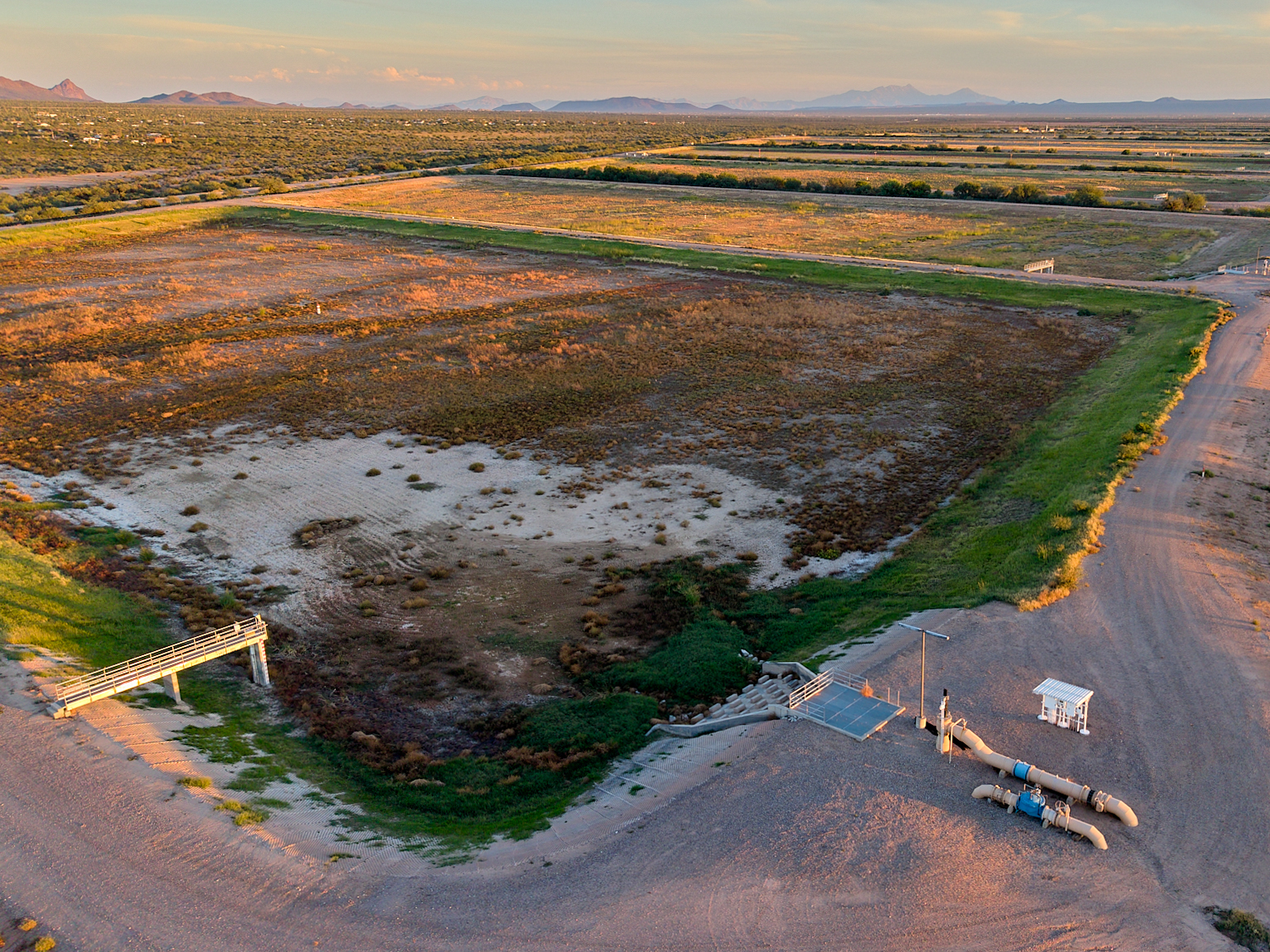
On a cloudy mid-November morning, dry, cracked clay stretched across dozens of acres within a human-made basin in the Sonoran Desert, located approximately six miles west of the Tucson Mountains. Following routine annual maintenance, this basin will soon be replenished with water pumped from the Colorado River, a journey of over 300 miles uphill from Lake Havasu, transforming the arid expanse into a temporary lake. This water will then gradually seep into the subterranean aquifer, serving as a critical underground reservoir for Tucson, Arizona—a city already grappling with arid conditions—until it is channeled to residents’ homes.
For the past two decades, Tucson has strategically utilized Colorado River water to fill this and 19 other storage basins, a practice designed to replenish the Avra Valley aquifer, the primary underground source that sustains the city. This long-term strategy has allowed Tucson to accumulate a substantial water reserve, effectively creating a subterranean savings account for periods of scarcity.
In 2027, Tucson Water is set to access this carefully curated savings account for the first time in recent memory. The necessity arises from a confluence of factors: a persistent drought exacerbated by climate change, decades of unsustainable overuse of the Colorado River, and the breakdown of negotiations among the states dependent on its diminishing flow. Consequently, the federal government has mandated significant reductions in water allocations for Arizona, California, and Nevada. Tucson, anticipating a loss of approximately 14% of its usual Colorado River water supply, has made the decision to draw from its aquifer reserves instead.
City officials maintain that this shift will not directly impact residents, citing the city’s proactive approach in recharging the aquifer to establish a substantial buffer. John Kmiec, director of Tucson Water, emphasized that this proactive measure is precisely what the city has prepared for over decades and generations. He noted that a community that had not anticipated changes in the Colorado River or local conditions might face a crisis, but Tucson’s long-standing commitment to aquifer recharge provides it with crucial resilience and sustainability.
Kmiec expressed confidence in the city’s ability to manage its groundwater reserves this year. In fact, Tucson Water did not even request its full, albeit reduced, Colorado River allocation, opting instead to leave a portion of its allotted water within the river system. This decision was made in exchange for millions of dollars through a federal program designed to incentivize such actions. Nevertheless, Kmiec acknowledged that envisioning Tucson’s future water budget without any Colorado River water remains a significant challenge.
Conversely, water conservationists argue that long-term reliance on the Colorado River is an unsustainable proposition. They advocate for Tucson to increase its efforts in rainwater harvesting and to expand the use of reclaimed water.
For the year 2027, the Arizona Water Banking Authority will provide credits to Tucson and other central Arizona cities facing allocation cuts. This mechanism ensures that Tucson will not forfeit its legal right to the water it withdraws from its aquifer this year, although the long-term implications beyond 2027 remain uncertain. Despite these uncertainties, researchers and local water conservationists concur that Tucson is comparatively better positioned than many other municipalities across Arizona.

The city of Cave Creek, for instance, relies on the Colorado River for an overwhelming 95% of its water supply, making it particularly vulnerable to the mandated cuts. Lacking direct access to groundwater beneath its own jurisdiction, Cave Creek officials are actively seeking agreements with other communities to pump and transport groundwater to their city. The Phoenix metropolitan area, which draws water from the Salt and Verde rivers in addition to the Colorado River, may also need to tap into its groundwater reserves, a practice it has engaged in for over a decade. Phoenix is also implementing a surcharge for high water consumption as it invests in new water infrastructure. In contrast, Tucson’s water rates have been structured on a tiered basis according to usage for the past 50 years.
In Pinal County, a rapidly expanding rural region situated between Phoenix and Tucson, farmers have been contending with water cuts since 2019. In response, in July of 2026, agricultural districts finalized agreements to receive water from a company that transports groundwater from California into Arizona. They have also committed to expanding the New Bartlett Dam on the Verde River.
Meanwhile, researchers are contemplating the long-term consequences of Tucson’s decision to draw from its groundwater savings, particularly given the increasing uncertainty surrounding the city’s ability to replenish these reserves in the future. Sharon Megdal, director of the University of Arizona’s Water Resources Research Center, stated that while the aquifer currently holds ample water, this availability is not guaranteed indefinitely. She stressed the importance of Tucson anticipating future uncertainties and prioritizing water conservation through reduced consumption and increased recycling, emphasizing that water used now will not be available for future needs.
The historical context of water management in the Tucson region reveals a long struggle with scarcity. European colonizers arrived in the 1600s and, through the 1900s, significantly depleted the region’s aquifers, displacing Indigenous populations who had managed these resources for millennia. This historical exploitation led to dramatic landscape transformations. For example, in the late 1800s, groundwater levels in the Santa Cruz River Valley were robust enough to support a flowing river and a dense mesquite forest. However, by 1913, the Santa Cruz River ceased to flow year-round, and by 1940, its seasonal flow had also vanished.

During the 1940s, Tucson’s groundwater pumping began to exceed the aquifers’ natural recharge rates, supplying water for agriculture, mining, and the city’s growing population. The city initiated wastewater treatment and reuse in the 1980s. Prior to the early 1990s, Tucson’s water supply was almost entirely dependent on groundwater. This reliance shifted with the completion of the Central Arizona Project in 1993, a massive 336-mile system of canals and pumping stations designed to deliver Colorado River water to central Arizona, with its terminus just south of Tucson.
Over the past two decades, the Central Arizona Project has delivered billions of gallons of water to the 20 recharge basins in the Avra Valley, an area previously dedicated to groundwater-fed agriculture. The city of Tucson acquired this land in the 1970s, effectively halting groundwater pumping and enabling officials to replenish the aquifers using Colorado River water. This strategic land acquisition and subsequent infrastructure development have been instrumental in the city’s water management success.
In recent decades, Tucson has managed to significantly increase its water reserves. Groundwater levels have risen in the vicinity of the recharge basins, leading to increased water pressure in the aquifers and a literal uplift of the desert surface—a tangible indicator that the city’s aquifer recharging system is functioning effectively. Since the early 2000s, Tucson has annually channeled its Colorado River water allocation, typically up to 145,000 acre-feet, into the Avra Valley aquifer. A substantial portion of this water, between 95,000 and 100,000 acre-feet, is usually withdrawn and distributed to Tucson water users, with approximately 30% being retained in the aquifer for future use. An acre-foot of water is equivalent to nearly 326,000 gallons, enough to cover an acre of land a foot deep.
However, in August, after protracted negotiations, the Colorado River Basin states failed to reach a consensus on managing the river’s declining water supply. This impasse led the U.S. Department of the Interior to announce that the Lower Basin states—Nevada, Arizona, and California—would be subject to water-supply cuts for two years, while the four Upper Basin states—Colorado, Utah, New Mexico, and Wyoming—were urged to voluntarily reduce their water usage. This two-year plan is part of a broader 10-year framework, with future allocations beyond 2028 yet to be determined, and even the immediate two-year cuts are still being finalized. During this period, Tucson anticipates an annual reduction of approximately 20,000 acre-feet of water, representing about 14% of its typical Colorado River supply.

Despite these projected cuts, Tucson Water could have still requested around 120,000 acre-feet of Colorado River water, storing approximately 20,000 acre-feet in the aquifer. Instead, with the endorsement of the Tucson City Council, water managers have opted to request only about 70,000 acre-feet for 2027, choosing to sell back the remaining 50,000 acre-feet to Lake Mead. This strategic decision means Tucson will withdraw about 25,000 acre-feet from its groundwater storage, marking a reversal of its long-standing practice of storing more water than it withdraws. This move will be offset by an $86.7 million payment received for leaving water in Lake Mead, funds designated for water conservation projects aimed at reducing Tucson’s dependence on the Colorado River. Kmiec indicated that sufficient water is available in the system for Tucson to make this strategic decision, and the financial compensation will bolster preparedness for a drier future potentially marked by more severe water restrictions. He emphasized that diversifying the city’s water portfolio, a process currently underway, is becoming increasingly critical for future water security.
Nonetheless, some water conservationists express reservations about Tucson’s decision to begin drawing from its reserves and the messaging surrounding this transition. Withdrawing 25,000 acre-feet from Tucson’s underground savings will inevitably lead to a depletion of the Avra Valley aquifer. Megdal, the University of Arizona water researcher, pointed out that any withdrawal, by definition, reduces the available supply.
Catlow Shipek, senior program director at the Watershed Management Group, a Tucson-based nonprofit dedicated to water conservation, voices concerns about Tucson Water’s communication strategy. He perceives a tendency to assure the public that all is well, potentially downplaying the gravity of the situation. While Shipek acknowledges that Tucson does not face immediate crisis and residents need not panic, he believes the city’s messaging should be more nuanced, as there are legitimate reasons for concern.
To date, Tucson has accumulated approximately 600,000 acre-feet of Colorado River water in its reserves, a quantity sufficient to meet the city’s needs for over six years based on current consumption rates. However, Kmiec asserts that Tucson possesses enough water to sustain its residents for decades, owing to its legal right to extract naturally occurring groundwater and its participation in other water conservation programs. The city also benefits from the significant amount of farmland that was fallowed in the 1970s, reducing agricultural water demand. Kmiec stated that even if Colorado River water ceased to flow and wastewater recycling were halted, the city holds legal rights to over 47 years’ worth of water.

Kmiec anticipates that the Colorado River will continue to be a vital component of Tucson’s water supply, with the city expecting to receive some river water after 2028, though potentially at reduced volumes. Concurrently, the city is actively exploring alternative water sources. By 2031, Tucson plans to implement a system designed to purify its wastewater to standards exceeding those for drinking water, subsequently returning it to residents’ homes. While the final cost of this advanced purification system is still under assessment, it remains in the planning phase, with a portion of the $86.7 million secured from the Lake Mead water sale earmarked for its development. The overarching objective, according to Kmiec, is to diminish the city’s reliance on the Colorado River.
The city is also pursuing other conservation initiatives. Recently, it updated its large water-user ordinance, which governs water consumption by businesses such as golf courses and data centers. The revised policy mandates conservation plans for any water user exceeding approximately 20 acre-feet of water per month. However, water conservation advocates like Shipek advocate for a lower threshold, ideally around 6 acre-feet. The Tucson City Council narrowly approved this policy with a 4-3 vote. Mayor Regina Romero, who voted in favor, emphasized the need to balance the city’s water requirements with economic development, expressing a desire to avoid deterring new businesses through excessive regulatory hurdles.
The Watershed Management Group has put forth its own "hydro-local" plan for Tucson’s water future, proposing a pathway for the city to achieve water self-sufficiency without drawing from the Colorado River. This ambitious plan necessitates more stringent water conservation measures, including a 50% reduction in residential and commercial water demand through enhanced rainwater harvesting, graywater utilization, and stormwater management to offset indoor water consumption. The plan also advocates for a transition to less water-intensive agricultural crops, the attraction of desert-friendly industries, and support for existing businesses to reduce their water footprints. Shipek articulated a vision of cultivating a deeper relationship with the surrounding water resources, including rain, stormwater, and treated wastewater, emphasizing the principle of giving back to the aquifer and the Earth for every human use.
Despite the increasingly arid climate, Kmiec remains optimistic about the city’s water supply, provided that both individuals and businesses continue to exercise responsible water usage, a practice that has been in place for several decades. He underscored that the city’s continued well-being hinges on responsible stewardship within the Sonoran Desert and the judicious use of water resources.