Johny Prima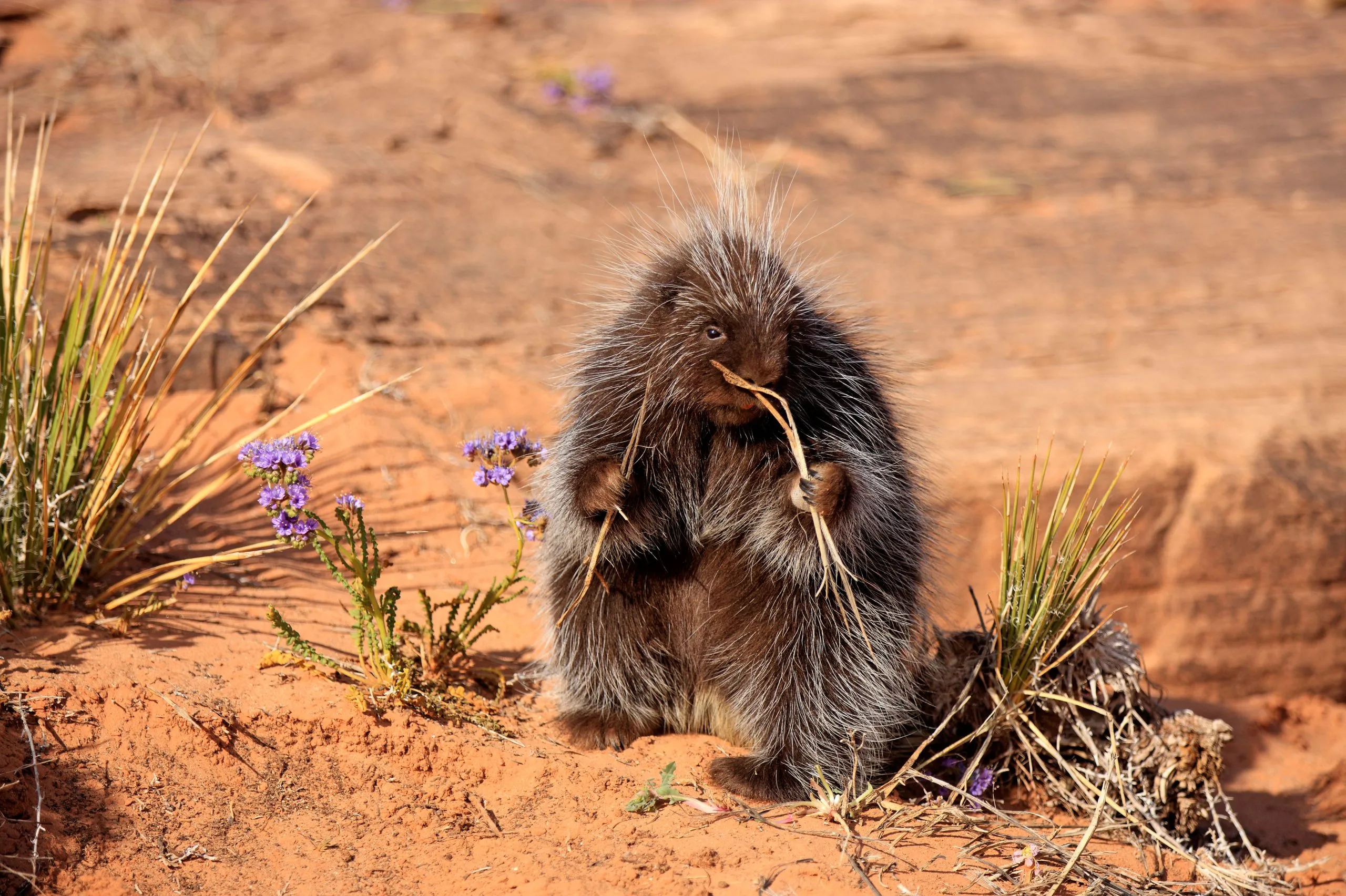
Once a common sight, the North American porcupine (Erethizon dorsatum) is subtly vanishing from its traditional habitats across the Western United States, prompting urgent investigations by wildlife scientists and inspiring ambitious restoration efforts by Indigenous communities deeply connected to this unique rodent. For generations, the porcupine, or kaschiip as it is known to the Karuk Tribe of Northern California, held a significant place in the cultural fabric and ecological balance of the region. Today, however, sightings are increasingly rare, transforming vivid memories into poignant echoes of a bygone era.
Emilio Tripp, a dedicated wildlife manager and a citizen of the Karuk Tribe, vividly recalls a fleeting glimpse of a shadowy silhouette during a nighttime drive with his father in the late 1990s. This solitary, uncertain encounter remains his only personal brush with the elusive kaschiip. Decades later, the 43-year-old reflects on the profound shift, noting that direct encounters are now almost exclusively confined to the memories of tribal elders, who fondly recount a time when porcupines were abundant until the turn of the century. Modern sightings are reduced to rare, often tragic, events: a carcass on a forest road, a fleeting nocturnal encounter. The growing concern within the Karuk community is palpable, a collective question hanging heavy in the air: where have all the porcupines gone? As Tripp articulates, "Everyone’s concerned. If there were more (observations), we’d hear about it."
This unsettling trend extends far beyond Northern California. Across the vast and diverse landscapes of the American West, porcupine populations are undeniably dwindling. Wildlife scientists are now engaged in a critical race against time, striving to pinpoint remaining populations, understand the complex drivers of their decline, and formulate effective conservation strategies. Concurrently, Indigenous nations like the Karuk Tribe are moving forward with proactive plans, charting innovative pathways to reintroduce porcupines and restore their vital presence to ancestral forests.
Porcupines are instantly recognizable for their formidable defense mechanism: a dense coat of some 30,000 sharp, barbed quills. This natural armor, while highly effective against most predators, can paradoxically pose a challenge to the porcupine itself, as they are known to accidentally quill themselves. Characterized by ecologists like Tim Bean of California Polytechnic State University as "big and dopey and slow," these nocturnal herbivores navigate their environment with a distinctive waddle, primarily feeding on foliage and the nutrient-rich inner bark of trees. This dietary preference, however, has historically cast them in a negative light, particularly within the timber industry, which has long considered them pests due to their tree-gnawing habits that can damage valuable lumber.
The perception of porcupines as agricultural and forestry nuisances led to widespread and aggressive persecution campaigns throughout the 20th century across North America. Government-sanctioned poisoning and hunting programs decimated populations. Vermont alone, between 1957 and 1959, recorded the mass killing of over 10,800 porcupines. In California, Forest Service officials declared an "open season" on porcupines in 1950, operating under the misguided belief that the species posed an existential threat to pine forests. While official state bounty programs eventually ceased by 1979, the damage was profound, and porcupine numbers have largely failed to rebound to historical levels.

Contemporary surveys conducted by researchers in British Columbia, Arizona, western Montana, and Northern California consistently reveal that porcupines remain scarce in these regions. The lack of comprehensive historical monitoring data makes it challenging for scientists to definitively determine whether populations are still actively declining or simply struggling to recover from decades of systemic persecution. However, anecdotal evidence provides a stark and compelling narrative: veterinarians report fewer cases of pets injured by quills, rural homeowners observe fewer porcupines in their backyards, and hikers note their increasing rarity in wilderness areas. This absence has ripple effects through the ecosystem. In the Sierra Nevada mountains, for instance, the endangered fisher (Pekania pennanti), a member of the weasel family and one of the few predators capable of preying on porcupines, now suffers from a critical lack of this high-protein food source. Consequently, fishers in the Sierras are notably scrawnier and produce smaller litters compared to their counterparts in other regions, illustrating a clear trophic cascade resulting from the porcupine’s disappearance.
Beyond the immediate ecological consequences, the dwindling porcupine population serves as a stark indicator of a broader environmental crisis. Erik Beever, an ecologist with the U.S. Geological Survey, views the porcupine’s silent disappearance as symptomatic of a "silent erosion of animal abundance" — a widespread decline in biodiversity that often goes unnoticed until a species reaches a critical threshold. "We’re wondering whether the species is either increasing or declining without anybody even knowing," Beever notes, highlighting the urgent need for more robust ecological monitoring.
Culturally, the porcupine’s decline represents a significant loss for the Karuk Tribe. Porcupine quills are traditionally woven into intricate baskets and incorporated into other vital cultural and ceremonial items. Today, the tribe often finds itself importing quills from distant sources rather than harvesting them locally. This inability to gather quills from their ancestral lands severs a profound connection between tribal members and their homelands, impacting not only artistic practices but also the intergenerational transfer of traditional ecological knowledge. As Emilio Tripp emphasizes, "It’s important for (porcupines) to be a part of our landscape. That’s part of why they’re chosen to be part of this ceremonial item."

In response to this pressing knowledge gap, scientists are actively working to unravel the mystery of the porcupine’s decline. Tim Bean’s team, for instance, meticulously combed through a century of public records, roadkill databases, wildlife agency reports, and citizen science contributions to map porcupine distribution patterns across the Pacific Northwest. Their findings indicate a perplexing shift: while porcupines are dwindling in their traditional conifer forest habitats, they are surprisingly appearing in non-traditional environments like deserts and grasslands, suggesting potential habitat shifts or adaptive strategies in response to environmental pressures. Erik Beever is now spearheading a more expansive study encompassing the entire Western U.S.
Researchers have put forth several theories to explain why porcupine populations have failed to recover and, in many areas, continue to decline. One significant concern revolves around the proliferation of illegal marijuana farms, often hidden deep within remote forest areas. These illicit operations frequently employ highly toxic rodenticides, which, while targeting pest species, inadvertently kill a wide range of wildlife, including porcupines, through direct consumption or secondary poisoning. Another theory suggests that increased protections for apex predators, such as mountain lions, while crucial for predator conservation, may have inadvertently intensified predation pressure on slow-reproducing species like porcupines in areas where their populations are already vulnerable. Furthermore, the porcupine’s inherently low reproductive rate, typically birthing only a single offspring at a time, makes them particularly susceptible to population declines and slow to recover from environmental disturbances or increased mortality. Beyond these specific factors, broader environmental changes like habitat loss and fragmentation due to human development, altered forest dynamics from wildfire suppression, and the overarching impacts of climate change on food sources and suitable habitat are also likely contributing to their vulnerability.
Studying porcupines presents unique challenges due to their elusive nature and broad habitat preferences. As generalist herbivores, they inhabit a diverse array of forest types, making it difficult for researchers to pinpoint optimal survey locations. Furthermore, they are notoriously hard to bait, confounding efforts to capture them on camera traps for population monitoring. Scientists have experimented with various attractants, including brine-soaked wood blocks, peanut butter, and even porcupine urine, with only limited success. The Central Sierra Environmental Resource Center, after 34 years of both baited and unbaited camera surveys in the Sierra Nevada, has recorded porcupines only three times. John Buckley, the center’s executive director, describes the situation as a profound "mystery," questioning why porcupines are not reproducing and repopulating even in seemingly undisturbed habitats like Yosemite National Park.

Despite these considerable challenges, the Karuk Tribe remains steadfast in its commitment to bringing porcupines back. Initial camera trap surveys within tribal lands have yielded scant evidence, with one designated "hotspot" registering only a single porcupine sighting – a testament to their extreme rarity. This scarcity has led Karuk biologists to explore alternative, more innovative methods, including deploying trained dogs specifically to conduct scat surveys, which can provide valuable genetic and distribution data without direct animal contact.
The prospect of reintroducing the species presents a delicate balancing act. Given the current scarcity of porcupines across the West, it remains uncertain whether already fragile source populations can afford to lose individuals for translocation to other areas. Nevertheless, Emilio Tripp and the Karuk Tribe feel a compelling urgency to act, observing that the ecosystem does not appear to be healing itself. "Things don’t seem to be getting better in over the course of my lifetime," Tripp acknowledges. Yet, a deep-seated optimism persists. Tripp, his wife, and daughter continue to participate regularly in basket-weaving events, incorporating quills into their craft, thereby upholding the Karuk’s age-old traditions that honor the porcupine. This dedication is a small, yet powerful, act of enduring hope—a hope that, in the not-too-distant future, the Karuk Tribe will once again be able to welcome the kaschiip home, restoring not only a species but a vital piece of their cultural and ecological heritage.