Roger Danuarta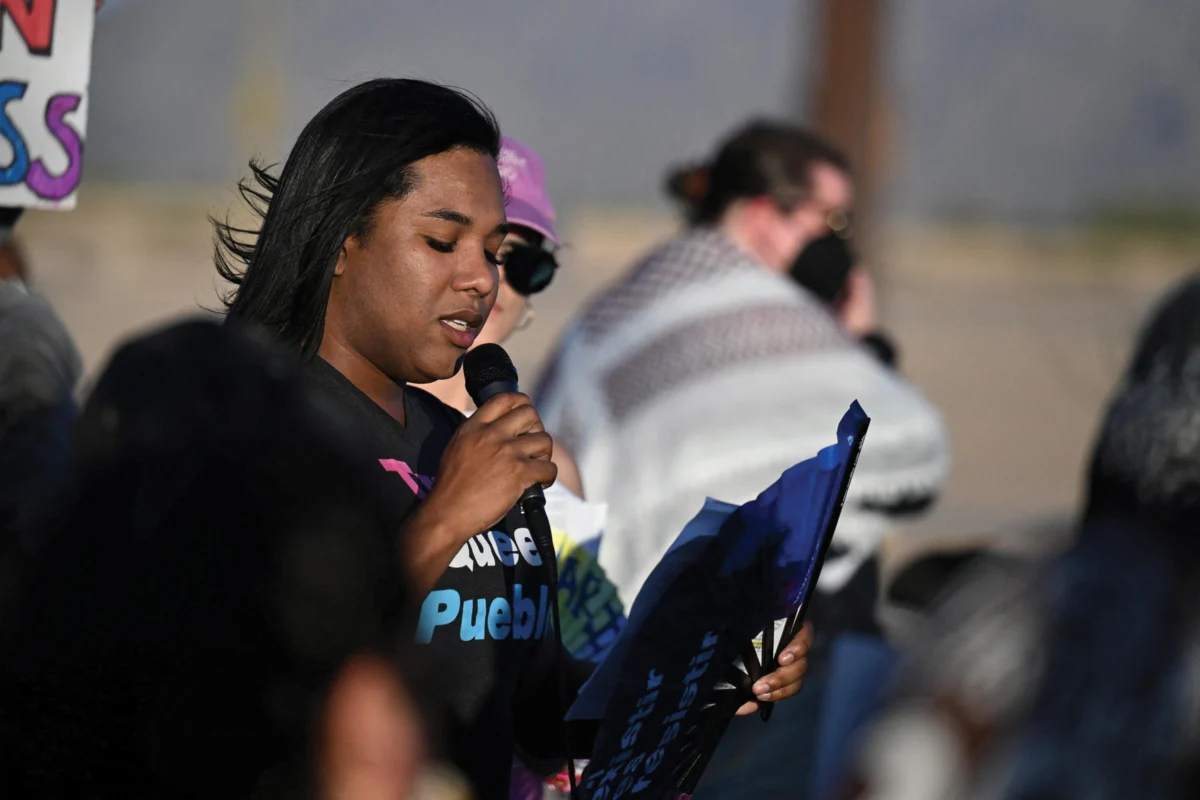
Prior to her own detention, 26-year-old Saenz had dedicated a year to advocating for Arbella "Yari" Márquez, a lesbian Phoenix resident held in the same notorious Eloy facility. Márquez was battling severe health issues, including leukemia, and had reportedly lost over 70 pounds while in custody. For Saenz, a transgender woman herself, Márquez’s plight was deeply personal. She became a central figure in the campaign for Márquez’s release, coordinating visits, engaging with politicians and media, and relentlessly exposing the dire conditions within the detention center, particularly for LGBTQ+ individuals. This tenacious advocacy, spearheaded by Saenz and Trans Queer Pueblo—a Phoenix-based racial and gender justice organization supporting trans and queer migrants—successfully elevated Márquez’s situation to national prominence, drawing the attention of congressional members and religious leaders alike.
Saenz understood the profound stakes of this struggle from her own lived experience. In her native Venezuela, she faced intense persecution for her transgender identity, compelling her to flee across multiple South American borders. According to a habeas petition filed by her lawyers in April, her journey was marked by repeated sexual violence, two kidnappings, and forced labor, from which she finally escaped in 2024. Eventually, she arrived at the U.S. border, seeking asylum and a sanctuary she hoped to find.
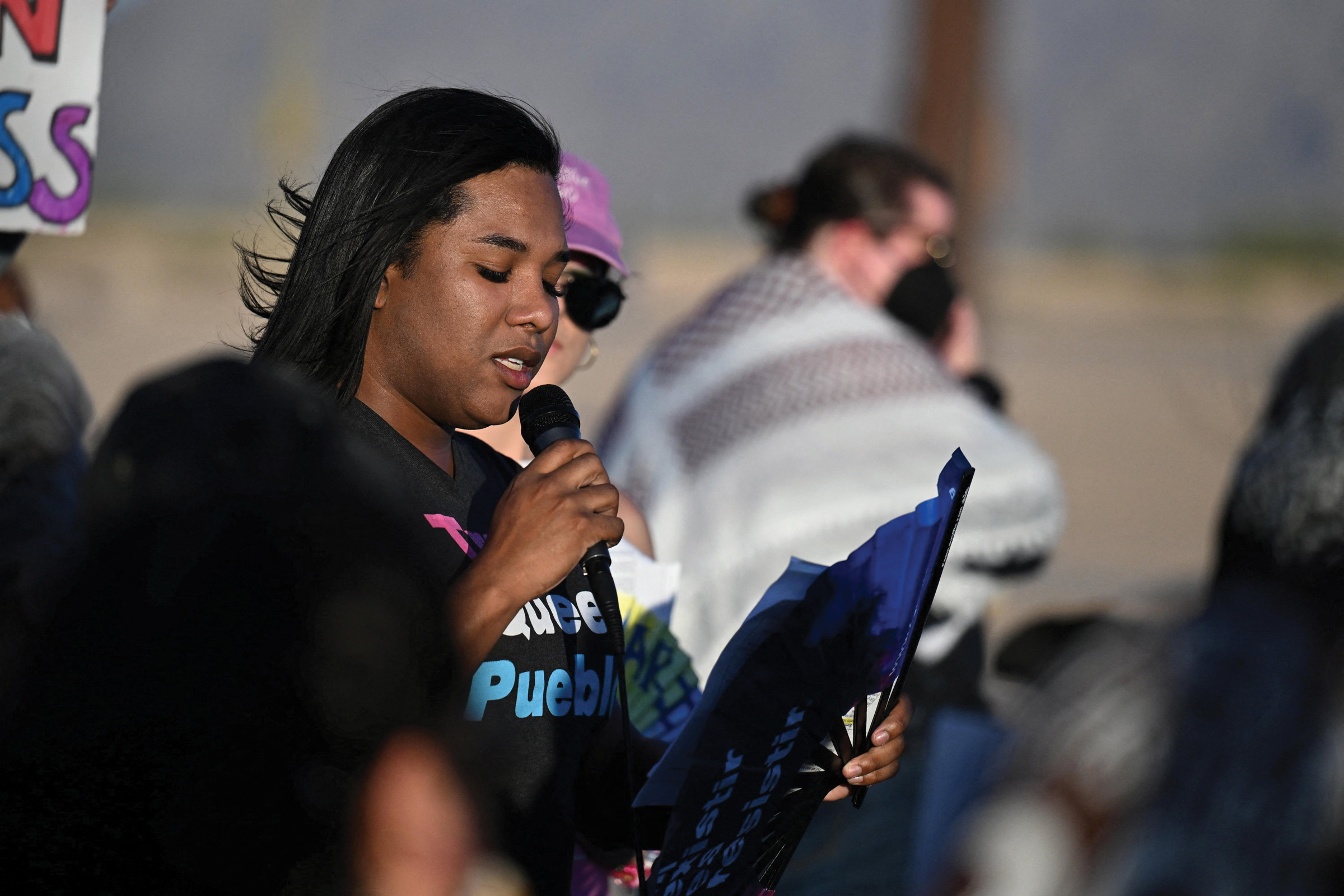
However, her journey took an unexpected turn in March of this year. Saenz, accompanied by a Trans Queer Pueblo volunteer, attended what she believed was a routine immigration check-in. Without explanation, an agent informed her she was being detained, plunging her into immediate despair. A week later, after a bewildering series of deprivations and transfers, she tested positive for COVID-19 and found herself in isolation within the very detention center where Márquez was held. She was mere hundreds of meters from the woman whose freedom she had championed for a year, yet tragically unable to communicate directly with her. After her isolation period concluded, Saenz spent the next six weeks in the men’s unit. Despite the physical barrier, a letter from Márquez, housed in the women’s unit, reached her, urging her to remain strong, assuring her of solidarity, and promising that both would eventually find freedom. Saenz recognized she couldn’t directly assist Márquez from within, but she realized there were other trans women in her unit who desperately needed her support.
The Eloy Detention Center, established in 1994, has historically been identified as one of the deadliest immigration detention facilities in the United States. Operated by CoreCivic, a private corrections company, the center’s stark facade is bordered by a sprawling, dusty parking area, marked by a sickly saguaro cactus near the company sign. It stands amidst ranches, a mere ten minutes from Eloy, a sun-drenched town of just over 15,000 residents, and close to three other CoreCivic-managed prisons. Beyond its double razor-wire fences and uninviting grey exterior, testimonies from the approximately 1,600 individuals detained there consistently paint a picture of inadequate medical care, unsanitary living conditions, physical abuse, and frequent lockdowns. Saenz corroborated these accounts, detailing how, after her initial five days of isolation, she spent weeks without receiving her prescribed hormone therapy or medication for a chronic illness. She reported widespread transphobia and poor food quality, lamenting that guards largely ignored her complaints.
In response to Saenz’s allegations, an ICE spokesperson issued a detailed email, notably referring to her by her deadname and using male pronouns. The spokesperson stated in English that her accusations "related to mistreatment and denial of medical care are wholly false." Citing patient privacy, ICE declined to comment on her COVID-19 diagnosis but maintained that Saenz lodged no formal complaints during her stay and was detained for missing scheduled interviews—a claim she vehemently denies. "Facility personnel treat all detainees equally, with respect and dignity," the ICE spokesperson wrote, emphasizing the word "all." The spokesperson further added, "Being detained is a choice," suggesting that unauthorized migrants should voluntarily leave the country.

Saenz’s detention occurred amid a significant surge in immigration enforcement. By early 2026, the number of entries into detention facilities had skyrocketed, exceeding figures from the same period the previous year by over 60%. For transgender individuals in custody, the situation is particularly perilous and obscured; ICE ceased publishing data on transgender people under custody in February 2025, making it nearly impossible for advocates to track or protect them effectively. This lack of transparency poses a severe challenge to human rights organizations monitoring conditions and advocating for vulnerable populations.
After Trans Queer Pueblo expanded its campaign to include Saenz alongside Márquez, and a detailed article was published in LOOKOUT, legal representation was secured for Saenz. Ultimately, after more than six weeks of detention, a judge ordered her release on April 21. She was freed the following day, and within half an hour, she met with a representative at the Wendy’s off I-10, about 45 minutes south of Phoenix, beginning to share her story. This narrative, compiled from three conversations—one by phone while she was still detained, one immediately after her release, and another several weeks later—traces the trajectory of her 44-day ordeal and underscores her unwavering refusal to be silenced.
Speaking from inside Eloy, Saenz described her state as "bad." When asked why, she explained, "Because it has been inhumane treatment, living with so many men, the discrimination and transphobia. They kept me isolated for five days because I supposedly had COVID, but I had no symptoms. They only let me out to shower, and I ate inside my cell. I couldn’t talk to anyone, I had nothing to do, I cried every day. I didn’t know what time it was. They brought me food at different times. Sometimes they didn’t bring it at all." She confirmed she was often hungry. "I have tried to stay very strong, I have tried to maintain my ideals, but it is very complicated to fight here alone against everything when there are no human rights, no respect, nothing."

Regarding her arrest at the U.S. Citizenship and Immigration Services office in Phoenix, after ICE claimed she missed required interviews, Saenz clarified, "The officer attending to me seated me separately [with a Trans Queer Pueblo volunteer], and told me we would do a verification in English. They took me to a room and asked my name, my address, and when I turned, there was an ICE officer with gloves who told me they had to detain me." She described the experience as terrifying. "They put handcuffs on my hands, my feet, my waist, they took me out the back like a criminal. And that’s when I started to cry and tremble from nerves." Trans Queer Pueblo members assert her detention was retaliatory for her advocacy for Arbella Márquez. Saenz agrees: "Yes, it is retaliation. It is a way of wanting to silence us, but they will not succeed. They have me detained without any cause, for being a trans woman, Black, an immigrant, for raising my voice, for not being afraid."
Now free, Saenz reflected on her time inside: "I have mixed feelings, but I know it’s disgusting. No one deserves to be in there, no one." When confronted with ICE’s denial that she was in solitary confinement, calling it "categorically false," Saenz countered, "It is not convenient for them for people outside to know what happens inside. There are no human rights. There is no respect for anyone, for no one. They do with us whatever they want. There are many people who are isolated, many people who are medicated [against their will], many people who are dying in there and they don’t care. They force you to sign a voluntary departure [an agreement to leave the country without formal deportation] and if you don’t, they throw you in a room and that’s it." She revealed that attempts to coerce her into signing a voluntary departure occurred "more than 10 times," each time met with her defiant refusal, tearing up the papers, fighting, and shouting.
Saenz confirmed there were three other trans women detained in Eloy, also housed with men. "We asked, please, to be treated as women. We have been fighting against transphobia. They called me ‘Mr. Carlos Saenz.’ I mean, I’ve been fighting for years with that, I’ve been fleeing from that and I ask, please, just respect my identity as a woman. I spoke with the manager, I spoke with everyone and they didn’t care." She explained the difficulty for the other trans women. "They wouldn’t let us be together inside. But the three of us would go out to the yards, and we would cry and laugh. They had been there longer than me. I defended them many times because it is very difficult to fight against a system and against the deeply rooted machismo of men, and I defended them because they were yelled at, humiliated. They are my sisters."

Looking ahead, Saenz declared, "I will continue fighting. Now in my heart, I feel a longing, I feel a desire because I was able to leave but my companions are still inside. They continue to experience that discrimination, that transphobia. I will continue fighting. The transphobia is very strong in there." Weeks later, the vivid memories persisted. "I remember everything. I remember pain, sadness, desperation, the inhumane treatment we received, the discrimination and racism we experienced from the CoreCivic guards. The transphobia is very strong in there. For example, you have to wear very loose clothing, you can’t tie a knot in your shirt, you can’t tuck your shirt in because the guards threaten you." She only received a bra about 15 days after requesting it, illustrating the constant waiting and denial.
During the long nights, the isolation, Saenz thought, "That I couldn’t give up, that I should share my knowledge with the other girls so they could defend themselves. I thought a lot about them." She found strength in the support of Trans Queer Pueblo. "But seeing them so vulnerable, how the male detainees treated them, how the guards treated them, I always thought about the talks I could give them to educate them, so they could have the tools to defend themselves against everything. I also got sad, I cried, but I never lost hope that I would get out of that place." There was no peace or tranquility inside. "There inside, we are the only feminine image; men tend to see us as a sexual object. So, when I had the opportunity to share with the other inmates, I tried to educate them and explain that we are women, that they must respect us as women. I taught them how to coexist with a trans woman." She never considered hiding her identity. "Never. I always stood firm that I was a trans woman, that I am Karla Saenz, and that I would not allow anything or anyone to steal my identity."
The trauma of detention lingers. "When I left, I was afraid to go out, to return to my daily life, and I felt very strange. I couldn’t sleep. I woke up crying. I feel that detention marked me deeply. Although I always appear very strong, although I always have the tools to know how to defend myself, I feel that no one deserves to live what is lived in there. It is hell."

Meanwhile, Arbella "Yari" Rodríguez Márquez, who remains detained, sent poignant drawings to her partner from the Eloy facility. After more than 17 months in custody, she has had minimal contact with the outside world and scarce exposure to sunlight. Lacking reading material, Márquez turned to art, creating detailed and revealing images of her prolonged confinement. Among them is a stark depiction of her cell, featuring coffins above the bunks, a grim illustration of the psychological toll inflicted by such conditions. Saenz’s story and Márquez’s art serve as powerful indictments of a system that continues to challenge the fundamental human rights and dignity of vulnerable migrants.