Roger Danuarta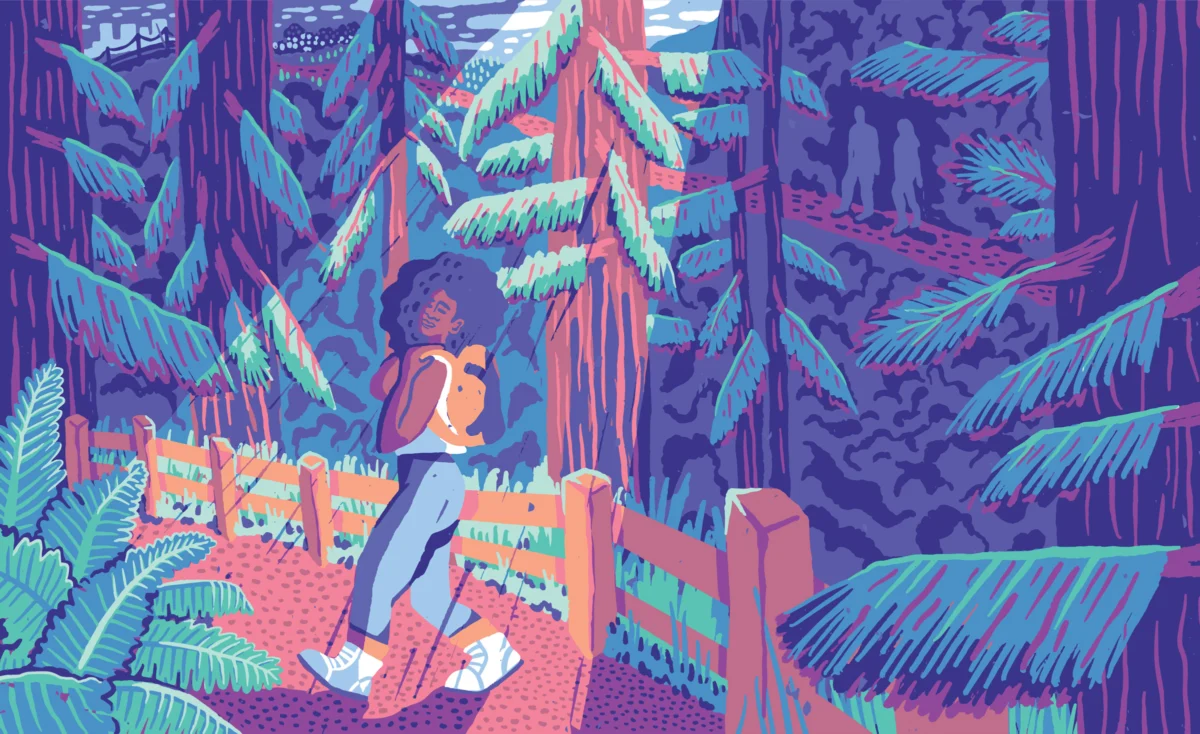
The stark realities of American history often cast long shadows, shaping individual and collective consciousness, particularly regarding access to and experience within natural spaces. For one nine-year-old, a PBS documentary series, Eyes on the Prize, offered a searing introduction to this legacy through the tragic story of Emmett Till, a boy barely older than herself, brutally lynched while visiting relatives in the segregated South. This horrific fate profoundly troubled her, prompting a direct question to her father: "Dad, did you ever know of anyone who was lynched?" His understated, yet potent, reply – "All the time" – resonated with a chilling finality, embedding Till’s story as a permanent fixture in her imagination. It was a foundational moment, initiating a lifelong contemplation of how systemic violence and racial prejudice have historically constrained Black existence and limited freedom, especially in what should be universally accessible outdoor environments. Over time, she came to understand how many outdoor spaces, ostensibly open to all, became implicitly exclusive, unwelcoming, and even deadly for Black Americans.
Yet, the human spirit often demonstrates an extraordinary capacity to hold multiple, seemingly contradictory truths. While the generational narrative includes the pain and peril of growing up under Jim Crow segregation, it also encompasses remarkable stories of resilience, agency, and joy. Her parents, for instance, transcended their Southern origins to build an extraordinary life in California. Their 14-acre hobby and recreation farm, complete with abundant fruit trees, a flourishing garden, and a swimming pool nestled in the oak-studded hills near Clear Lake, became an outdoor sanctuary. This refuge of respite and celebration exemplified a broader tradition among many Black families, who, despite systemic barriers, actively cultivated connections with nature. Their spirit of can-do determination and hospitality, expressed through tending animals, tilling the soil, and generously sharing the land’s bountiful harvests, mirrored a deeply rooted resistance and agency found within nature itself. This duality underscores a critical aspect of the Black experience: forging joy and community even amidst persistent systemic challenges.
Despite these triumphs of resilience, the themes of safety and comfort have remained persistent throughout her personal journey outdoors. These concerns frequently surface in conversations within Outdoor Afro, the organization she founded in 2009 to reconnect Black Americans with nature. Even today, amidst the cheerful signage of national parks and the communal glow of campfires, the question, sometimes whispered, sometimes voiced with urgent clarity, persists: Will we be safe here? This query extends beyond the overt threat of physical violence, encompassing the more subtle, yet equally impactful, forms of discomfort. A lingering stare, pointed and awkward attention, or a seemingly innocuous question about one’s presence in a particular place can convey a profound sense of not belonging, effectively undermining the feeling of safety.
A formative childhood incident vividly illustrates this subtle exclusion. At a youth church event in an affluent, predominantly white hillside neighborhood in Oakland, California, the initial joyous squeals of children exploring a playground beneath a stunning canopy of redwood trees gradually gave way to an unsettling shift. As the sun began to fade, a heavy scrutiny descended upon their group, cast by nearby adults. Nothing was explicitly said, yet nothing needed to be. The unspoken message was clear, signaling it was time to leave. This experience cemented an early understanding that some of the most consequential conversations in outdoor spaces occur in silence, communicated through non-verbal cues that convey suspicion, discomfort, or outright unwelcomeness.
Historically, the ability of Black Americans to access and enjoy public outdoor spaces was severely restricted, often by law and frequently enforced with violence. During the era of Jim Crow segregation, a picnic in a park, a swim in a municipal pool, or a day at the beach could be legally, and often brutally, prohibited based solely on race. The pervasive existence of "Sundown Towns" – communities where Black people were expected to leave by nightfall under threat of violence – created real, tangible barriers that profoundly shaped generations of memory, habit, and travel patterns. These invisible fences limited not just physical movement but also the psychological freedom to simply be in nature.
Before the Great Migration, when the vast majority of Black Americans resided in the rural South, many tenaciously pursued their connection to nature, often by creating their own destinations. Places like Idlewild, Michigan, Oak Bluffs on Martha’s Vineyard, and Lincoln Hills, Colorado, became vital hubs of enterprise, recreation, and community life. These self-sufficient havens drew Black families from across the country, offering spaces where they could recreate, relax, and thrive free from the pervasive weight of racism and discrimination. Here, Black entrepreneurs built and operated overnight inns, campgrounds, guided tours, outfitters, and programming for children, creating a robust infrastructure that served their communities and fostered a unique sense of belonging and cultural affirmation in the outdoors. These spaces were not merely alternatives; they were assertions of self-determination and vital expressions of Black cultural heritage.
During this period, The Negro Motorist Green Book, commonly known as The Green Book, became an indispensable pocket travel companion for Black Americans. Created by Victor H. Green, a New York postal worker, it meticulously listed safe havens along interstates – overnight accommodations, dining establishments, shopping venues, entertainment spots, and outdoor destinations – that welcomed Black travelers. Regularly updated, The Green Book was a testament to the necessity of collective knowledge and a tool for survival, allowing Black families to navigate a racially hostile landscape with a degree of safety and dignity. Its publication ceased around 1964, following the passage of the Civil Rights Act, as its publisher hoped the need for such a guide had finally passed. However, while legal segregation ended, the pervasive feelings of being unwelcome persisted, prompting many families to remain closer to home rather than risk testing uncertain territories. As Black Americans embarked on the Great Migration, moving in large numbers to Western and Northern cities, many of those historical safe enclaves either faded into obscurity, were sold, or disappeared through eminent domain, further complicating the relationship between Black communities and accessible natural spaces.

The uncertainty surrounding safety outdoors, particularly far from one’s own community or in remote public lands, thus endured. In 2020, amidst a season of heightened social and racial tensions across the country, she embarked on her first dove hunt in the sweltering heat of California’s Central Valley. Becoming disoriented, she found herself wandering through waist-high grass, surrounded by individuals who did not share her racial identity, many openly carrying loaded firearms. Her encounter with a man whose gaze was hard and measured triggered an immediate visceral response: goosebumps rose, and her first instinct was that her presence was unwelcome because she was Black.
However, with more years of public-land hunting experience, she has since re-evaluated that moment, recognizing her initial instinct was only partially correct. The man, likely having meticulously researched his spot, risen before dawn, driven a long way, and hiked in to stake out a prime hunting location, would have been understandably frustrated by her aimless intrusion into his carefully chosen ground. His coldness may have stemmed less from her identity and more from the competitive, territorial nature of the sport itself.
Indeed, continued experiences hunting, fishing, hiking, and camping on public lands have revealed a nuanced aspect of outdoor culture: seasoned outdoorspeople often guard their favored stretches of river, the ridge where elk are plentiful, or the serene flat on Bureau of Land Management land offering the perfect morning view. These prized spots are rarely freely shared with strangers. The outdoors can be subtly competitive, driven by a persistent concern that excessive attention on a good location will eventually diminish its quality. This protective attitude, while understandable within the subculture, can easily be misinterpreted as coldness or hostility by newcomers, even when it doesn’t carry an explicitly racial meaning. There is a quiet wondering that surfaces when no one around you shares your history, humor, and way of reading the world. This understanding offers a measure of grounding, helping to distinguish moments of perceived unwelcomeness rooted in identity from those stemming from the inherent competitive spirit of outdoor culture, or even the practical safety considerations present when firearms are involved.
Beyond the interactions with strangers, the very context of a place profoundly shapes the outdoor experience. Growing up in Oakland, her early experiences were also shaped by places like Joaquin Miller Park, where the diverse array of people hiking in the hills above the bay mirrored the city’s vibrant multiculturalism. This felt natural and right, a stark contrast to the unsettling childhood afternoon in the affluent park. This highlights how proximity to diverse communities can foster a different, more inclusive sense of belonging in nature.
Venturing further afield, however, often shifted this dynamic. At 20, undertaking a mountaineering expedition with Outward Bound, she found herself as the sole Black woman in her group. Trekking for miles along the iconic Pacific Crest Trail, a profound sense of isolation frequently accompanied her. That "quiet wondering" about shared history and perspective became palpable. Yet, in a moment of acute fear, pinned to a mountainside one night, her instructor’s simple yet powerful advice – "trust your feet" – sparked the courage needed to continue climbing toward the summit. This transformative experience underscored a vital truth: the feeling of isolation can, paradoxically, coexist with being profoundly supported.
In many ways, organizations like Outdoor Afro are carrying forward the spirit of The Green Book for a new generation. Just as Victor Green believed Black people deserved to move through the world freely and with dignity, building a practical tool to achieve that, Outdoor Afro is constructing a similar, albeit living, map. This map is drawn from the collective stories, shared experiences, and strengthening relationships that empower individuals to navigate unfamiliar places with confidence and joy. Where previous generations were often handed down painful memories of exclusion and danger, the present moment offers the profound opportunity to create and widely share new narratives of connection, confidence, and profound joy in the outdoors.
Every Black person who steps onto a trail today, casts a fishing line for the first time, wakes to the symphony of birdsong in a tent, or gathers around a campfire, carries forward a vital legacy. They embody the spirit and determination of those who built havens like Idlewild and Lincoln Hills, proving that nature is a birthright for all. Each invitation extended, every shared trip, and every inaugural outdoor experience serves to expand what the next generation believes is possible, gradually dismantling historical barriers and cultivating a truly inclusive relationship between Black communities and the vast, healing expanse of the natural world. This ongoing movement is not just about access; it is about reclaiming space, rewriting narratives, and fostering a deep, intergenerational connection to the land that is both liberating and empowering.