Roger Danuarta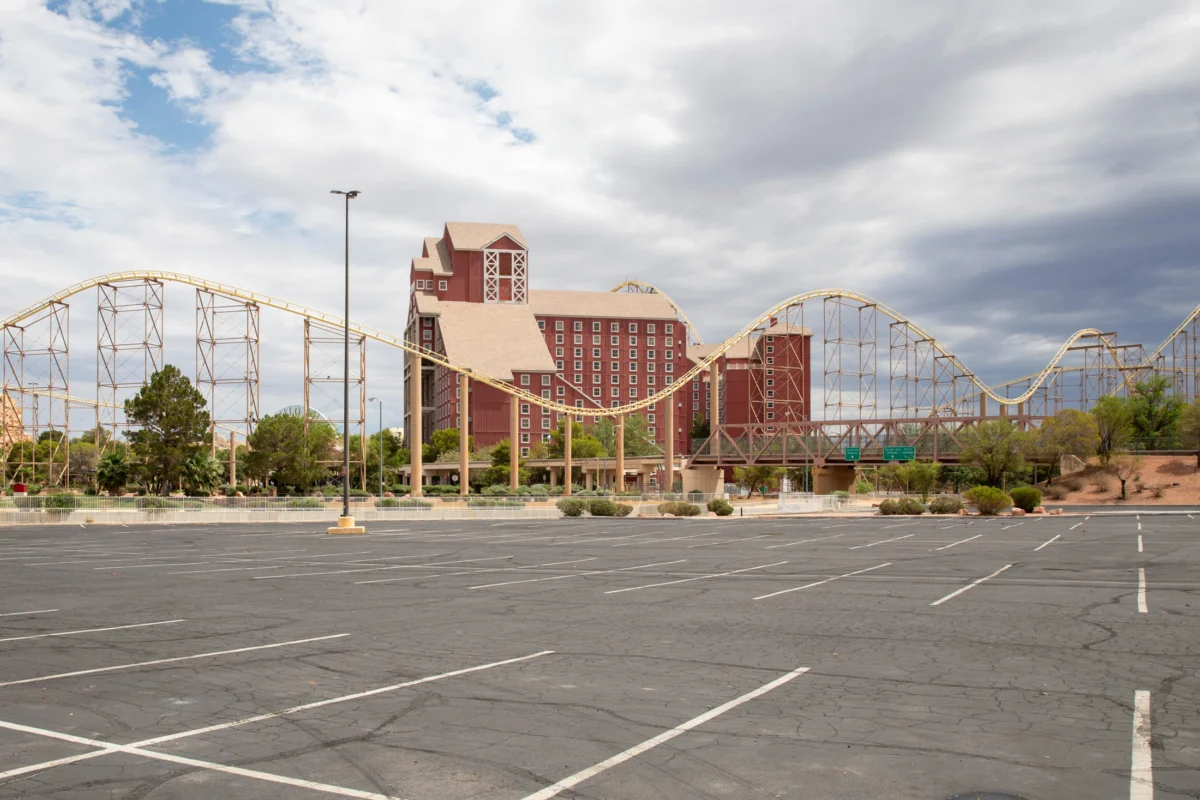
On what was widely believed to be the final Saturday night at the Primm Valley Resort & Casino, an eerie quiet descended upon the vast gaming floor, a stark contrast to its once-bustling heyday. The date, June 27, marked a poignant moment for employees like Melrose, a veteran casino worker who, with her distinctive curly hair and oversized cash belt, had dedicated 31 years to "protecting her games" in this remote company town situated on the Nevada-California border in the unforgiving Mojave Desert. The warm magenta glow from the remaining active slot machines cast long shadows across the plush, yet visibly worn, carpeting, a silent testament to countless footsteps and the passage of time. Only about thirty patrons wandered through a space designed to accommodate thousands, a skeletal presence hinting at the impending demise.
More than half of the casino games had already been powered down, their screens dark and silent. A single bar served a dwindling clientele, and the once-varied menu at the Bonnie & Clyde Diner was reduced to a meager offering of pizza and hot dogs. The escalators, a symbol of previous grandeur, had ceased functioning entirely in 2020, another sign of the gradual decline that had plagued Primm for years. The town, originally named State Line for its literal position straddling two states, was rebranded Primm in 1996, honoring the family who began developing its cluster of themed casinos in the 1950s. For decades, Primm served as a crucial waypoint, a glittering mirage for millions of travelers journeying between Southern California and Las Vegas, offering a last chance for entertainment and respite before the final stretch of desolate highway.
This particular Saturday, Primm Valley stood as the last operational casino in a town that once boasted three. Whiskey Pete’s, with its distinctive castle motif, had shuttered its gaming operations in 2024, though its associated gas station continued to serve passing motorists. The thrilling roller coasters at Buffalo Bill’s, a resort styled as a Western fantasy mining town, had been silent since the previous summer. As amenities diminished, so too did the crowds. Prizm Outlets, once a sprawling complex featuring over 100 retail stores, now housed only a single remaining shop, the Sanithrift. The Top 40 music, played a notch too loud, struggled to mask the diminishing bings and ka-chings of the few remaining slot machines. "Everything is going to be OK," Melrose murmured, a mantra of hope against the backdrop of fading neon and encroaching silence, as maintenance workers methodically wiped down buttons that no longer saw use.

The pandemic had dealt a severe blow to Primm’s already struggling casino floors, preventing a return to pre-2020 visitation levels. Yet, a collective shockwave reverberated through the tight-knit community on May 5, when Affinity Interactive, a regional gaming and hospitality company that had owned Primm’s properties since 2011, announced its complete withdrawal. The declaration stipulated the closure of all its Primm holdings – the resort, the casino, two gas stations, travel centers, and the Lotto Store – effective July 4. This abrupt decision delivered a devastating blow to the more than 300 employees who lived in the Desert Oasis Apartments, giving them a mere 60 days to secure new housing and employment.
Karine Fersch, a nine-year resident of Primm and an employee at the Sanithrift, vividly recalled a more vibrant past. "We had tourists from around the world, Californians, people in Nevada, and it was really busy," she lamented, expressing her panic at the prospect of displacement. Even the golf course where she once worked had ceased operations in 2025, its once verdant greens now sun-baked and barren, a stark visual metaphor for the town’s economic downturn. For three agonizing weeks following Affinity’s announcement, a frantic, desperate scramble ensued to save Primm. Rumors proliferated, fueled by social media posts and whispered conversations among the few remaining patrons. Regulars, hoping for one last game, rushed to play, some even throwing money and heartfelt notes into the glass-enclosed exhibit displaying Bonnie Parker and Clyde Barrow’s bullet-riddled car, a macabre yet iconic attraction at Whiskey Pete’s. A cashier named Lenoir at the Primm Center, a gas station with a dedicated slots room, shared a hopeful whisper: "I heard that MGM was going to buy it."
Then, at what felt like the eleventh hour, a miracle unfolded: Primm would, against all odds, remain open. However, for those who lived and worked there, the precise implications of this reprieve remained shrouded in uncertainty. The casinos in Primm, reflecting an older era of entertainment, were once immersive destinations, relying on spectacle and roadside allure to capture the attention of travelers. This business model, however, struggled to compete with the emergence of mega-resorts in Las Vegas and the increasing prevalence of online gaming and diversified entertainment options across the country. Primm’s decline mirrored a broader shift in traveler behavior and a shrinking traditional tourism market in Southern Nevada. In 2025, Las Vegas itself experienced a 7.5% drop in visitors—the largest non-pandemic-related annual decline since the Las Vegas Convention and Visitors Authority began tracking visitation in 1970—despite generating more revenue due to inflated pricing.
The original Primm family, who retained ownership of the land beneath the casino properties, publicly condemned Affinity’s decision, recognizing that it would effectively dismantle the entire town. Cory Clemetson, grandson of founder Ernie Primm, issued a statement on behalf of the family, expressing profound disappointment that Affinity had not done more to ensure continued operations and lamenting the lack of prior notice. Their deep roots in the desert, however, proved pivotal. On June 9, the Primm family struck a deal with Terrible’s, a prominent chain of gas stations and travel centers owned by the Herbst family. The Herbst family, with their "Terrible’s" brand deeply woven into Nevada’s roadside landscape for decades, understood the unique economic ecosystem of these desert waypoints. This agreement not only secured the continued operation of Primm Valley Resort but also promised a much-needed facelift for the town, including the planned reopening of Buffalo Bill’s for weekend concerts. Crucially, employee apartment leases would not be terminated, and workers would retain their jobs.

The survival of Primm stands in stark contrast to the fate of other struggling desert towns. Nearby Jean, for instance, lost its longtime casino, Nevada Landing, in 2007. That property was subsequently demolished for a planned community that never materialized, leaving Jean with little more than an airport, a post office, a now-closed prison, and two Terrible’s gas stations, one famously alien-themed. The Herbst family’s intervention in Primm underscored their commitment to these vital, if often overlooked, nodes of commerce and community in the vast emptiness of the American West.
In late June, the Nevada Gaming Commission, recognizing the urgency and the human impact, held an emergency hearing and swiftly approved the licensing transfer, allowing the deal between the Herbst and Primm families to proceed. In the days leading up to the original July 4 closure date, Primm’s slot machines were methodically drained of their cash, and rows of electronic gaming screens went dark as the casino prepared for the ownership change. For the few remaining employees who had not yet worked their final shifts or sought opportunities elsewhere, a glimmer of hope for a future at Primm Valley emerged.
Yet, the precise details of this new era remained frustratingly vague. Would the casino and travel centers be rebranded under the Terrible’s name? A cashier at one of the gas stations simply shrugged and giggled when asked, highlighting the pervasive uncertainty. The wall-to-wall refrigerators at the gas station and the Primm travel center stood nearly empty, the beer cave cleared, and only a few discounted bags of El Chavito spicy mango candies remained as the last vestiges of a once-full stock. An employee who had worked and lived in Primm for 28 years stood alone in the roadside slot parlor within the travel center, clad in a turquoise button-up uniform, surrounded by dark, progressive slot machines, only one of which still pulsed with light.
On the evening of June 28, as Affinity Valley’s operations wound down and Terrible’s prepared to take over, no one seemed to have a clear picture of what would happen next. "Everything closes at midnight tonight," one diner speculated at the Bonnie & Clyde, "Even the games." Two women at the casino bar asked the bartender about the reopening date. "No idea," he replied, twisting the cap on an orange juice bottle, a simple gesture reflecting the broader lack of information. (Both Terrible’s and the Primm family declined requests for comment during this period of transition).

But that night, at the stroke of midnight, the games stayed on. The Top 40 songs continued to play. A man in a cowboy hat cashed out at the bar, tipped his hat, and vanished through the casino doors into the desert summer night—a fitting, almost cinematic image for a place precariously balanced between its past and an uncertain future. Seventeen days later, on July 22, a video posted to Facebook officially announced Primm Valley’s reopening. The footage showed a jubilant crowd streaming through the automatic sliding glass doors, pumping fists and clapping, some capturing the moment on their phones. The casino floor, despite the unseen administrative and licensing switchover that had nearly shut down the entire town, appeared largely unchanged. The dramatic episode served as a stark reminder to its workforce that their livelihoods and homes, even in a company town, remain subject to the whims of corporate balance sheets and the ever-shifting sands of the global entertainment economy. Primm, the gateway to Nevada, had once again stared down the abyss, clinging to a tenuous rebirth in the heart of the Mojave.