Rocky Gerung
The seemingly sudden appearance of a film crew in Livingston, Montana, transformed a quiet residential street into a scene of simulated conflict in late September, sparking a national conversation and a local reckoning. Orange-and-white traffic barricades cordoned off the normally tranquil neighborhood east of Livingston’s historic downtown, as cameras began to roll on scenes depicting Antifa rioters and U.S. Immigration and Customs Enforcement (ICE) officers engaging in simulated combat, complete with the pyrotechnic destruction of a vehicle. This on-set spectacle soon spilled over into the real world, as local protests erupted against the film, and the online discourse surrounding it intensified, drawing in a global audience. The production, operating under the working title Pawn Shop, features notable actors like Danny Trejo and Harvey Keitel, and its distribution by The Daily Wire, a conservative media outlet, further amplified its political charge. The Daily Wire explicitly markets its platform as a sanctuary from "corporate influence and Leftist ideology," positioning the film as a counter-narrative within the broader cultural landscape.
The controversy surrounding Pawn Shop quickly transcended its cinematic scope, evolving into a proxy battleground for deeply divisive national issues, including immigration policy, the boundaries of free speech, and the widening chasm of the American political divide. This national polarization found a microcosm in the small southwestern Montana town of approximately 9,000 residents, nestled just north of the iconic Yellowstone National Park. Even weeks after the cameras stopped rolling and the initial online fervor subsided, Livingston residents and their elected officials continue to grapple with the implications of the production, particularly the extended street closures, staged gunfire, and explosions, which many believe exposed significant gaps in the city’s planning and regulatory frameworks.
"There’s a lot of checks and balances that were missed here," commented Brooklyn Wilde, a protester whose social media posts on Instagram and TikTok played a significant role in amplifying awareness of the film’s controversial nature across the country. This sentiment has resonated with many in the community, leading to calls for a comprehensive overhaul of the city’s film regulations. The incident has prompted broader discussions about how local governments can effectively balance the economic benefits of film production with the imperative to protect residents’ quality of life and uphold principles of free speech. Investigations involving community members, city officials, independent producers, and permitting experts have shed light on a permitting process and a municipal government that many observers found ill-equipped to handle a production of Pawn Shop‘s scale and controversial subject matter. However, the producers of Pawn Shop maintain that the city’s process was not deficient.
Lead producer Dallas Sonnier asserted in an email, "The culture vultures protesting our movie are hiding behind a permitting regulatory process as a way to bludgeon their city commissioners into submission," adding, "This protest was 1,000% political from the start."
In the initial days of filming, Keegan Nashan, a prominent activist in her early thirties, actively encouraged residents via social media to disrupt the production. Her call to action was met with a wave of local responses, including car horns blaring and car alarms sounding along the affected streets, while some neighbors resorted to operating power saws and playing loud music. Small but vocal groups of protesters frequently gathered near the set, their presence a constant reminder of the burgeoning conflict.
Nashan and other concerned residents were particularly disturbed by the film’s perceived pro-ICE stance. While many would later voice broader concerns about city planning and regulatory oversight, the initial focus for many protesters, armed with a leaked script that Mountain Journal and High Country News also reviewed, centered on the film’s narrative. The script reportedly portrays undocumented immigrants in a largely negative light, characterizing them as criminals, rapists, and gang members, while casting legally immigrating individuals as protagonists. A specific scene that ignited considerable ire depicted an ICE agent fatally shooting a protester through her windshield, an act the film frames as justified. For many, this scene bore a chilling resemblance to the real-life killing of Renee Good, who was shot and killed by ICE agents through her windshield in early 2026, an incident that had already drawn significant public attention and criticism.
Ben Shapiro, founder of The Daily Wire, acknowledged the film’s political leanings in a YouTube video discussing the controversy, stating, "The movie is pro-ICE for sure." Producers declined to comment on specific plot details, citing a desire to avoid spoiling the cinematic experience for audiences.
The production’s presence in Livingston was facilitated, in part, by real estate developer and filmmaker Carter Boehm, who serves as an executive producer on Pawn Shop and co-owns the Yellowstone Film Ranch located a short distance south of the town. Boehm explained that producers approached him about using a building he owns in downtown Livingston as the film’s primary "hero location." He maintained that his personal political views did not influence his decision and that he did not anticipate the controversy that might arise from filming a movie that seemingly glorifies ICE operations in a public space. "I really didn’t give a shit," Boehm stated, emphasizing his focus on the economic benefits the production brought to the town. Tina Kilborn, a property manager who provided catering and housing for the cast and crew, expressed bewilderment at the backlash, welcoming the business opportunity. "This is all pretend," Kilborn remarked, drawing parallels to fictional characters in other films. "It’s just a movie. You guys know that Darryl Hannah isn’t really a mermaid, right? You know that Leonardo DiCaprio wasn’t on the Titanic. Where is all this anger coming from?"
During the early stages of filming, Nashan directly confronted the production on set, her amplified voice, recorded and shared online, shouting into a microphone and disrupting instructions from a stunt coordinator. Producers later cited this incident as creating dangerous conditions and compromising the safety of the actors. Nashan, however, defended her actions as an exercise of her freedom of speech, stating she was unaware at the time that she was endangering workers. She acknowledged her approach was forceful, admitting, "Maybe not my best moment, honestly."

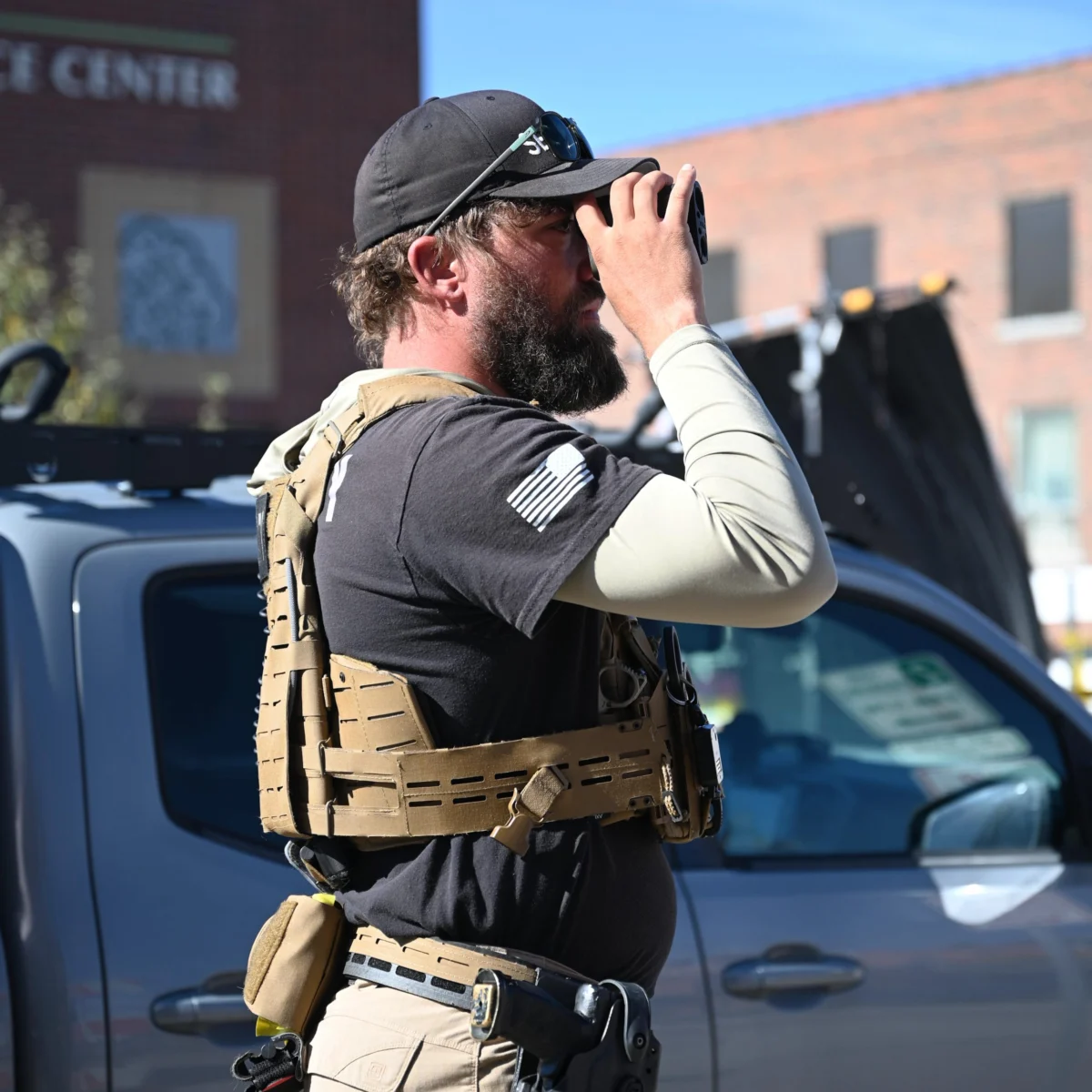
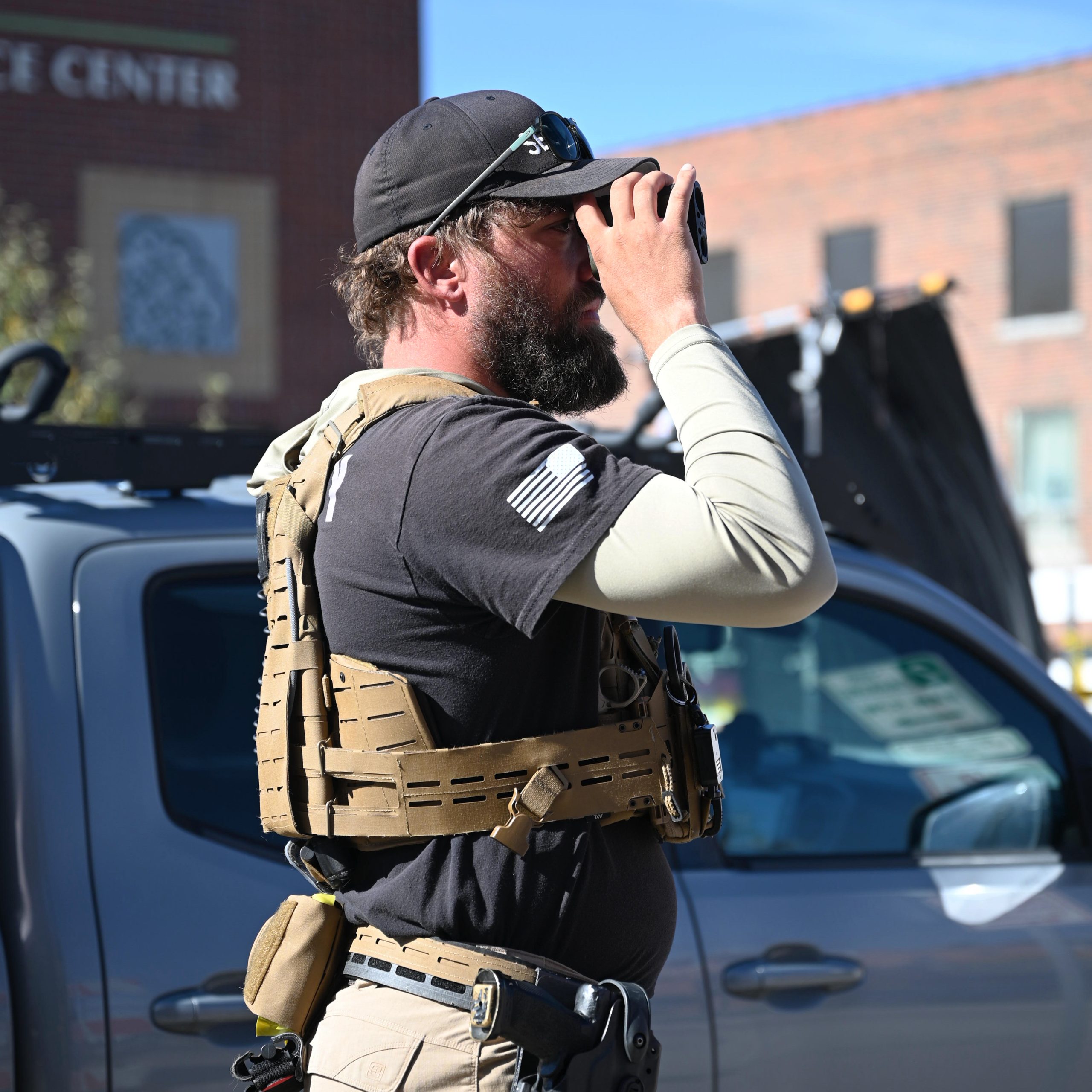
In response to initial protests, which included an incident where a vehicle reportedly drove onto the set, producers requested and received approval for expanded street closures and hired six private security guards. These guards, equipped with bulletproof vests and firearms, became a focal point of concern for protesters and some residents, who felt their presence escalated tensions and created a paramilitary atmosphere. Quenby Iandiorio, a Livingston-based musician and protester, described the guards as "paramilitary" and noted their resemblance to ICE patrols. When questioned about this comparison, lead producer Sonnier responded with a dismissive, "No idea." Iandiorio, in turn, wore a neon orange vest emblazoned with "Peaceful Observer Do Not Shoot," a symbol adopted from protests following the ICE killings of Good and Alex Pretti in the Twin Cities.
Producer Amanda Presmyk addressed the Livingston City Commission, stating, "We increased security because protecting the people working for us is our responsibility. That is very different than bringing armed security personnel into town to intimidate the public." The online sphere became a breeding ground for further animosity, with social media posts and news coverage reaching millions. In Livingston, a local coffee shop faced a barrage of one-star Google reviews after a white nationalist group targeted an anti-ICE sign displayed in their window. Both producers and protesters reported receiving death threats and experiencing doxxing, contributing to a pervasive sense of fear fueled by the hostile digital discourse. By the conclusion of filming on October 10th, Nashan and at least five other individuals had received criminal citations, primarily for charges such as disturbing the peace and disorderly conduct.
Kaya Patten-Fusselman, Executive Director of the Livingston Food Resource Center, observed the construction of the film’s titular pawn shop facade across the street from her office prior to the commencement of filming and protests. Her organization, a vital food pantry, serves one in every eight residents of Park County, many of whom are among the area’s most vulnerable populations. Patten-Fusselman recounted having to contact the city to ascertain the nature of the production, only to discover that her building was within the designated set closure area. She received direct notification from producers on September 22nd, mere days before filming began. Typically, her organization requires at least a month’s notice for any event that could impact client access to services. In this instance, she stated she had minimal time to react and no input into the subsequent developments. "I had no way of saying, ‘No, you can’t do this,’" Patten-Fusselman lamented, "I wasn’t part of that conversation." Producers, however, countered that they adhered to the city’s directives, reporting daily communication with the food pantry regarding service disruptions during commission testimonies.
As the production shifted from a residential area to the downtown vicinity of the food pantry, armed security guards reportedly halted vehicles attempting to access the pantry, according to multiple sources. Additional street closures exacerbated confusion regarding patron access to essential services. Patten-Fusselman noted that some patrons, deterred by the scene, turned away, leading to an eight-week low in attendance at the food pantry during the filming period. Instead of focusing on the film’s political content, Patten-Fusselman, alongside hundreds of other community members, attended two lengthy city commission meetings in October to voice concerns about the production’s impact on residents. She and others argued that Livingston had not adequately prepared for the community disruption and that its regulatory processes were insufficient for a shoot that necessitated two and a half weeks of street closures. "We have clients who live in their cars in the valley who we didn’t see for three weeks, who don’t have access to housing, who were too scared to come," she stated. "In the absence of policy, where does human decency come in?"
Patten-Fusselman and other residents who had not been involved in the protests began to question the fundamental approval process for a production of such magnitude. At the packed public meetings, commissioners heard from both concerned residents and supporters of the film. Protesters like Nashan stood alongside community members like Patten-Fusselman, raising concerns about city planning and community safeguards that were distinct from the film’s narrative. "Ryan Gosling could be riding a unicorn in the streets," community member Bex Frucht told commissioners. "If one child missed their macaroni and cheese or one grandma couldn’t get to her groceries, I would say the same thing: Shut it down, revoke the permit."

During the initial meeting, the commission voted to temporarily halt the permit. However, the filmmakers’ attorney, Matthew Monforton, issued a legal threat, alleging that Livingston residents opposed to the film’s subject matter had orchestrated a "sustained, escalating campaign of intimidation and sabotage" and that the production pause violated the First Amendment. Faced with this legal challenge, city commissioners reversed their decision. Filming resumed under revised conditions, which included directives to focus security personnel on cast and crew rather than residents, ensure continued access to the food pantry, and shield simulated violence from public view.
The Livingston City Commission was not directly involved in the initial permitting process. City Manager Grant Gager reviewed and approved the permit, but he did not respond to repeated requests for interviews. According to public records, Pawn Shop producers submitted Livingston’s three-page filming questionnaire to Gager on September 9th, less than two weeks before the shoot was scheduled to begin. An urgent follow-up email from the filmmakers arrived the afternoon before filming commenced, and Gager responded approximately 15 minutes later, granting approval with a set of conditions. The following day, Livingston’s Public Works Director, Shannon Holmes, instructed producers to notify area businesses and residents of the closures, specifically recommending communication with the food pantry.
The producers’ application did not mention a security team, with their response to the "What are your security plans?" question being "N/A." The city’s application form lacks specific requirements for notifying neighbors, instead posing the question, "Have local neighborhood groups/businesses been notified of your event concept?" Producers answered "Yes" to both, indicating ongoing notification efforts. Nonetheless, Patten-Fusselman maintains that Livingston’s planning process failed the community due to inadequate resident notification and an excessively short timeline. In Livingston, a single-day street closure for a special event typically requires at least six weeks’ notice, whereas Pawn Shop provided less than two. The food pantry, she argued, was an afterthought in this process. "Sometimes, we don’t know that we’re missing something until something goes wrong," Patten-Fusselman stated. "The green-lighting of a permit that blocks access to an essential service went wrong."
Across the United States, cities employ a variety of approaches to regulate filming activities. Some larger municipalities maintain dedicated film offices, boards, or commissions, while smaller municipalities often operate with less staff and more informal processes. In Montana, Livingston and Bozeman are the only cities with established film permitting procedures. Conversely, some regions actively promote a lack of stringent regulations to attract productions. However, where regulations are in place, they typically serve to protect the public. Bozeman, for instance, requires filmmakers to obtain written permission from the police department for scenes depicting violence and similar authorization from local businesses affected by street closures. Boise, Idaho, mandates that producers notify all residents within a 300-foot radius of the production site. In Atlanta, Georgia, regulations are even more protective, requiring notification of residents within three blocks and the collection of signatures in "sensitive areas." Some cities also implement tiered regulations based on the duration and impact of shoots. In Everett, Washington, "high-impact" shoots necessitate advance sign-off from affected neighbors at least 72 hours prior to filming. While public comment on film permits is not a common occurrence, representatives from FilmUSA note that it does happen on occasion. In Pasadena, California, any resident can request a public hearing for "long-term" shoots exceeding six days in residential neighborhoods.
Despite the community’s concerns, Pawn Shop producers do not believe the permitting process was mishandled or that it was unusually lenient. "Don’t overestimate the permitting process here as a factor for why anyone shoots a movie in Livingston," Sonnier stated via email. "That process is relatively standard in all places except major cities like Los Angeles where they are over-regulated and politically hostile."

Ultimately, Patten-Fusselman felt that the producers exploited the city’s lack of preparedness. She argued that the heightened discourse surrounding the film’s political content overshadowed critical concerns about governmental oversights and their impact on affected individuals. In response to this sentiment, Sonnier retorted, "Anyone hiding behind the ‘permitting process gone awry’ excuse is a liar." Patten-Fusselman countered, "Inflammatory rhetoric is easier than nuance." Following the conclusion of filming, the food pantry saw an increase in daily visitors, from approximately 80 households to over 100, a poignant illustration of the production’s tangible impact.
Livingston is no stranger to the film industry; its scenic landscapes served as the backdrop for A River Runs Through It in the early 1990s, igniting interest in Montana as a filming destination. More recently, the television series Yellowstone has further boosted cinematic attention in the Greater Yellowstone Ecosystem. However, prior to Pawn Shop, the town had primarily hosted productions requiring only brief street closures. In his four years as City Manager, Grant Gager testified to commissioners that he had processed only a handful of film permits, most of which went largely unnoticed. The most significant shoot he had handled before Pawn Shop involved a car commercial requiring a two-and-a-half-hour intermittent road closure on a Saturday morning. The city, therefore, possessed limited experience with a production of this magnitude and duration, particularly one that would provoke such intense public backlash, making the fallout difficult to fully anticipate.
"When something goes wrong, one side always wants to blame the other side," observed Tony Armer, co-director of FilmUSA, an advocacy group for film commissions. He suggested that critics could fault the production company for not being considerate neighbors or city officials for insufficient inquiry and transparency, concluding, "But there’s more than enough blame to always go to both parties." Gager described a "gray area" within Livingston’s city code regarding responsibility for administering film permits. He took the lead, asserting that his decisions aligned with past permitting practices. Gager acknowledged that the Pawn Shop production was, at times, "out of compliance" with its permit, citing an instance of profanity-laden graffiti on set. He stated he worked with the production team to rectify the situation.
In at least one instance highlighted by the public, Gager’s decisions may have contravened Livingston ordinance, which prohibits the firing of any firearm within city limits. While the city’s film application does not inquire about plans to fire blanks, Gager implicitly authorized such activity by requiring the film crew to notify the Livingston Police Department beforehand. Livingston Police Chief Wayne Hard confirmed to Mountain Journal and High Country News that this notification process was followed "every time they used blanks." However, Dan Clark, director of Montana State University’s Local Government Center, suggested that allowing blank firing should have necessitated sign-off from the city commission. He drew a parallel to ordinary events like waiving open container restrictions for music festivals, arguing that firing guns, even on a film set, requires review from the city’s legislative branch if it otherwise conflicts with city law. Chief Hard declined to comment on whether he was consulted regarding the legality of firing blanks, and City Attorney Jon Hesse did not respond to a similar request. Clark noted that if Gager erred in his decision regarding blank rounds, it would further underscore the "gray area" he identified concerning film permit administration. He questioned whether staff should handle such permits without public input or if commissioners should deliberate these aspects in public meetings, noting that friction between different branches of local government is not uncommon. "Life changes, things evolve," he commented.
In response to these concerns, Livingston commissioners indicated a need to update their regulations. During an October 3rd meeting, Commissioner James Willich described Pawn Shop as a large-scale production that highlighted the absence of corresponding large-scale policies in Livingston. "I think we need to take a real hard look as a community and as the city entity. How do we move forward?" he asked. "We’ve got a spotlight on the holes we’re missing, our loopholes. They were pointed out to us glaringly." Approximately two weeks later, the city commission moved to expedite the overhaul of the city’s film-permitting process. Officials and residents, however, remain divided on the precise nature of these perceived loopholes. Commissioners have been reticent to elaborate on their specific concerns to the press, but many residents interviewed expressed a desire for greater public notification, particularly for events that could disrupt daily life. In a brief interview, Commissioner Jessica Wilcox stated that Livingston requires a more robust public engagement process for regulating movies but declined to comment further until the policy-making process concluded. Other commissioners declined repeated interview requests, directing inquiries to the public record.

The political ramifications of the shoot continue to unfold. In early November, commissioners requested the resignation of City Manager Gager, who complied less than a week later. During a public meeting regarding his departure, commissioners cited communication and accountability breakdowns, along with differing long-term visions for the city, as reasons for their decision. Without specific details, community members publicly debated whether Gager’s decisions related to Pawn Shop were a contributing factor. Gager did not respond to requests for comment regarding his resignation.
More than a month after filming concluded, the pawn shop facade, set barricades, and armed security guards have been removed. Boehm indicated that Pawn Shop is slated for a February 2027 premiere, but unlike previous productions filmed near Livingston, it is unlikely to debut in the town itself. Nevertheless, he asserted that the producers benefited significantly from the media attention. "It’s the best thing that could happen," Boehm stated, noting that the extensive coverage and public outcry brought the movie to the attention of millions who might otherwise have remained unaware of its existence. He further shared that The Daily Wire reported new subscriptions had already covered the film’s $1.5 million budget. "I guess I should thank Keegan [Nashan] for that," Boehm remarked, adding, "I won’t."
Nashan expressed mixed feelings about her role in the protests and is currently contesting her criminal charges. She felt a moral imperative to hold the production and its security team accountable, stating, "If you say nothing, then you are complicit, and I refuse to be complicit." However, she also expressed regret for inadvertently drawing attention to the production, admitting, "Shame is maybe too strong. But I feel sort of upset by doing that inadvertently, and wish I’d had a bit more forethought on how to go about doing what I’d wanted to do." She concluded with a sigh, "But it’s all done."
The question of whether to return to Livingston for future productions remains. When asked by Mountain Journal and High Country News if he would consider filming in Livingston again, lead producer Sonnier responded enthusiastically via email, "You bet we will!" He cited filmmaker Sam Peckinpah, known for his graphic and often visceral depictions of violence, who spent his final years in a Livingston hotel, suggesting, "Peckinpah wouldn’t have it any other way."