Rocky Gerung
The ephemeral beauty of two sacred datura blossoms, unfurling precisely at midnight on the occasion of a full moon wedding, marked a moment of profound connection for the couple who had carefully cultivated the toxic nightshade from seed. This unexpected and exquisite flowering, particularly on such a significant personal milestone, felt like an act of pure magic, perhaps orchestrated by the unseen forces within the garden’s soil. The journey with Datura wrightii, known for its potent psychoactive properties, began a year prior when its spiky seed capsules were opened, scattering deliriant seeds throughout their landscape.
The following morning, as the deep-throated, trumpet-shaped flowers began to droop after a night of dedicated work by numerous sphinx moths, a poignant scene unfolded amidst the remnants of the celebration. While clearing away discarded Mexican lagers and sticky churro sugar, a juvenile cottontail rabbit was discovered with a bleeding chest, appearing as if it had been offered as a sacrifice. The rabbit was likely a victim of a recently hatched rattlesnake, an encounter where the predator may have bitten off more than it could manage. Despite an offering of water, by the time the last of the chairs were stacked, the small creature had passed away. Transporting the kit to the wash, the author gently covered its eyes with dried chia seeds, creating a small memorial alongside quartzy granite and datura leaves—a ritualistically observed practice of honoring deceased animals and aiding their transition to the spirit world.
Weeks later, the lingering visions of the luminous white datura blooms and the departed cottontail coalesced in the author’s mind during a visit to the Palm Springs Art Museum with their husband. The journey down the Twentynine Palms Highway, descending over 4,000 feet, led them to an exhibition titled "A Queer Arcana: Art, Magic, and Spirit." This compelling exhibition showcased over a century of work by LGBTQ+ artists who have explored themes of spirituality, magic, and the ethereal in their paintings, sculptures, performances, and photography. This exhibition is not an isolated event but reflects a growing trend in the art world to highlight alternative spiritualities, following similar exhibitions such as "QUEER MAGIC" in Santa Fe in 2023 and "Sci-fi, Magick, Queer L.A." in Los Angeles in 2024.

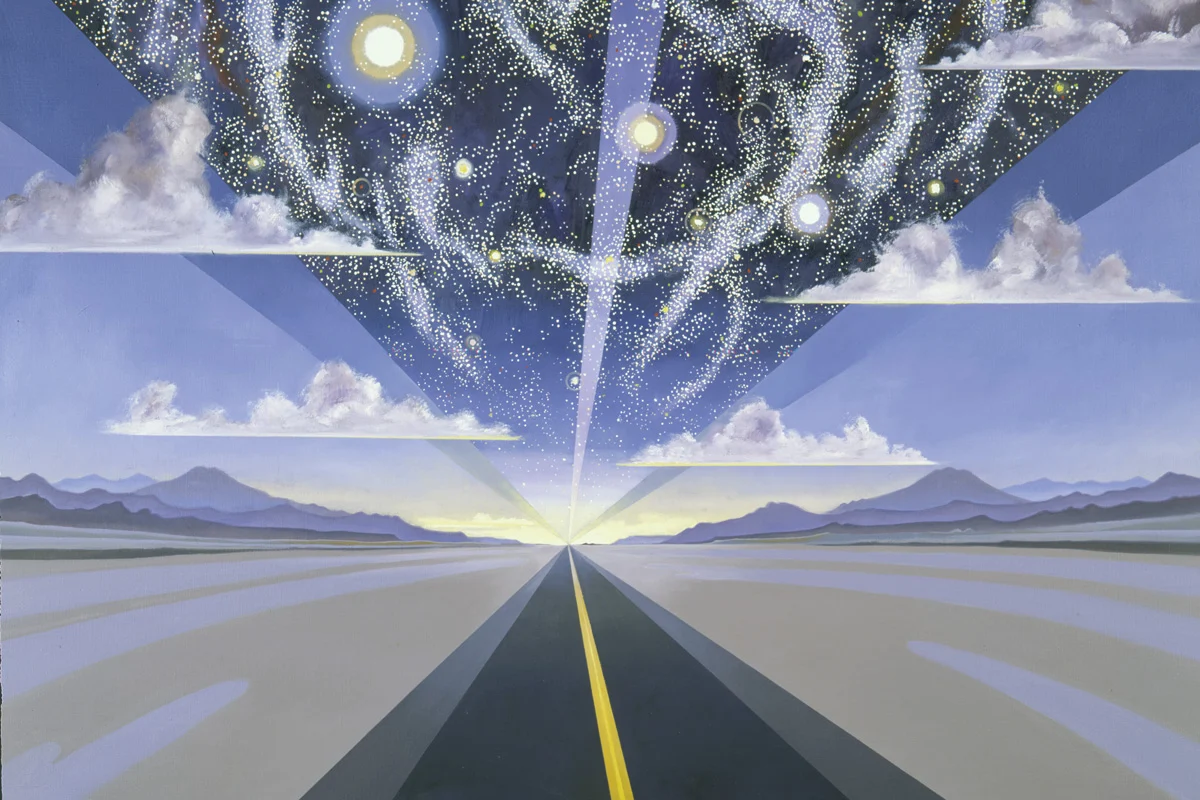
Many of the artists featured in "A Queer Arcana" maintain deep connections to the American Southwest and California, landscapes renowned for their spiritual resonance. The region’s characteristic vortices, boulder fields, and expansive, dark skies have long attracted seekers and mystics to places like Joshua Tree, Sedona, Arizona, and Crestone, Colorado. These spiritual landscapes often serve as backdrops for the artists’ works, which frequently incorporate body-centric and fantastical imagery, seemingly piercing the "thin veil" that separates the physical and spiritual realms. Ingo Swann, a native of Telluride, Colorado, contributes his 1986 painting Proto Adam, depicting a cosmic go-go dancer emerging from a desert river, while Clarity Haynes’s 2022 artwork, Altar for Laura Aguilar, offers a pastel tribute to the late photographer, incorporating images from Aguilar’s evocative nude desert self-portraits. Eric-Paul Riege’s chestplate [3] (2026), a more subtly rendered black-and-white textile, weaves together traditional Diné beliefs with his personal experiences of queerness.
The exhibition extends its exploration with diverse artistic expressions, featuring pieces that depict cosmic 69s, clandestine occult gatherings, and even aliens rendered with such exaggerated anatomy that their appendages appear to possess an independent sentience. Complementing the visual arts, a collection of magazine archives delves into the realms of witchcraft and New Age goddess worship, offering further context to the exhibition’s thematic depth.
As curator David Evans Frantz articulated in a press release, "Queer artists, activists, and cultural producers have long sought spiritual practices outside the mainstream to affirm their identities, build community, and envision new ways of being in an often-oppressive world." Upon entering the exhibition, visitors are greeted by large text on a deep wine-colored wall referencing the influential work of Gloria Anzaldúa, a queer Chicana poet and theorist. Anzaldúa, who described herself as a "spiritual mestiza," understood spiritual seeking as an inherently queer method of engaging with the world and the infinite.
A particularly captivating piece within the exhibition was Edgar Fabián Frías’s Give Us Home Spider: Ritual 5: TXI Cement Quarry, Bloomington, CA (2017). Donning headphones and focusing on a wall-mounted television, the author found themselves mesmerized by this video installation, which served as an open portal into a deeply resonant ritual. Frías, who identifies as a brujx—a gender-neutral Spanish term for a practitioner of magic—and is a descendant of the Wixárika people, organized a series of rituals across Southern California. These ceremonies were designed to confront environmental racism and health disparities, issues that directly impacted Frías’s upbringing in close proximity to the TXI Cement Quarry. The quarry’s operations exposed the local community to hexavalent chromium, a known carcinogen and a contributor to autoimmune diseases. In the video, Frías and thirteen other healers, adorned in vibrant fluorescent attire, engage in a ritual that includes playing a drone pipe to a techno beat, digging holes in the earth, vocalizing with cackles, and consuming pomegranates.

This ritual, performed nearly a decade prior to the exhibition, resonated with profound prescience, particularly as smoke from the Lineage Fire in Los Angeles’s Boyle Heights drifted across Southern California. The fire released toxic fumes from a food-storage empire, a stark reminder of the pervasive environmental injustices that plague communities. Frías’s ritual serves as a powerful call to acknowledge and address past harms in the present moment to foster a more intentional future. Regardless of individual spiritual beliefs, recognizing the damages inflicted upon both humanity and the Earth is paramount. At a minimum, confronting denial can offer solace and inspire meaningful actions to combat injustices. Sometimes, this may simply involve pausing to acknowledge the brief but significant life of a desert cottontail.
The exhibition "A Queer Arcana" did not emerge spontaneously; rather, it represents a deliberate convergence of ancestral wisdom and contemporary community efforts. The artworks and artifacts serve as whispers from the liminal spaces, urging listeners to connect and to actively resist not only queer repression but all forms of oppression. Today, these voices invite audiences to challenge city councils approving data centers and to erect protective salt circles around their creative spirits, shielding them from the pervasive "malevolence of AI-generated slop." They advocate for the formation of vital coalitions with their nonhuman neighbors, fostering a deeper interspecies solidarity.
The visit coincided with another significant ritual: the observance of the Summer Solstice. Displays of queer tarot decks within the museum, including the work of trans activist Rachel Pollack, prompted the author to draw from their own deck on the longest day of the year. Much of the author’s personal spirituality has been shaped by the natural world, encompassing practices such as Milky Way veneration, grounding Qi Gong, bird song observation, and ceremonial river cleanups. However, as a Libra Sun with a Scorpio Moon, the author finds quarterly tarot readings to be an effective tool for managing chronic indecisiveness and deep-seated grudges. Their MotherPeace deck, one of the earliest feminist and queer tarot decks that significantly influenced the practice in the 1970s, is another integral component of their personal cosmology.
Upon drawing a round, moon-shaped card, the "Son of Cups" was revealed. This card, as described by one of the deck’s creators, signifies "meditative awareness." The imagery depicts a naked man serenely floating on the sea, legs crossed, playing a flute. Seagulls call out beside him, while below, large datura flowers unfurl like sails, mirroring the visual motifs encountered in the author’s own garden.