Roger Danuarta
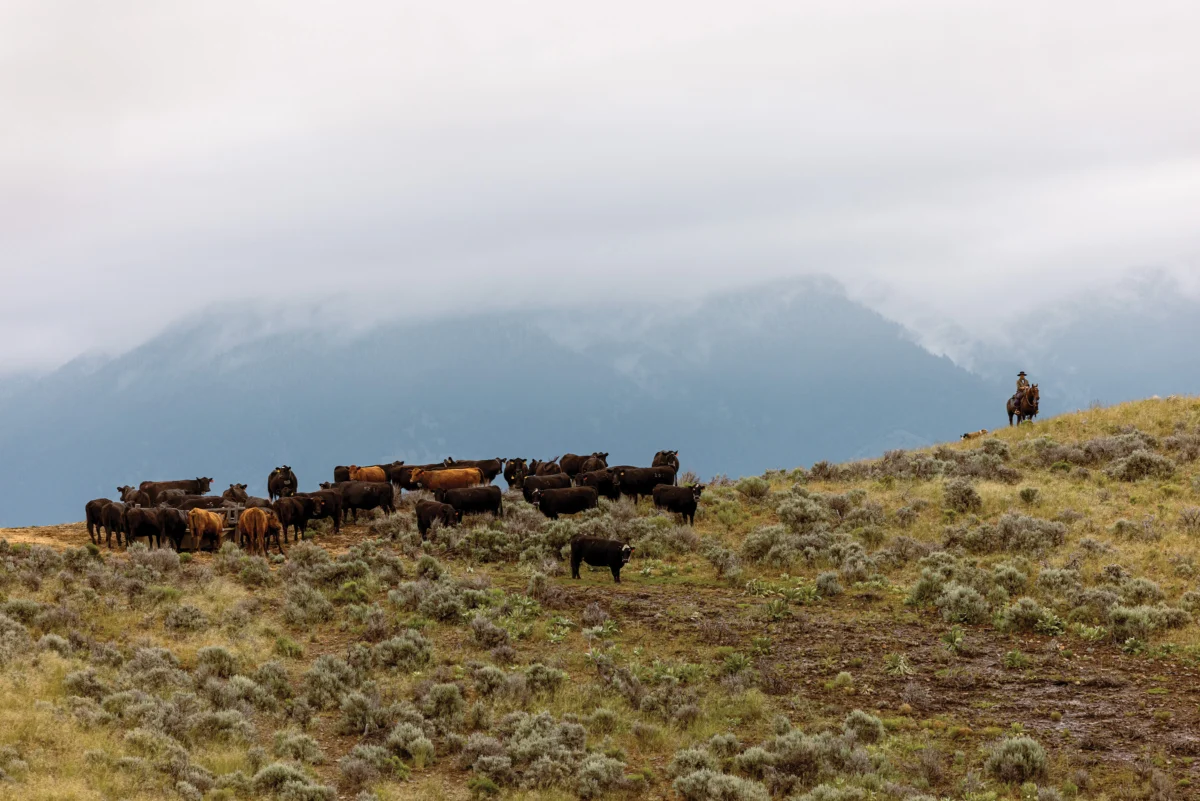
"It watches with argus eyes the inside and outside, up, down, and lengthwise; it prevents the ‘ins’ from being ‘outs’; and the ‘outs’ from being ‘ins’; watches at day-break, at noontide, at sunset and all night long," proclaimed the Glidden Barb-Fence Journal in 1885, a testament to the revolutionary, all-seeing power of barbed wire. Today, on the sprawling McFarland White Ranch, nestled a dozen miles from tiny Two Dot, Montana, a different kind of vigilance is taking root. Harrison White watched as a cow, her breath misting in the crisp July air, funneled into a steel chute, its metal gates screeching in protest. He approached, not with a branding iron or a coil of wire, but with a thick black polymer collar, signaling a profound shift in how the American West manages its livestock and its land. This new high-tech necklace, a GPS tracking collar, communicates with nearby base station towers, which in turn connect via satellite to an intuitive application. From an office or a pickup truck, ranchers like White and his sister, Lanie, can now precisely monitor the location of each collared animal, drawing invisible fences with a few clicks of a mouse. Should an animal stray too close to these digital boundaries, its collar emits a warning sound, followed by a mild electric shock, a modern-day, unseen shepherd. After Harrison buckled on her collar, the cow bucked and swung her head in momentary protest against the unfamiliar weight, but within moments, she was calmly grazing nearby grass, adapting to the technology that promises to redefine her world.

The transition from physical to virtual fencing addresses a significant challenge for Western lands, which are crisscrossed by an estimated 620,000 miles of barbed wire and other physical barriers – enough to circle the Earth more than 25 times. These traditional fences, as Lanie White pointedly declared while programming collars stacked in an ATV, are "bullshit." She emphasized their prohibitive expense, environmental damage, and ecosystem fragmentation. Indeed, the economic burden of building and maintaining these extensive networks, particularly across vast, rugged terrain, is astronomical, often exceeding $15,000 per mile. Beyond the financial strain, these physical divisions dictate grazing patterns and impede the natural migration of wildlife, disrupting ancient pathways and contributing to habitat fragmentation globally, from the American West’s pronghorn to Africa’s migrating wildebeest.

Since 2021, when virtual fencing technology became commercially available, its adoption across Western landscapes has expanded dramatically. Ranchers are increasingly leveraging these invisible barriers to replace physical fences destroyed by devastating wildfires, a growing threat exacerbated by climate change. They also use them to keep cattle away from ecologically sensitive areas, such as spawning grounds for fish or nesting sites for endangered birds, and to strategically direct grazing to create fire breaks, a critical tool in wildfire management. The McFarland White Ranch was among Montana’s pioneers, initially trialing Vence technology in 2022 before transitioning to Halter. Both companies, rooted in New Zealand’s dairy industry, where frequent cow rotation necessitates flexible paddock management, have brought innovative solutions to the global livestock sector. Vence, notably, received backing from a division of Shell, aiming to integrate sustainable grazing into carbon offset programs, and was later acquired by pharmaceutical giant Merck’s Animal Health division, highlighting the growing corporate interest in agricultural technology. Despite initial skepticism and challenges inherent in embracing new solutions, the White family remains steadfast in their belief in virtual fencing’s transformative power. Lanie White sees it as "the biggest ranching revolution that will occur in my lifetime," a sentiment shared by a growing number of producers globally.

The history of physical fencing in the U.S. is deeply intertwined with the nation’s expansionist past. In the early 1800s, European colonists, fueled by the concept of "Manifest Destiny" and the promise of "free" land appropriated from Native Americans, pushed westward. The vast Great Plains, however, lacked the abundant wood and stone used for traditional fencing in the East, and early attempts with smooth wire proved ineffective against livestock. This void spurred a fervent "race" in the late 1860s and early 1870s to develop spiked wire. Joseph Glidden’s 1873 invention, a technique for attaching barbs to double-stranded wire and the machinery to mass-produce it, proved to be a game-changer. Glidden’s "metallic imitation of a thorny hedge" was cheaper, easier to install, and rapidly sliced up the landscape. Landscape ecologist David Augustine of the USDA’s Agricultural Research Service notes that much of this fencing arbitrarily followed "section lines — the township and range system," rarely aligning with natural ecological boundaries.

Beyond its agricultural utility, fencing has historically served as a tool of control. In the 20th century, barbed wire defended military trenches and continues to be used in prisons globally. As Scott Abbott, co-author of The Perfect Fence: Untangling the Meanings of Barbed Wire, observes, "Control through violence and force, I think that’s the underlying basic meaning." Historians like Dina Gilio-Whitaker (Confederated Tribes of the Colville Reservation) argue that barbed wire, alongside railroads, plows, and the telegraph, served as "mechanisms of containment in a paradigm of domination" that facilitated the colonization of the West. This private-property ethos, reinforced by fencing, encouraged individualism and, combined with policies like the Dawes Act of 1887, fragmented communal Indigenous lands, forcing assimilation into a capitalist economy.

The ecological toll on wildlife, though initially overlooked, became increasingly evident. Early 20th-century efforts to fence Yellowstone National Park’s northern boundary to protect pronghorn from poachers inadvertently caused population declines. By the 1960s, scientific literature began documenting pronghorn entanglement and deaths in fences. Public outrage, fueled by photos of dying pronghorn in Wyoming, prompted Rep. Henry Reuss of Wisconsin to introduce legislation prohibiting wildlife-impeding fencing on public lands. Cultural narratives also shifted, exemplified by Edward Abbey’s 1975 novel The Monkey Wrench Gang, where protagonist "Seldom Seen" Smith famously declared, "Always cut fence. That’s the law west of the 100th meridian." Yet, without a practical alternative to barbed wire, this remained largely an environmentalist’s wish list until the recent arrival of virtual fencing.

The concept of invisible animal control is not new; "invisible fences" for dogs, using buried wires and shock collars, were patented in 1973, with radio-wave activation explored by 1987. USDA scientists began designing virtual fencing for cows in the early 2000s, but it took over two decades, and the pioneering efforts of overseas companies collaborating with dairy producers, to make the technology commercially viable for the vast beef cattle operations of the American West. This potential for dual benefit—supporting ranchers and conserving wildlife—has invigorated conservationists. The Nature Conservancy (TNC), in partnership with organizations like the Southwest Montana Sagebrush Partnership, is financially supporting ranchers in Montana who implement virtual fencing, recognizing its capacity for a profound "paradigm shift" across the landscape. TNC’s Jim Berkey envisions "vast potential changes" that could lead to a more permeable, ecologically connected Western ecosystem, supporting species from pronghorn to sage grouse. Other groups like the National Wildlife Federation and the Rocky Mountain Elk Foundation are also investing in this future.

For ranchers, the appeal of virtual fencing grows with every wildfire season. Fast-moving rangeland fires obliterate traditional wooden fenceposts, destroying thousands of miles of infrastructure that can cost tens of millions of dollars to replace. Virtual fencing, while requiring upfront investment in base stations ($10,000 per tower) and annual collar rentals ($50 per animal), offers a dynamic and resilient solution. The economics often favor larger ranches, which can realize significant savings on labor and materials over time, especially with shared costs from nonprofits, state departments of wildlife, private donors, or federal agencies. The 2020 East Troublesome Fire near Granby, Colorado, became an early proving ground, spurring some of the first virtual fencing installations in the West and its inaugural use on a Forest Service allotment through a Natural Resources Conservation Service grant. Allegra Waterman-Snow, a district manager at the Eagle County Conservation District, recalls that "nobody knew what virtual fencing was" at the time, underscoring its rapid emergence.

Further wildfires in 2022 accelerated adoption. Dan Probert, an eastern Oregon rancher, witnessed 20 miles of fencing burn on his 20,000-acre Saddle Creek Forest Service allotment during the Double Creek Fire. Faced with replacement costs of $20,000 to $25,000 per mile in remote Hells Canyon, he noted, "No one, including us and the Forest Service and a bunch of different wildlife groups, wanted to put the hard fences back in." Similarly, Mike and Joy Wilson, cattle ranchers in north-central Washington, adopted virtual fencing after leasing 9,000 acres from the Confederated Tribes of the Colville Reservation. The Tribes, who had recently reacquired the parcel, sought to create a vital wildlife corridor between the Rocky Mountains and the Cascade Range. Existing minimal fencing meant new physical barriers would disrupt this ecological goal, making virtual fencing a financially and environmentally sound choice, supported by Conservation Northwest.

Near Salmon, Idaho, the nearly 70,000-acre Diamond Moose allotment on the Salmon-Challis National Forest faced closure after the 2022 Moose Fire destroyed much of its minimal fencing. However, permittees Chyenne and Jay Smith observed unburned forage amidst the devastation and proposed a novel solution: using virtual fencing to temporarily cordon off recuperating areas while allowing grazing in unaffected sections. Their initiative sparked a collaboration with Melinda Ellison, an associate professor of range livestock research at the University of Idaho’s Nancy M. Cummings Research, Extension and Education Center, who was seeking to test virtual fencing in rugged terrain. With support from the Bureau of Land Management, Forest Service, Idaho Department of Agriculture, and grants from the Foundation for America’s Public Lands and USDA, Ellison’s team has been working with area ranchers ever since.

The journey was not without its challenges. Initially, training the Smiths’ cows to respect the virtual boundaries required patience, with stubbornly unresponsive animals eventually removed from the herd. The software interface proved "moderately clunky," requiring a degree of tech-savviness. Hardware issues also emerged, from cows damaging loose collars to two bulls getting entangled when their carabiners interlocked. USDA researcher Augustine confirmed these early product limitations, noting the technology "hadn’t been thoroughly validated on working ranches." Despite these hurdles, the University of Idaho’s research station has expanded its focus to practical applications, supporting nine ranches, over 2,000 collars, and 20 base stations, with the Forest Service purchasing some base stations but preferring ranchers to manage the livestock-specific collars.

Today, the technology has significantly streamlined ranch operations. Chyenne Smith’s morning routine now includes checking a digital map on her laptop, monitoring her herd’s precise location. Cow-shaped icons reveal critical information: whether they are gathered around a functioning water trough, avoiding a depleted salt lick, or exhibiting unusual movements indicative of injury or predator presence. Jay Smith notes that their time on the allotments is now more targeted and efficient, allowing them to proactively address issues. Virtual fencing has also enabled better range management, preventing cows from prematurely moving to higher ground or lagging at lower elevations, ensuring even grazing and strategic pasture resting, thereby optimizing forage utilization and permit compliance. The cows, according to Chyenne, "are quickly getting the hang of it," demonstrating a rapid learning curve for the livestock.

However, not all early trials were smooth. The McFarland White Ranch’s initial deployment of 1,800 Vence collars in 2022 encountered significant issues. Hundreds of collars broke or fell off, losing their quarter-pound lithium batteries, which raised environmental concerns about heavy metals potentially leaching into the American Fork River and Big Elk Creek. The remaining collars also required battery changes every six months, far more frequently than expected. Lanie White publicly shared her negative experience, leading to Vence’s (Merck Animal Health) spokesperson Jennifer Luddy acknowledging that "System performance may vary by terrain, weather, infrastructure, grazing practices and frequency of use." After removing the Vence collars in February 2023, the Whites re-collared 350 cows in the fall of 2024 using Halter technology, observing immediate improvements. Halter’s collars fit more snugly, leading to calmer animals, and crucially, are solar-charged, boasting a five to seven-year lifespan, a significant upgrade over frequent battery replacements. Furthermore, the newest Halter collars can transmit data directly to the Starlink satellite network, reducing the reliance on local base stations, a critical advancement for remote areas. Despite less institutional support than the Smiths, the Whites receive funding from the National Fish and Wildlife Foundation and assistance from organizations like the Property and Environment Research Center (PERC), the Forest Service, and the Rocky Mountain Elk Foundation, underscoring a broad collaborative effort to advance this technology. Lanie White, reflecting on their persistence through challenges, asserted, "We’re nothing if not tenacious," determined to be part of what she believes is a ranching revolution.

Paul Evangelista, a researcher at Colorado State University, confidently states that "virtual fencing is here to stay." Its adoption is accelerating, particularly in regions devastated by wildfires. In eastern Oregon, the 2024 Lone Rock Fire destroyed 1,100 miles of fencing, estimated at $25 million to replace, creating an urgent demand for alternatives. Dallas Hall Defrees, regenerative ranching program director for Sustainable Northwest, a Portland-based nonprofit, noted, "It burned so much that ranchers truly did not have a place to put their cows." Sustainable Northwest is now leading a project to install virtual fencing on 177,000 acres of private land across three counties in the Upper Rock Creek watershed, poised to become the largest system in the Pacific Northwest. This initiative, Defrees explains, aims "to have working lands and to do them better, to have rural economies, rural communities and ecosystems all function alongside each other." The market is also becoming more competitive, with new players like Gallagher eShepherd and Norwegian company Nofence joining Vence and Halter, driving rapid innovation. Joshua Morrison, a Halter territory manager, described the market as "blowing up," with 65,000 collars sold in his region by July 2026, and 40 more ranches in western Montana and Idaho trialing the technology.

Despite its rapid evolution, virtual fencing still has limitations. Defrees likens it to a "steak knife," not yet a "scalpel," acknowledging it cannot prevent underlying issues like drought, invasive species, or wildfires, nor is it a substitute for sound land management. Allegra Waterman-Snow observed, "We did not see that the simple fact of virtual fencing meant that your ground improved." A critical challenge in the arid West is ensuring adequate water access within virtual grazing areas, as thirsty cows may override warning signals to reach water sources. As third-generation rancher Koy Holland of Montana’s Grasshopper Valley succinctly put it, "You can draw all the fences in the world with virtual fencing, but if you don’t have water, it ain’t no good." The human learning curve also remains a factor; for ranchers with an average age of 58, adapting to new digital interfaces can be more challenging than for the livestock.

Despite the growing enthusiasm and demonstrable benefits, virtual fencing has yet to bring about a meaningful reduction in physical fencing. The technology is still too nascent for ranchers or land managers to confidently dismantle expensive, existing barriers. Koy Holland, having less than two years of experience, chuckled at the idea of tearing down fences costing $17,000 to $20,000 per mile, opting instead to "throw gates open." Kyle Nelson, rangeland management specialist for the Salmon-Challis National Forest, agrees that while a discussion about fence removal is underway, "I don’t think we’re quite there yet." Even in Eagle County, where reliability in mountainous terrain stands at 70% to 80%, this assurance is insufficient for wholesale fence removal. Perimeter fencing, essential for keeping cattle off roads and out of neighboring properties, is likely to remain a permanent fixture. As I drove away from the McFarland White Ranch, rain splattering my windshield, I paused at the sight of a century-old woven-wire fence topped with barbed wire, an impassable barrier for many species. Directly beyond it stood a pronghorn with two fawns, a poignant tableau of the past, present, and future coexisting in a few short miles, where the promise of a fenceless West slowly, yet tenaciously, takes hold amidst enduring legacies.