Rocky Georgio
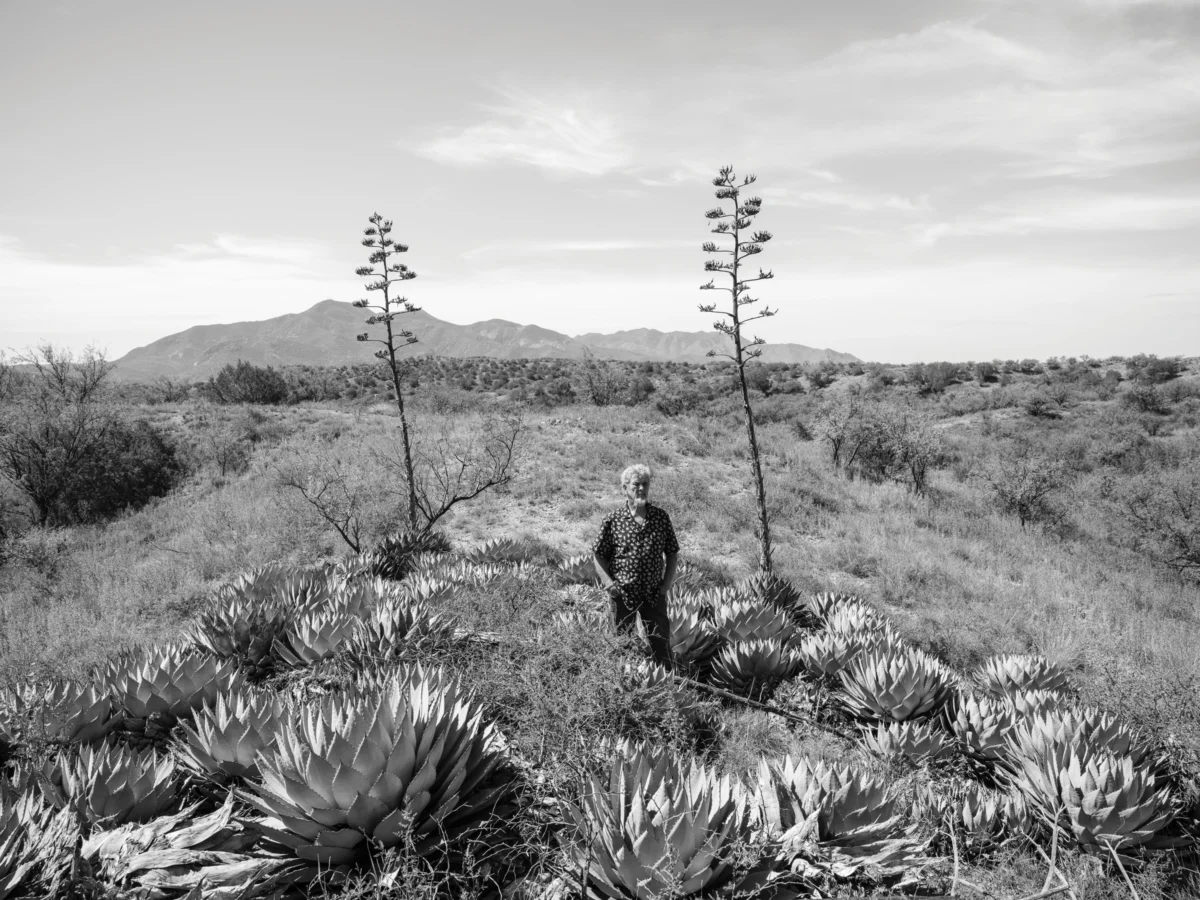
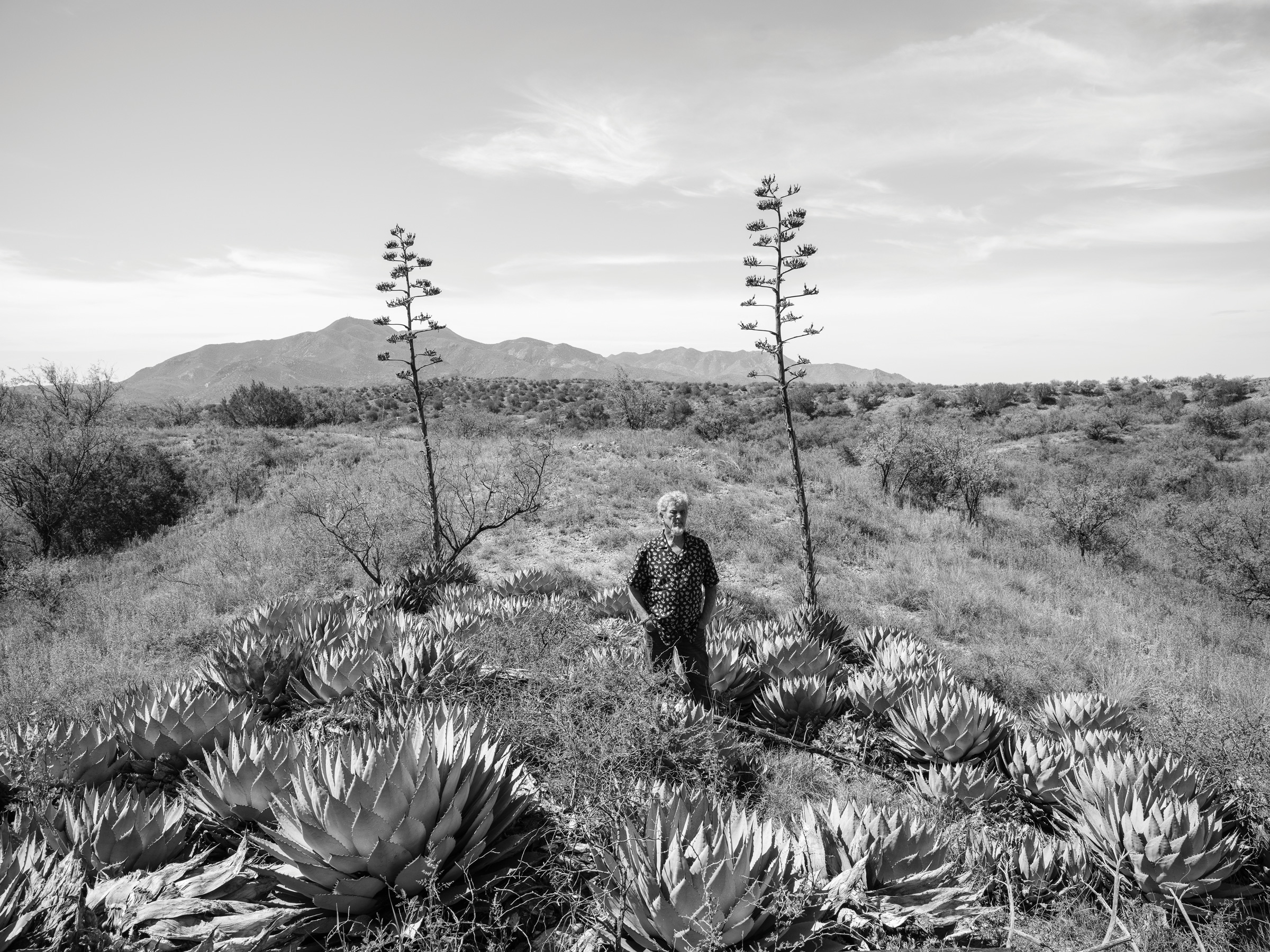
In October 2021, the arid expanse of southern Arizona served as the backdrop for a profound conversation along the U.S.-Mexico border, a landscape that has been the lifeblood and laboratory of botanist, activist, and author Gary Paul Nabhan for five decades. His home, a mere twenty-two miles from the Nogales port of entry, is situated within this region that has also deeply captivated my own life, and it is Gary who has illuminated its essence, revealing it to be far more than a mere line etched into the desert sand. Gary has been an intimate observer and participant in the Borderlands since the early 1970s, a period I followed suit in 1984, bearing witness to the complex human and ecological dramas unfolding along this frontier. On this particular day, Gary, embodying his characteristic field persona, wore a faded t-shirt emblazoned with a Spanish call for peasant solidarity, a simple wooden cross resting against his chest, and a well-worn khaki baseball cap pulled low. His full gray beard framed a gentle face, and his deep, shimmering gray-blue eyes held a farmer’s wisdom, a reflection of his life’s work. "It’s okay to have boundaries in our lives," Gary once shared, his words resonating with the very essence of the border that fascinates us both. "But if we were to glue all the pores on our skin shut, or all the stoma on a plant leaf shut, we would die. So we really need porous borders, because it’s a time-tested way to enrich life rather than strangle it."
Our journey took us along the Roosevelt Reservation, a 60-foot-wide corridor established in 1907 by Theodore Roosevelt for security purposes, stretching across 632 miles of the border. We traversed the U.S. side, within the San Bernardino National Wildlife Refuge, a vibrant ecotone where desert scrub transitions into grasslands within the Chihuahuan Desert. It is a landscape transformed beyond Roosevelt’s wildest imaginings, now a militarized desert, patrolled by Customs and Border Protection agents on trucks, ATVs, and horseback, supported by an extensive network of surveillance towers, drones, and intense nocturnal lighting. The imposing 30-foot-high, rust-hued bollard wall sliced across the impossibly cerulean autumn sky, a stark contrast to the natural beauty surrounding us. As we navigated through muddy pools left by recent monsoon thunderstorms, my gaze was drawn northward to the refuge’s ecological marvels: the riparian desert, where sacaton grass swayed in the breeze, stoic creosote bushes offered splashes of yellow, and thick-trunked cottonwoods rustled their shimmering leaves. Historically, this area was a haven of springs, creeks, and ephemeral washes, supporting a rich tapestry of flora and fauna, including numerous bird species, mammals, reptiles, amphibians, and fish, such as the endangered Yaqui chub and Yaqui topminnow, and the threatened Yaqui catfish. While human development had depleted these vital water sources throughout the 20th century, the designation of the refuge in 1982 initiated a significant restoration effort.
However, this refuge also fell within the hundreds of miles targeted for the construction of the so-called "big, beautiful wall." In the pursuit of its completion, numerous environmental and cultural protection statutes were bypassed. During the initial Trump administration, $408 million was allocated to the region, and construction crews excavated a well adjacent to the refuge to supply water for concrete mixing, a move that inflicted damage upon the fragile desert wetland biome. While the wall effectively halted most cross-border mammal migration, its impact on drug smuggling was negligible, as it’s estimated that the majority of illicit substances are transported through official ports of entry.
As we continued eastward along the border, the passage of time offered ample opportunity for reflection on the dramatic changes that had occurred in just a few decades. I recounted an instance where I observed border fence construction near the Santa Cruz River, a fence designed with openings large enough to withstand windstorms but too small for a human grip, rendering it virtually unscalable. Yet, during my visit, grasshoppers effortlessly navigated these human-made barriers, a vivid illustration of undocumented "more-than-human" entities subverting human attempts at control. Gary then brought up the San Miguel Gate on the Tohono O’odham Nation, a significant portion of which straddles the border. Historically, this informal crossing, where the fence simply ceased to exist (the "gate" being symbolic), was respected by the Border Patrol due to the O’odham ceremonial routes and the presence of binational Indigenous families. Although closed to vehicular traffic for years, the closure was not initiated by CBP. In a poignant twist of irony, an actual gate was installed and welded shut by a Mexican landowner on the other side.
We both reminisced about another informal crossing, the one at Boquillas on the Rio Grande in Big Bend National Park, where an elderly gentleman would ferry visitors across the river during low water levels, allowing them to enjoy a cold beverage on the Mexican side, far from any Border Patrol presence. The nostalgia for these bygone eras made the sight of today’s 30-foot-high wall even more poignant. It stretched across the desert plain for miles, an alien object, as incongruous as the black monolith that incited violence among early hominids in "2001: A Space Odyssey." Its shape and color were entirely foreign to the desert landscape, a permanent scar on the land. And then, as abruptly as it appeared, it vanished.

The recent monsoon storms had a dramatic effect on the wall itself. We stopped and disembarked from the truck to witness the aftermath. The very wash the fence straddled had been flooded, tearing a series of bollard gates from their hinges and effectively breaching the wall. While the Army Corps of Engineers had designed these gates to withstand such flooding, they were intended for manual opening before the monsoon season. During the storm, a surge of approximately 290 cubic feet of water per second—roughly 112,200 gallons per minute—rushed north to south, impacting the wall with a force that may have reached heights of 25 feet. To capture the scale of the destruction, I asked Gary to stand near the damaged section, his body mere inches from the Mexican side. The debris line was several feet above his head. A Border Patrol surveillance tower stood a short distance away. As I remarked, "The Border Patrol’s gotta show up any minute," the silence that followed was telling; they never appeared. For those fleeting moments, Gary and I shared a glimpse of the border as it existed before the wall, and perhaps, a premonition of a future where such human-made barriers are eventually swept away by the relentless march of time.
Gary Paul Nabhan is a figure of profound multifacetedness. He is the MacArthur "genius grant"-winning ethnobotanist who revolutionized his field by merging rigorous scientific inquiry with a deep commitment to social witness and accompaniment, a practice inspired by Catholic social teaching that emphasizes presence and service within Indigenous communities. He is the scholar and activist who has dedicated half a century to the Arizona and Sonora Borderlands, living and working within its unique ecological and cultural tapestry. As a co-founder of Native Seeds/SEARCH, he has been instrumental in establishing a pioneering arid lands seedbank. Gary also embodies a spiritual quest, a member of the Order of Ecumenical Franciscans, drawing inspiration from St. Francis of Assisi’s reverence for the sacredness and vulnerability of all life, both human and non-human. His prolific writing spans numerous genres—scientific articles, narrative nonfiction, and poetry—with nearly thirty-six books to his name, predominantly monographs. In these works, he traverses not only literary forms but also geographical boundaries and the interconnectedness of life, exploring the biological-cultural-spiritual significance of mesquite trees, the cultural practices surrounding agave distillation, the lives of activists and visionaries, and offering a Gospel-oriented guide for farmers and fishers. His most recent publication, "Water in the Desert," represents his first true autobiography, an attempt to weave together the myriad threads of his life into a unified vision that braids together matter, history, and spirit.
From his earliest days as a student studying and observing the Borderlands, Gary has consistently documented loss—of habitat, species, civil rights, and the natural vistas unmarred by walls. His seminal first book, "The Desert Smells Like Rain," chronicled the precarious existence of the Tohono O’odham people’s ancient dryland-farming traditions. Over four decades later, "Water in the Desert" details the severe degradation of the border biome near his home in Patagonia, Arizona. Throughout his career, Gary has maintained a voice that echoes Old Testament lamentations, yet it is consistently tempered with a wry humor and a masterful command of puns. His writing about the interconnectedness of mesquite trees in the desert Southwest, for instance, playfully transforms "ménage à trois" into "ménage à tree." Ultimately, his work cycles through profound grief to arrive, always, at hard-won seeds of renewal and recovery.

The impulse to write this story emerged in 2021, a period during which I found myself unable to write at all. Five years passed, and it was only recently, after navigating my own cycle of losses, that I began to write again. Gary, who is more than a decade my senior, played a pivotal role in this resurgence. As I approach an age where societal markers shift, a key revelation is that elderhood doesn’t preclude the need for guidance from those further along life’s path, even as one increasingly assumes the role of mentor for younger generations. I write, therefore, of my elder. Yet, particularly within the desert West, Gary is also our elder, a beacon for all who cherish the land and its inhabitants. My journalistic endeavor began with writing this story, evolving into a deepening of mentorship and friendship. Even when I doubted my ability to ever complete this narrative, our conversations continued; more accurately, he remained in contact with me. I would find myself hiking in San Francisco’s Golden Gate Park, the fog-laden breeze rustling through Monterey cypress boughs, mirroring the despondency in my own mind, and Gary would call, simply to discuss a new book he had read on the Sanctuary movement, or folk music, or a magnificent thunderstorm that had recently swept across the desert. I believe he was intentionally accompanying me through my period of darkness. His voice and his messages have been a constant companion for years. The stacks of books on my desk, lectures on YouTube, and our conversations in his Prius (adorned with a peeling "No Border Wall" sticker in cholo-style Old English script) as we traversed the roads of southern Arizona, all contribute to this shared narrative. Dozens of iPhone photos and videos on my phone, and Gary’s presence in my laptop journals and my indecipherable reporter’s notebooks, all bear testament to this journey. To travel alongside Gary is to engage in a dialogue with the world, to witness it intimately through its landscapes, species, policies, and poetry.
Listening to a recording from a 2021 visit to Quitobaquito, a natural spring just yards from the border and one of the most sacred sites for the Hia-C’ed O’odham and Tohono O’odham peoples, brings back vivid memories. Similar to the San Bernardino National Wildlife Refuge, Quitobaquito is a critical crossroads, maintained to this day for Indigenous peoples’ historical migratory and ceremonial routes, as well as for the region’s unique desert flora and fauna. Bulrushes formed a reedy perimeter around the pond, and nearby, two ancient cottonwoods stood taller than anything else in the vicinity, save for the imposing Border Patrol surveillance towers. I had heard about the wall’s construction here, but nothing could have prepared me for the jarring juxtaposition of the miraculous spring—the largest water source for dozens of miles—and the imposing 30-foot-high bollard wall, identical to the one at San Bernardino, over 200 miles to the east. Aside from the distant traffic on Mexican Highway 2, the atmosphere was serene. President Biden was in office, and wall construction had ceased. Gary, along with his longtime friend and Tohono O’odham leader Austin Nuñez, had recently published a manifesto in the New York Times advocating for the healing of the wounds inflicted upon the Borderlands during the previous administration: "We must reimagine the landscapes we share with Mexico. The border should not be a line that divides cultures and fragments their desert environment. It is a juncture where two nations connect, where history is shared, where cultures are alive and where a common future must unfold." At the time, we harbored no inkling that this moment of hope was merely a temporary respite. The modest reclamation efforts under Biden would not only be reversed in a subsequent term but would also usher in a new wave of environmental devastation, with plans for a second wall parallel to the first, signifying an even graver assault than before. We naively envisioned an open-ended period of recovery.
A solitary coot, its pale beak a stark contrast to its glossy black feathers, glided across the center of the main pond, seemingly indifferent to its human observers. Rivulets feeding the pond created smaller pools where the endemic and endangered Quitobaquito pupfish, a remarkably resilient desert native, had adapted to high salinity and temperatures exceeding 100 degrees Fahrenheit. These tiny fish had somehow survived the construction of the border wall and the rumble of Border Patrol vehicles along the Roosevelt Reservation. I noticed a distinct, uniform color change on the bulrushes, transitioning from a vibrant lime-green to an oatmeal hue approximately three feet above the waterline. Upon inquiring about the groundwater depletion, Gary explained, "They pumped 800,000 gallons per mile of border wall to do the concrete footing, and this is a fragile aquifer." The spring’s flow into the pond had been diminishing even before the wall’s construction, due to agricultural activities on the Sonoran side. Compounded by record-breaking heat, the water level reached its second-lowest point in recorded history. On the recording, my audible sighs of dismay—"God!"— punctuated the quiet observation.

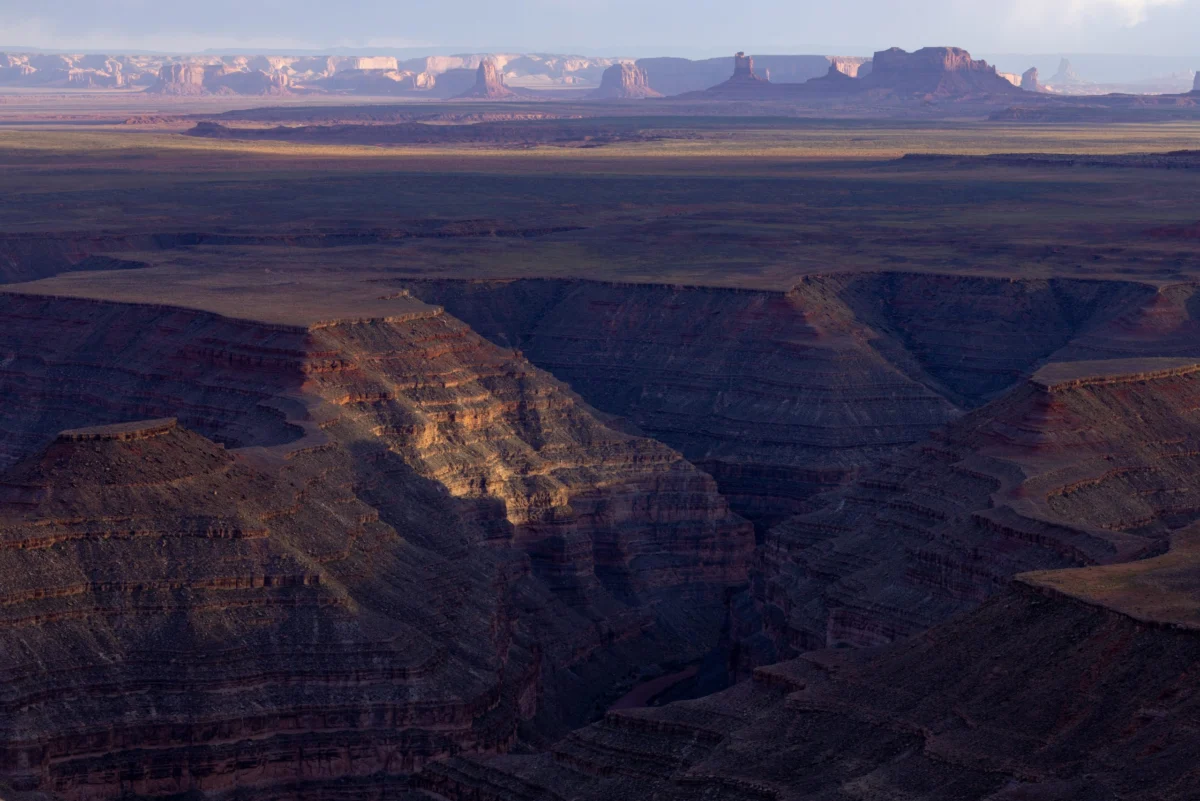
Gary pointed to two cottonwoods, their green leaves shimmering in the breeze, remarking, "There used to be 15, 20 of them." He then recounted a deeply personal memory: "I lowered my son down to the water to have him baptized with a Catholic priest and an Indian medicine man right off that cottonwood there." He then gestured towards the skeletal remains of a collapsed tree, adding, "It died three or four years ago. So, there’s been a complete habitat decline since I did my dissertation here in 1982." We returned to observe the pupfish one last time. My eyesight is not keen, and I had not clearly seen them during our initial walk past the shallow pools in the dappled light of a mesquite thicket. This time, I knelt down and caught fleeting glimpses of iridescence—blues and silvers—emanating from the males and females. These guppy-like fish, critically endangered even before the wall’s construction, faced such a high probability of extinction that Biosphere 2 collected a few dozen specimens, introducing them to a stream environment within their "desert biome" research center as a sanctuary to ensure the species’ survival should it disappear from Quitobaquito. Gary, holding a cherished volume of desert verse by his friend, Tohono O’odham poet Ofelia Zepeda, "Ocean Power," sat at a weathered picnic table and began writing a letter to her on the blank pages at the end of the book. He expressed his desire to "speak" to Zepeda from this sacred place, where cell reception was nonexistent. He had listened intently as she spoke of her childhood visits to Quitobaquito and expressed his gratitude for her mentorship in O’odham dialects. Zepeda’s poems are characterized by their precision, clarity, and spare desert imagery. Her poem "Morning Air" captures this essence: "The early morning air, / enveloped in heavy moisture. / I go outside and it lays on my shoulders. / I go about my business, / carrying the morning air / for the rest of the day." This metaphor of carrying moisture resonates with the way desert dwellers, both human and non-human, endure: the moisture is both material and spiritual. It is said to have emerged into the world with the wet breath of the creator-god I’itoi from a cave high on Baboquivari Peak, the majestic, ruddy, heart-shaped sky island that dominates the Tohono O’odham landscape and cosmology. This is a place where arroyos and tinajas fill during the sudden deluges of summer and the prolonged, soaking rains of winter. I once visited this mountain alone and became lost, clearly unprepared and unwelcome. Decades ago, Gary, already deeply involved in his work with the "people of the desert" (the literal translation of "Tohono O’odham"), hiked to I’itoi’s cave with young O’odham pilgrims. In "The Desert Smells Like Rain," he described the offerings within this sacred emergence place: rosaries, gum, cigarettes, and a multitude of other items hanging in the dimness. This profound experience prompted his reflection: "There is always something hidden in this world, that you can’t just realize from the outside. You need to make contact with it now and then, to nod your head in knowing, to receive its blessing." In a landscape marked by loss and grief, this act of contact signifies holding onto the spirit of what came before, what remains of what is even now being lost, and what will be—perhaps even what will be reborn from drought, fire, or flood, from the steel that slices through the desert. The path to healing must be simultaneously scientific and artistic, policy-driven and prayerful, a fusion of academic rigor and poetic expression. This is the essence of sacred activism.
The initial whisper of my dialogue with Gary occurred long before our physical meeting, sometime in the 1990s when I first encountered "The Desert Smells Like Rain," a seminal work in arid and Borderlands ethnography and botany. The book opens with the blessing of a summer monsoon shower on the Tohono O’odham Nation, where a young Native boy’s poetic observation gave the title its meaning, referring to the fragrance released when raindrops activate the resins on creosote leaves. The nation’s traditional lands extend across a border established in 1853, meaning this frontier, 173 years old, has existed for less than 2% of the 10,000 years the O’odham and their ancestors have called the Sonoran Desert home. Like many scholars of the borderlands, Gary is not a native of the region. He, like many artists and thinkers, was drawn to the American West in search of self within a world of overlapping cultures, characterized by both tension and synthesis. The Borderlands, geopolitically constructed, are themselves a waystation, intrinsically migratory in both human and ecological terms, a place of transition stretching back into deep time. Gary grew up on the Indiana Dunes, a unique arid oasis on the shores of Lake Michigan, with an Irish Catholic mother, a Lebanese American father, and an extensive paternal extended family. His fascination with the deserts of the American Southwest can be traced to the dunes of his youth and to his relatives’ ancestral roots in the arid lands between Lebanon, Syria, and Israel. I, on the other hand, was born in Southern California to an immigrant mother from El Salvador and a Mexican American father whose parents hailed from the arid north of Mexico; between my parents, I inherited a connection to a riparian desert. This shared experience of borders, and a ceaseless desire to traverse them—while also being rebuffed by them, laughing at their absurdity, shouting at them until our voices are hoarse, despairing of them, contemplating them, kneeling in prayer before them, and mourning their terrible cost: the border dead, both human—at least 10,000 lives lost since 1994 on what the United Nations’ International Organization for Migration calls the "deadliest land crossing in the world"—and more-than-human—binds Gary and me.
In 2023, I embarked on another road trip with Gary, this time to the Sonoran coast on the Gulf of California, a region of profound significance for him. He first encountered these traditional lands as an undergraduate at Prescott College, which has maintained a presence there since 1969. The journey was not without its challenges. En route, we visited with his friend Wenceslao Monroy, a respected community leader known for hosting delegations of Zapatistas from Chiapas. Monroy shared a harrowing account of a near-fatal encounter with cartel violence that forced him to flee his family’s historic ranch for weeks. Later, Gary spent an extended period conversing with students at the Universidad de Sonora herbarium in Hermosillo, a testament to his innate curiosity and his passion for dialogue with those eager for knowledge. It was already nightfall on an unlit, two-lane desert road, seemingly traversed only by the foolishly adventurous like ourselves, with no other vehicles in sight for miles. Nevertheless, we arrived safely at the shore, where the following day, Gary, with a documentary film crew’s high-definition cameras rolling, gathered a handful of glistening eelgrass. This was to showcase his expertise on what celebrity chefs have heralded as the new superfood—"sea rice," the grain that sprouts from the grass. This attention was greatly welcomed by the Comcáac, an Indigenous people so geographically remote from centralized Mexican government authority that they fiercely maintain their traditional identity, yet remain vulnerable to Mexico’s simultaneous romanticization of Indigenous history and its disregard for the welfare of contemporary Indigenous communities. Here, in one of the communities Gary has visited for decades, the inevitable question regarding his positioning arose—a question I have grappled with myself since first encountering the borders of Indigeneity as a young writer. Fifty years ago, anthropology was still a discipline tainted by a largely unconscious colonial gaze, a legacy of centuries of scribes documenting Native geographies and identities in service of military conquest, economic exploitation, and, according to the Church, spiritual salvation. Then, during Gary’s graduate studies, Palestinian scholar and Columbia professor Edward Said published his groundbreaking work "Orientalism," exposing this very gaze. The immediate consequence was a critique of the ethics of representation and increased scrutiny of "objective" research for the implicit power imbalances between the observer and the observed. This critique, however, did not originate with Said; it is as old as the resistance to colonialism itself and remains an ongoing conversation.

If Gary were a novice graduate student today seeking to research the Indigenous cultures of the Sonoran Desert, he would likely face scrutiny—from academic advisors and Indigenous leaders alike—regarding the nature of his relationships with his research participants, previously referred to as "research subjects." Would his mixed parentage (he identifies as Arab American) be perceived as fostering a more "horizontal" relationship, partially alleviating him of colonial baggage? Today, Gary states that he would not feel comfortable in such positions—that is, as an outsider with the privilege to come and go as he pleases, and wielding the power to represent Indigenous "others" in writing. Gary and I stand at a generational crossroads, witnessing a significant shift in scholarly and cultural paradigms. Slightly older than me, he was educated under the academic ancien régime of predominantly white male researchers working within Indigenous communities. However, we both participated in the post-Orientalism discourse that celebrated the border not merely as a physical boundary but as the Borderlands—a cultural space, a site of both violence and suffering, and crucially, a locus of intentional blending and adaptation of languages and aesthetics. This represented the theory and practice of forging a "third country," a distinct and transcendent region, as an act of creative and spiritual survival. Yet, that moment too has passed, and in recent decades, there has been a more stringent definition of cultural boundaries, particularly between Indigenous and non-Indigenous peoples, in alignment with the ideal and practice of Native sovereignty. This evolution does not diminish the reality of Gary’s relationships with the Tohono O’odham or the Comcáac, neither in the social sense, which I have witnessed on numerous occasions, nor in his body of research, nor in his steadfast allyship on urgent issues such as the border wall and the preservation of arid lands and seeds. What has undeniably changed is that the Indigenous communities of the Americas, North and South, have progressively reclaimed the means of their own representation. This was powerfully evident with the Comcáac. We spent time with Alberto Mellado Moreno, a brilliant young scholar who has authored a quartet of history books and cultivated a robust social media presence, sharing spectacular drone footage of the Comcáac landscape. He is now an elected official within the community. With a population that had dwindled to approximately 130 at the turn of the 20th century, the Comcáac have since rebounded to over 1,000 individuals. One afternoon, perched on a sandy bluff overlooking the green, eelgrass-laden sea, with the jagged silhouette of Tiburón Island rising from the water just miles to the west, Mellado regaled us with the Comcáac origin story. In his essay "Heeno," which Gary published in the anthology "The Nature of Desert Nature," Mellado personifies the desert, which becomes the "skin" of creation: "…for I have grown a skin of sand and stone, of plants with spines and thorns, of leaflets small but fragrant, of miniscule pools of water that sparkle like gems in the sun." The story of the Comcáac is so intrinsically interwoven with the story of the land that Mellado’s desert "skin" cannot conceive of its own survival without the Indigenous presence: "I knew that as long as they continued to live, I too would exist." This positions the Comcáac as guardians of that skin and calls upon the rest of us to follow their example—a summons that reached me from Mellado through Gary. This represents one of Gary’s essential roles: an interlocutor who facilitates the transmission of knowledge, sustaining the conversation between those who were here before and remain, and those of us who, in the context of the region’s human history, arrived only yesterday.
In March 2026, I found myself hiking with Gary in the Mojave Desert. My elder maintained a steady, sure-footed pace, having already completed a twenty-minute run that morning at 6 a.m. We were staying at the 29 Palms Inn, one of the few remaining establishments of its kind predating the Airbnb era in California’s high desert, featuring adobe cabins dating back to the 1920s. Given the anticipated influx of spring break visitors to Joshua Tree National Park, I suggested the less-trafficked Covington Flats area, characterized by fewer granite boulders, expansive vistas, and a nearly thirty-year-old burn scar that offers a valuable window into a critical climate impact in arid lands: the desert on fire. The Mojave had experienced a peculiar water year; soaking rains in November and December were followed by an unseasonably warm and dry January, with modest rains finally returning in February. This erratic pattern caused the flora to exhibit an unusual rhythm. During my visit in early January, sufficient rain and sun had already prompted the Joshua trees to prematurely sprout their large, creamy blossoms. In the dense stands along the road to Covington, the landscape resembled popped corn kernels scattered across the spiky green bowls of gentle draws. We parked several miles in, encountering no other vehicles. A sweeping panorama unfolded before us: the land descended steeply southward before rising again, a rock-walled canyon opened to the east, while modest, softly formed peaks emerged to the west. Back in 1999, the Juniper Complex Fire had consumed nearly 14,000 acres, with a finger of it reaching within a few hundred yards of the community where I then resided. I had visited Covington Flats in the immediate aftermath of the fire and, with a complete lack of scientific authority, believed that the desert I knew and loved was irrevocably lost. Humans navigate loss through established rituals, a journey both intimate and communal. The non-human world also experiences loss, and its corollary to grief is adaptation, a process that is both species-specific and "communal"—no species exists in isolation. On our walks, Gary consistently highlighted cooperation over competition among organic life, noting a mature piñon pine "nursing" a Joshua tree seedling with its shade. The fire, however, had not annihilated the desert. Our footsteps crunched on the pebbly earth, audible on my iPhone recordings, our voices filled with wonder. The Joshua blossoms, a carpet of brittlebush shoots with their bright yellow daisy-like flowers across the loamy plain, desert bluebells nodding their otherworldly cobalt hue, and evening primrose thriving on the road berms, their flowers beginning to turn inward mid-morning for protection as the early spring sun silvered the land. The devastation from decades ago was most evident in the charred skeletons of ancient junipers. The Joshua trees that burned were long gone; fire consumes their fibrous internal structure more rapidly and completely. However, what was lost to the fire served as mulch, enriching the soil with potash that now aids the emergence of young yuccas, junipers, and piñons. In any case, the damage was not uniform; here, a nearly barren hillside, and there, a stand of centuries-old piñons nestled in a gully that the fire had miraculously leaped over. I noticed a silky, silvery cloud within a wolfberry bush, which my untrained eyes initially mistook for a catclaw. A spider web, I wondered? No, Gary corrected me; it was a caterpillar tent, hanging like spun sugar, intricately woven around the bush’s branching structure. I then realized there were at least a dozen such tents shimmering in the wolfberry patch. Upon closer inspection, I observed hundreds of wriggling caterpillars within each cloud. Within days, Gary explained, they would transform into buff-colored moths, fluttering amidst the green of spring. Upon emerging from their chrysalises, they would feed, mate, and perish within a week, ensuring the continuation of the next generation by laying eggs on the very twigs where they were born. The caterpillars stirred a memory. I recalled an essay titled "The Desert" by Aldous Huxley, which I had read years ago. Gary immediately remembered it, and I suspect he has read every essay ever written about the desert. The most striking passage in the piece describes Huxley walking into the Mojave, where he resided in the 1940s, and encountering a carpet of caterpillars, the same species we were observing. Huxley juxtaposed their wild persistence with a visit to a nearby military research site, where he contemplated the atomic bomb and its harbinger of annihilation at the dawn of the Cold War. "Forget humans and their ‘common sense’," Huxley advised. We have spent tens of thousands of years developing language and its symbols, and look where it has led us. He urged readers to look to the caterpillars: "To intelligence that operates on the organic level." There is something more: "And beyond survival," he wrote, "is transfiguration; beyond and including animal grace is the grace of that other not-self, of which the desert silence and the desert emptiness are the most expressive symbols." Perhaps when we achieve our "not-selves," like the caterpillars, we will discover a pathway out of the climate crisis we face today, a danger as profound as the nuclear shadow under which Huxley lived. As Gary and I stood amidst the wriggling mini-accordions within the glowing silk of their tents, I recalled the grasshoppers that had popped through the fence years ago and thought of the jaguar recently captured on wildlife cameras crossing the border not far from Gary’s home. I also considered the human migrants in both his and my family lineages, and the migrants who, even today, arrive at the wall dreaming of ways to cross it. Merging the insights of both Gary and Comcáac chronicler Alberto Mellado Moreno, we find the skin of our bodies and the "skin" of the land, and the necessarily porous boundary between them. The same can be said for the porousness between distinct cultures, and indeed, in the blending of academic disciplines and literary genres: growth flourishes when difference is allowed to roam freely. At a time when borders inflict such profound harm on both the human and non-human realms, Gary Paul Nabhan stands steadfastly at the line, beckoning us to cross it.
“Morning Air” from Ocean Power: Poems from the Desert © 1995 Ofelia Zepeda. Reprinted by permission of the University of Arizona Press.

We welcome reader letters. Email High Country News at [email protected] or submit a letter to the editor. See our letters to the editor policy.
This article appeared in the September 2026 print edition of the magazine with the headline “Desert Sage.”