Johny Prima
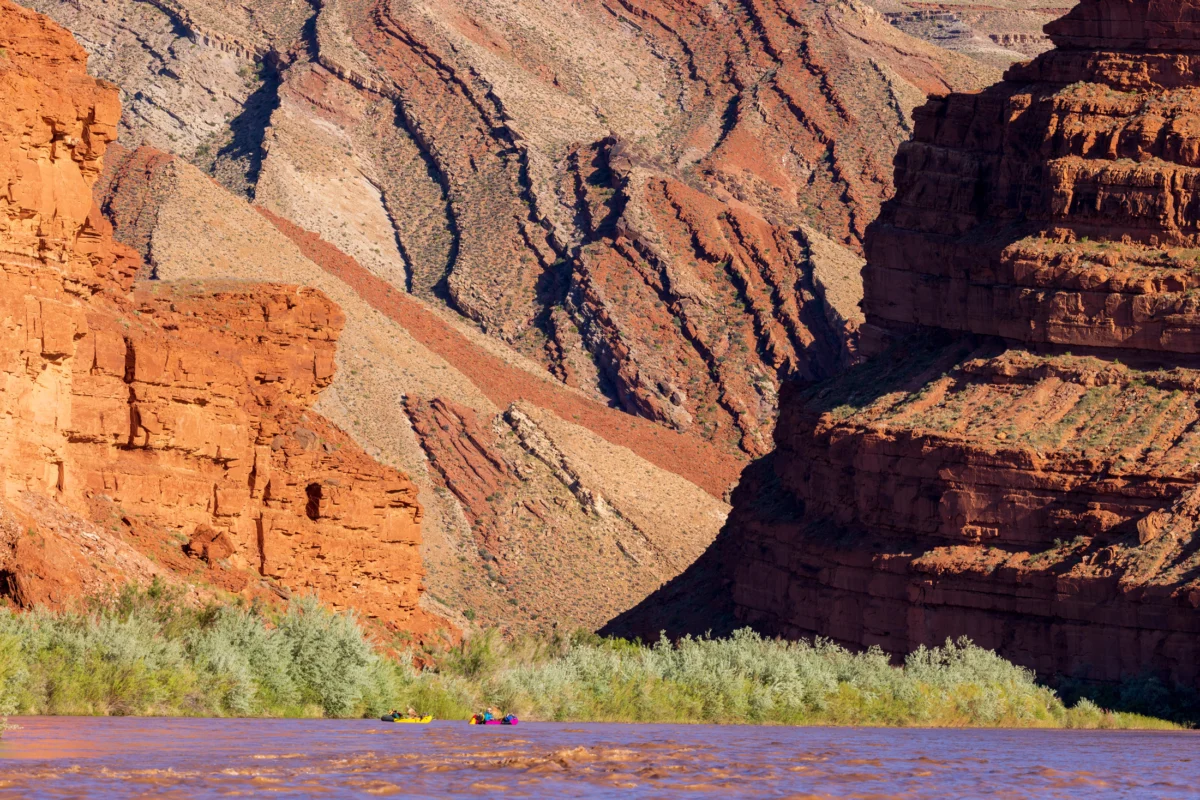
A historic initiative designed to grant sovereign tribal nations a direct, collaborative role in safeguarding their ancestral lands in southern Utah faced an abrupt end on Monday, as President Donald Trump announced a dramatic reduction of the Bears Ears National Monument and the complete dissolution of its governing commission. Established in 2016 alongside the monument, the Bears Ears Commission represented a groundbreaking partnership, uniting five tribal nations with federal agencies to develop management plans for 1.35 million acres rich in cultural heritage and ecological significance. However, the President’s executive order slashed the monument by a staggering 91 percent, explicitly stating the goal of enabling resource extraction and effectively eliminating the commission entirely. Simultaneously, a separate proclamation drastically reduced the nearby Grand Staircase-Escalante National Monument by 90 percent, collectively excising approximately 3 million acres of federally protected land.
This latest action by the Trump administration echoes, and in some respects surpasses, similar reductions undertaken during his first term, which President Joe Biden later reversed, restoring the monuments to their original boundaries. The current proclamation, widely anticipated since President Trump’s return to office last year, culminates a sustained campaign by the state of Utah, advocating for the downsizing of these monuments and a curtailment of Indigenous oversight in their management. Davina Smith-Idjesa, co-chair for the Bears Ears Inter-Tribal Coalition and its representative for the Navajo Nation, articulated the profound sense of betrayal and exhaustion felt across tribal communities during a Tuesday press call. "I am angry. I am hurt, and I am tired of standing here having to explain again why Bears Ears matters to me," Smith-Idjesa declared, underscoring the deep spiritual, cultural, and historical ties Indigenous peoples hold to these landscapes. The Bears Ears Inter-Tribal Coalition, a nonprofit formed by the Hopi Tribe, Navajo Nation, Ute Indian Tribe, Ute Mountain Ute Tribe, and Zuni Tribe, has been at the forefront of advocating for the monument’s protection and the affirmation of tribal sovereignty in its stewardship.

The immediate consequence of these unilateral reductions is not merely a redrawing of lines on a map but a profound blow to the principles of tribal self-determination and co-stewardship. "We have been here before, but this cuts even deeper," Smith-Idjesa explained, highlighting the unprecedented nature of abolishing the Bears Ears Commission. "To reduce Bears Ears again is devastating, but to abolish the Bears Ears Commission is to attempt to erase years of tribal leadership, relationships and work between sovereign tribal nations and our federal partners." This erasure is particularly jarring given that the Department of the Interior under the previous Trump administration had pledged to consult with the commission before considering any changes to the monument’s boundaries – a consultation that the Bears Ears Inter-Tribal Coalition confirmed never materialized.
Monte Mills, director of the Native American Law Center at the University of Washington, observed that Monday’s proclamation goes beyond mere boundary adjustments; it fundamentally redefines what the administration deems worthy of protection. The order’s language dismisses the inherent significance of the region, characterizing the objects within the monument as "not of particular historic or scientific interest" and the broader landscape as merely "generic features" that were "not… worthy of protection." Mills contended that this isn’t simply an effort to undo a monument but "trying to rewrite and trying to erase the real history and meaning and value of this place." He further contextualized the proclamation as part of "a broader project of white nationalism on the part of this administration," aligning it with other governmental actions, such as the removal of signs from national parks that feature Indigenous histories or the narratives of slavery. This perspective suggests a systemic effort to diminish non-Western historical and cultural narratives within the public consciousness.
The lands within Bears Ears and Grand Staircase-Escalante are far from "generic." Bears Ears, known to Indigenous peoples as "Hoon’Naqvut" (Ute), "Skaidih" (Paiute), "Kwiyagatu Nukavachi" (Zuni), "Ansh An Lashokdiwe" (Hopi), and "Sich’iiniihoodzíí" (Navajo), represents a sacred landscape imbued with millennia of human history. It contains tens of thousands of archaeological sites, including ancient cliff dwellings, rock art panels, and burial grounds, making it one of the most culturally significant regions in the United States. It is a living landscape for the five tribes, essential for traditional practices, ceremonies, medicinal plant gathering, hunting, and the continuation of cultural identity. The monument’s name itself refers to two prominent buttes, resembling the ears of a bear rising from the landscape, a powerful symbol of the interconnectedness between people and place.

Grand Staircase-Escalante, established by President Bill Clinton in 1996, shares a similar story of profound paleontological and archaeological importance, alongside its stunning geological formations. Like Bears Ears, it has been a focal point of contention between conservationists, Indigenous groups, and those advocating for resource extraction. The Inter-Tribal Coalition also formed last year to defend Grand Staircase-Escalante and ensure the inclusion of tribal perspectives in its management. Both monuments had finalized their comprehensive resource management plans in 2025, following years of extensive public and tribal consultation aimed at integrating Indigenous knowledge and traditional ecological practices. Bears Ears, in particular, had emerged as an internationally recognized model for Indigenous leadership in land stewardship, demonstrating how collaborative management could effectively balance conservation with cultural preservation and sustainable access.
The recurring political tug-of-war over these monuments vividly illustrates the inherent vulnerability of tribal co-management initiatives to shifts in administrative policy and the powerful influence of economic interests. Bears Ears, in particular, has become a lightning rod, symbolizing the broader struggle over public lands management and Indigenous rights in the United States. Mills argued that the recent actions signal "the fundamental destruction of public-lands management as we know it," extending beyond monuments to encompass grazing rules, oil and gas regulations, and even the enforcement of the Endangered Species Act. He described the federal government’s actions regarding Bears Ears as "fully stepping back from its obligations" to tribal nations, asserting that this retreat occurred "at the behest of Utah politicians."
Indeed, Utah state officials have long maintained a contentious relationship with the federally designated monuments within their borders. In blistering public comments submitted in 2024 on a draft of the Bears Ears resource management plan, the state accused federal agencies under the Biden administration of an undue "focus on eliminating the State’s rights from this land," claiming "wholesale deference" to the Bears Ears Commission. These comments went further, suggesting the plan sought to "create a new ‘Indian Country’" through the monument and demanded that agencies be "more inclusive of living, non-Indigenous people," arguing that the draft plan "gives less respect, dignity and protections to their heritage when compared to the heritage of the area’s Indigenous people." Utah, which had previously sued over President Biden’s restoration of the monuments in 2022, also criticized the plan for promoting "a state of non-use." President Trump echoed these sentiments at Monday’s proclamation signing ceremony, inaccurately claiming that the monument restricted activities like hunting, fishing, and even walking – all of which were permitted within the monuments’ original boundaries.

The decision to shrink the monuments has been met with widespread opposition, not only from tribal leaders but also from members of Congress, conservation organizations, outdoor recreationists, and local communities. The Native American Rights Fund (NARF), which has represented three of the commission tribes at Bears Ears, immediately announced its intention to pursue legal action. NARF Deputy Director Matthew Campbell stated unequivocally on Tuesday that the president lacks the legal authority to unilaterally shrink national monuments, asserting, "We will pursue every available legal course of action to stop these illegal attacks on Native homelands, culture, and people." This legal challenge will hinge on the interpretation of the Antiquities Act of 1906, the foundational law allowing presidents to designate national monuments. While the Act grants presidents the power to create monuments, legal scholars and advocates argue it does not explicitly or implicitly grant the power to abolish or significantly reduce them, a power traditionally reserved for Congress.
Hillary Hoffmann, a professor of law at the University of Wyoming and former co-director of the Bears Ears Inter-Tribal Coalition, emphasized that the constant back-and-forth over the monuments’ boundaries over the past decade "should be a signal to the judiciary that resolution is needed on these legal questions." She suggested that congressional action could provide a permanent solution, safeguarding Bears Ears and Grand Staircase-Escalante and ensuring the continuity of tribal co-management. Despite the setback, Hoffmann remained optimistic, stating, "I don’t think that this strikes any kind of death knell for collaborative management or co-stewardship." Long before the Bears Ears Commission was established, the five tribes united to form the Bears Ears Inter-Tribal Coalition, advocating passionately for the protection of the land that would eventually become the monument. That unwavering commitment, the tribes affirmed this week, will continue. "Our connection to Bears Ears did not begin with a presidential proclamation, and it will not end with one," Smith-Idjesa declared with resolute conviction. "You can abolish a commission, you can redraw a boundary, but you cannot erase our prayers from this land. You cannot erase the footprints of our ancestors from this land. You cannot erase us. We are still here."