Roger Danuarta
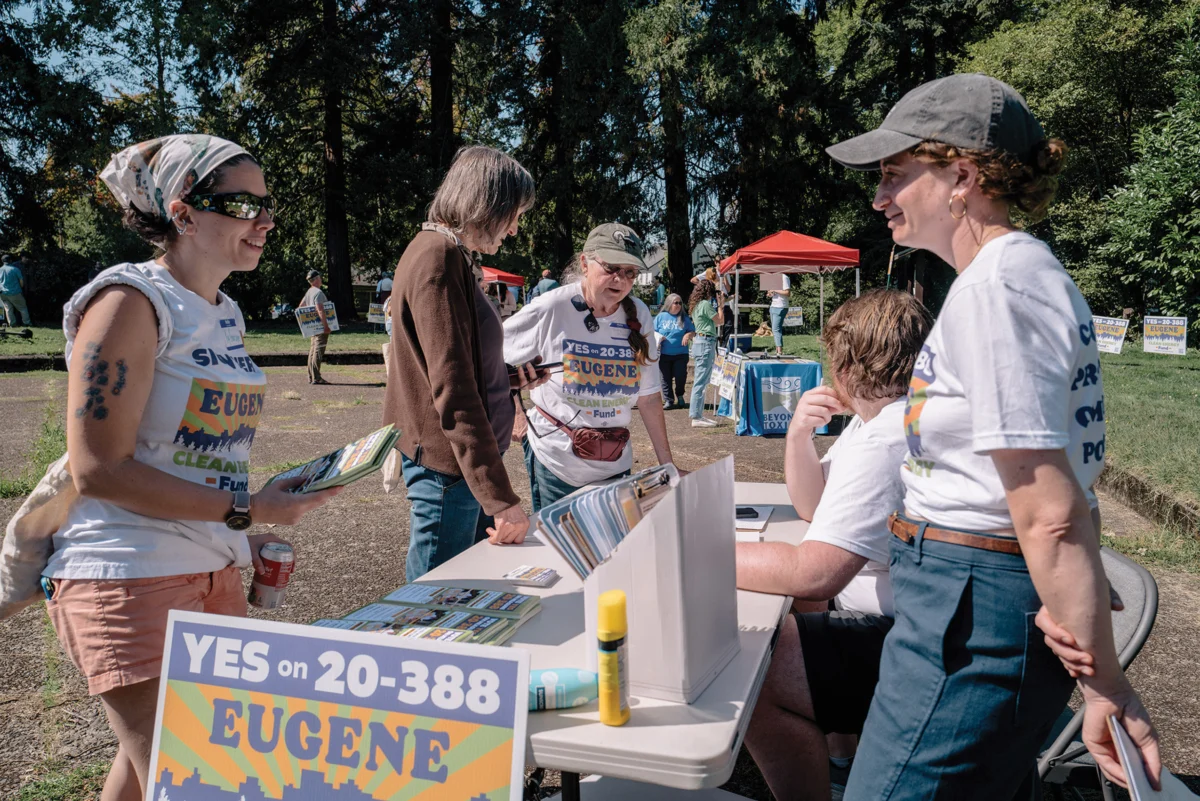
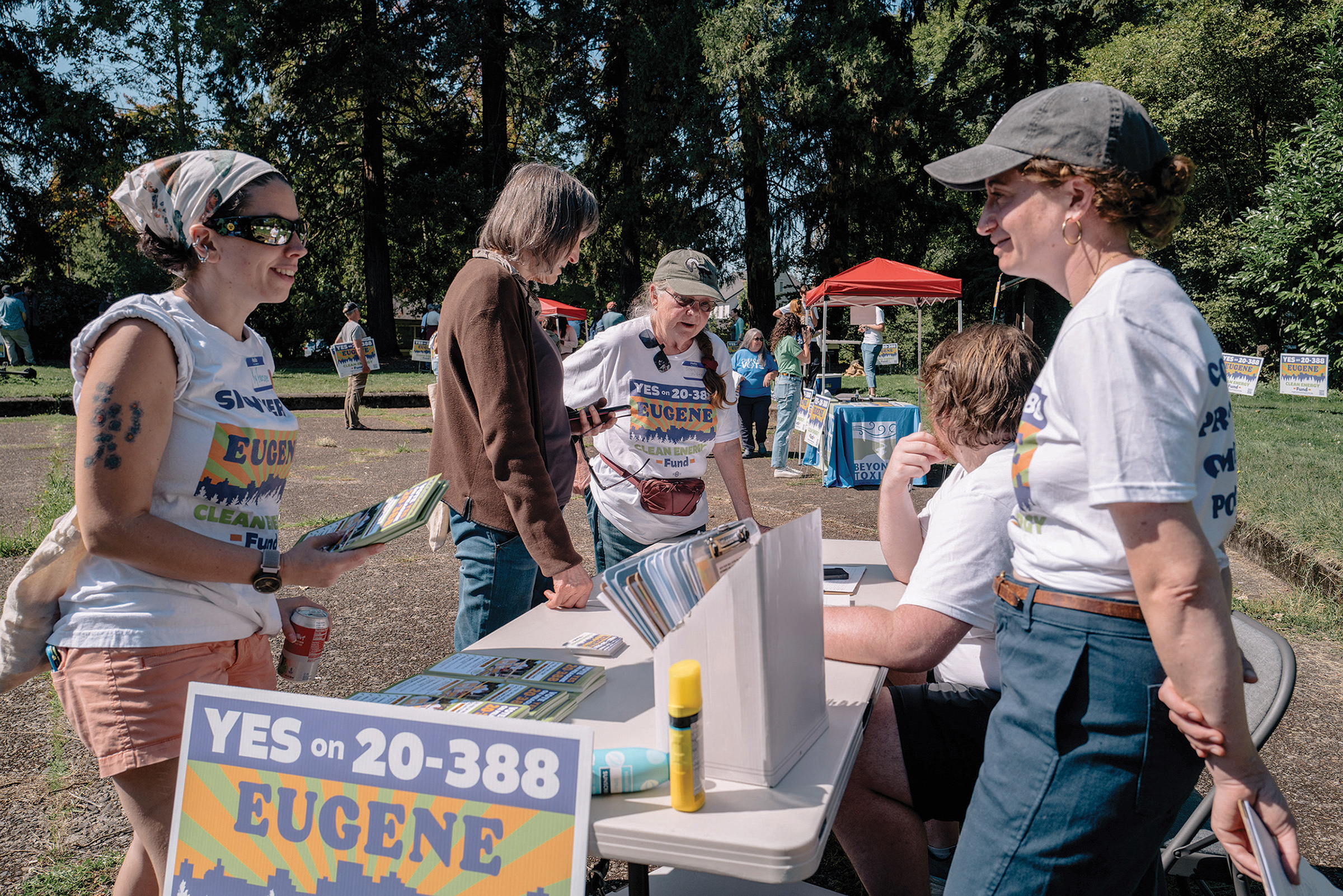
On a sweltering July day, a dedicated cadre of volunteers from Eugene, Oregon, embarked on a half-mile march from the local Sierra Club office to City Hall, their voices rising in a unified chant: "Climate change is here to stay, and billionaires have got to pay!" They carried with them a tangible representation of community resolve—five bankers’ boxes brimming with approximately 14,000 signatures, each one a testament to the growing demand for local climate action. Their mission was clear: to secure a spot for the Eugene Clean Energy Fund on the upcoming November ballot. If approved by voters, this innovative measure promises to unlock millions of dollars, critically needed to finance essential climate-resilience projects across the city, addressing the escalating impacts of a warming planet.
The proposed funding mechanism targets large corporate retailers, imposing a 2% tax on their operations through a mandatory retail license. This strategic approach circumvents Oregon’s unique absence of a statewide retail sales tax, enabling the city to generate revenue locally for pressing environmental needs. The tax specifically applies to companies boasting over $1 billion in gross national profits and at least $500,000 in local earnings. This encompasses a formidable list of economic giants, from ubiquitous big-box stores like Walmart and Target, to e-commerce behemoths such as Amazon, and financial powerhouses including Chase and Wells Fargo. The initiative is rooted in a compelling argument for corporate accountability, asserting that entities profiting substantially from consumer activity should contribute equitably to the ecological health and resilience of the communities that sustain them.
Public sentiment strongly favors the measure, according to one volunteer signature-collector, who observed that "most voters thought the idea was a no-brainer." This widespread support underscores a growing public appetite for concrete climate solutions and a desire to see ultra-wealthy corporations contribute their fair share. Aya Cockram, co-leader of the campaign and an organizer with Breach Collective, powerfully articulated this sentiment to the crowd gathered outside City Hall. "In a country that has seen its first trillionaire," Cockram declared, "it is far past time to make ultra-wealthy corporations pay their fair share, so that our communities can become more livable and resilient." Her words resonate with a broader national and global discourse on wealth inequality and the ethical obligations of large corporations in an era of unprecedented environmental challenges.
The Eugene Clean Energy Fund draws inspiration from a remarkably successful precedent established in Portland, Oregon, with its own similar measure passed in 2018. Portland’s 1% tax on large retailers has proven to be a financial boon for climate initiatives, raising over $1 billion to date. These funds have fueled a diverse array of projects, including extensive home retrofits to enhance energy efficiency, the planting of thousands of urban trees to mitigate heat islands and improve air quality, and the development of community solar installations to foster local, renewable energy generation. City estimates project that the latest slate of projects, approved in 2025, will collectively cut approximately 76,000 metric tons of greenhouse gas emissions, significantly improve regional air quality, lower energy bills for residents, and expand vital green spaces, demonstrating a tangible return on investment for environmental and social welfare.
Advocates in Eugene hope their proposed fund will similarly empower the city to accelerate progress toward its ambitious 2016 goal of cutting community emissions by 7.6% annually. The urgency of this target is underscored by recent data, which reveals only a 10% total drop in emissions from 2014 to 2021, according to city spokesperson Marion Suitor. This modest reduction falls far short of the pace required to meet long-term climate objectives and aligns with a global trend where many cities struggle to translate climate commitments into rapid, demonstrable reductions. The city’s sustainability efforts have also been hampered by severe fiscal constraints. A planned third full-time staffer for the sustainability office in 2026 was eliminated due to budget cuts. With rising inflation and a reduction in both state and federal funding, Eugene’s financial analysts have projected an urgent need to cut $5 million annually from the city’s budget to avert a looming financial crisis. This stark reality means that many existing climate programs are "not funded, or underfunded to the extreme right now," as Dylan Plummer, a campaign adviser with the Oregon Sierra Club, lamented, highlighting the critical role a dedicated local fund could play.
The proposed allocation of the Clean Energy Fund’s revenue reflects a comprehensive strategy for sustainable development and social equity. Ten percent of the funds would be dedicated to green infrastructure projects, which could include initiatives like permeable paving to manage stormwater, expanded urban canopy cover, and investments in public transit infrastructure designed to reduce reliance on fossil fuels. Up to 30% of the revenue is earmarked for clean energy-related job training and apprenticeship programs, a crucial component for fostering a just transition that creates new economic opportunities while addressing environmental challenges. This aspect has garnered significant endorsement from several local labor unions, recognizing the potential for well-paying, future-proof jobs.
Joel Iboa, executive director of the Oregon Just Transition Alliance, a co-leader of the campaign, emphasized the urgency of local reinvestment, particularly in light of recent developments such as the city’s approval for an Amazon distribution center near the airport. While Amazon states a commitment to local hiring, Iboa pointed out that the facility’s extensive delivery truck operations will undoubtedly increase carbon emissions, and the vast majority of its revenue will not recirculate within the local economy. "This is money that real people have helped make," Iboa stated, "and what we are doing is getting a small portion of that back and reinvesting it in the communities that have made that wealth possible." This sentiment underscores a core tenet of the fund: to re-localize wealth and direct it towards community benefit and ecological restoration.

The largest portion of the fund’s revenue, up to 60%, is designated for renewable energy and efficiency programs, with a crucial stipulation that half of these funds must directly benefit under-resourced communities. Emily Matlock, communications director for the local environmental justice organization Beyond Toxics, highlighted how the fund could dramatically expand their work on Eugene’s west side. This area, historically burdened by industrial pollution and concentrated low-income housing, faces significant environmental health disparities. Residents in West Eugene contend with diesel fumes and industrial pollutants, exacerbating health issues. Many homes in these neighborhoods are older, poorly insulated, and therefore require more energy for heating and cooling, particularly during escalating climate extremes. The fund could enable Beyond Toxics to provide vital resources like air purifiers and air conditioners to more residents who cannot afford them, directly addressing health vulnerabilities.
Further underscoring the environmental justice implications, Matlock cited the Trainsong neighborhood, encircled by railroad tracks and industrial operations, where the soil beneath public parks harbors toxic chemicals. While remediation efforts are planned, there is a risk that these activities could inadvertently disperse toxins into nearby homes. The Clean Energy Fund could provide crucial support for homeowners in such areas, enabling them to replace old insulation and windows, and install energy-efficient heat pumps that not only regulate indoor temperatures but also filter air. Such interventions would prevent a decades-long legacy of pollution from becoming further entrenched, transforming homes into healthier, more resilient spaces.
Beyond these targeted initiatives, advocates envision the fund supporting innovative pilot projects, such as the creation of community resilience hubs. These hubs would offer residents vital respite and resources during extreme weather events—serving as cooling centers during heatwaves, charging stations during power outages, and distribution points for emergency supplies. The fund could also catalyze small-scale solar power generation projects, empowering communities with local, clean energy sources. A dedicated 5% of the fund would be reserved for future innovation, underscoring a commitment to continuous adaptation and pioneering new solutions. "The sky is really the limit," Plummer remarked, "and there is an opportunity for us to be on the cutting edge of the transition to green energy, and ensuring that it’s done in a way that supports our front-line communities."
While Eugene’s campaign draws heavily from Portland’s successful model, organizers are acutely aware of the challenges that have emerged in their northern neighbor. Portland’s clean energy tax, initially projected to generate between $30 million and $60 million annually, far exceeded expectations, consistently bringing in closer to $200 million per year, accumulating over $1 billion to date. This unexpected financial windfall, while a testament to the tax’s efficacy, inadvertently led to political pressures and competing demands for what some perceived as readily available funds.

In August, a contentious ballot initiative in Portland sought to divert a substantial 25% of the Clean Energy Fund’s resources to the police department, with "no strings attached." This measure, backed by the Portland Police Association, narrowly failed to gather enough signatures to qualify for the November ballot. Cherice Bock, climate policy director at 350 PDX, an organization instrumental in passing the original Portland fund, vehemently criticized the proposal, stating, "This doesn’t have anything to do with climate change, and they’re not even pretending it does." The incident highlighted the vulnerability of dedicated climate funds to political maneuvering and attempts to reallocate resources away from their intended environmental and social justice goals.
Adding to the complexities, Tom Dundon, the new Dallas-based billionaire owner of the Portland Trailblazers NBA team, publicly suggested he would keep the franchise in town only if the city financed a renovation of its arena. Mayor Keith Wilson appeared amenable to the idea, even suggesting the use of clean energy fund dollars for the project. "We’ll renovate green, cut carbon, and do it the Portland way," he declared in a July press release. By mid-August, the City Council had committed $120 million for the arena, though the "sources yet to be confirmed" for these funds remained ambiguous. Bock, however, sees no genuine climate benefit from city-funded renovations of the Moda Center, which is already LEED-certified, underscoring concerns about mission creep. She further clarified that the perception of a surplus in clean energy funds is misleading; a 2023 analysis by the city of Portland estimated that fully funding all projects outlined in the city’s comprehensive climate plan would require an astronomical $50 billion, illustrating the vast gap between current funding and actual needs, even with a successful local tax.
Against this backdrop of fiscal challenges and political complexities, the Eugene Clean Energy Fund officially qualified for the ballot on August 5th. This milestone arrived amidst a dramatic and grim climate reality gripping Oregon. Following earlier heat waves, the state plunged into its worst wildfire season on record. Smoke and smog choked the skies, subjecting residents to dangerous levels of particulate matter and ozone, with local air quality indexes soaring to hazardous levels like 187. Over 2 million acres across Oregon burned in fires exacerbated by extreme, climate-driven drought conditions, compounded by federal funding cuts to critical services ranging from Forest Service budgets to emergency firefighting assistance.
In light of these compounding environmental crises, the ballot initiative has emerged as a rare beacon of hope and a tangible pathway for local action. As Joel Iboa eloquently described, "Ballot measures like this are a love letter to the community – folks saying, ‘If no one else will do this for us, we’re going to do it for us.’" Eugene’s pioneering effort represents more than just a local tax; it embodies a profound commitment to community self-determination, environmental justice, and a proactive response to the global climate crisis, potentially serving as a vital model for cities worldwide grappling with similar challenges.