Rocky Georgio
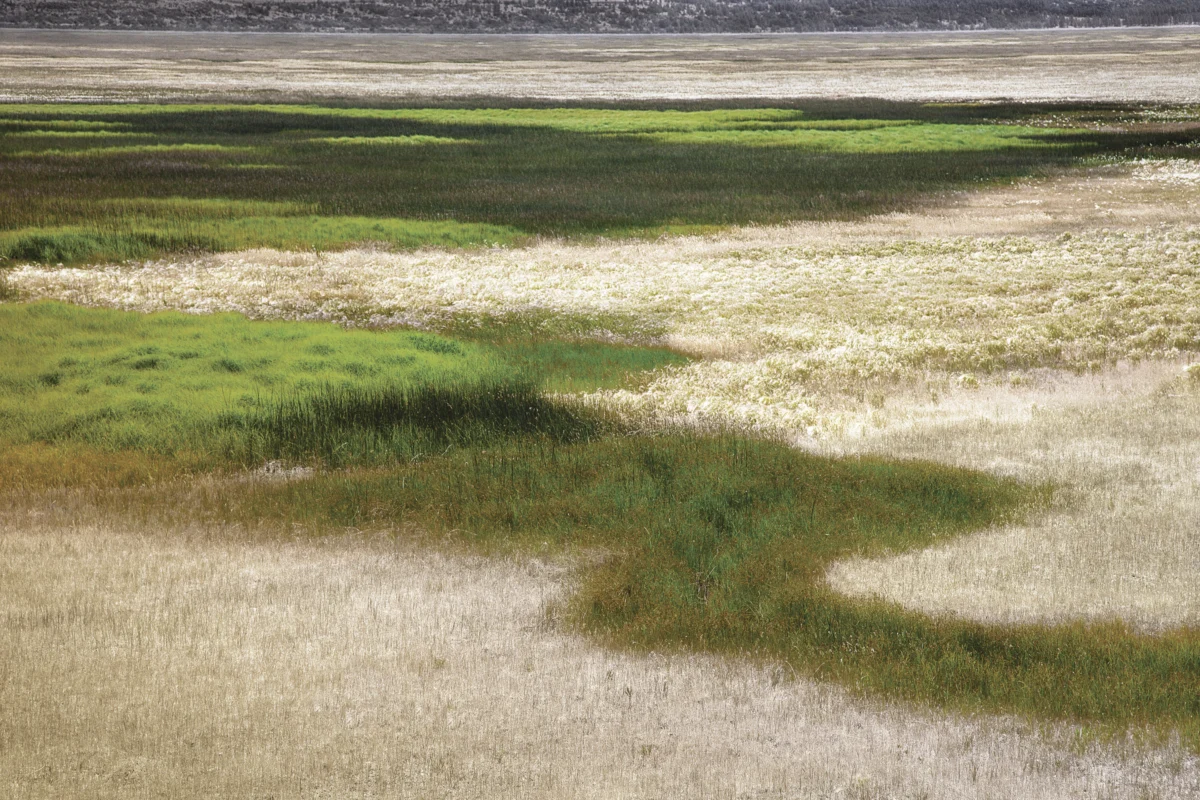
Desert springs, remote pools of water in landscapes defined by aridity, are vital ecosystems that have sustained life for millennia, guiding human migration and shaping settlement patterns across the western United States. These remarkable natural features serve as living archives, preserving both human and natural history within their small confines. They are rare lifelines, crucial for biodiversity, cultural heritage, and hydrological systems, disproportionate to their modest size. The gradual depletion of these precious resources often goes unnoticed, easily missed by those without a memory of what these places once were.

From the arid expanse of the Colorado Plateau in Arizona, where Mormon pioneers established a cooperative dairy in the late 1870s and 1880s, relying on Dairy Spring for butter and cheese production, to the stark beauty of the Black Rock Desert in Nevada, where Indigenous peoples have utilized hot springs for over 10,000 years, these water sources are etched into the fabric of regional history. The modern tubs at Dyke Hot Springs, for instance, are a testament to the ongoing human interaction with these thermal waters, designed to cool the extremely hot springs for a more comfortable experience. Further south, in Mexico’s Sonoran Desert, Alamo Spring emerges as a rare freshwater anomaly, creating small islands at the edge of the vast saltwater ocean, a stark contrast to its surroundings.

These springs are more than just water; they are critical habitats. Tappen Springs on the Colorado Plateau, a permanent water source in an arid environment, has historically served as a vital oasis for Indigenous tribes, local communities, and even historic cattle drives. The delicate balance of these ecosystems is under threat. A conversation with members of the Black Mesa Water Coalition at a Hopi festival in Flagstaff revealed the profound impact of losing these essential springs on their community, affecting them both physically and culturally. Later, during a spring ecology survey in the arid mountains of northeast Arizona, an ecologist shared a sobering statistic: since 1880, over 80% of the region’s springs have become ecologically impaired, and these small havens support an estimated 15% of the nation’s endangered species. This dependence of so much life on such small areas is truly awe-inspiring.

Discovering these hidden waters often relies on a network of human connection, as much as scientific research. A project documenting these springs began through a series of introductions, from a museum curator in northern Nevada to a landowner with a spring on his property. This landowner, whom the photographer has yet to meet in person, even provided daily directions to different springs via text message in exchange for images. This collaborative spirit highlights the deep connection between people and these often-overlooked water sources. Corn Creek Springs in the Mojave Desert of Nevada, historically and culturally significant to Native Americans and later Europeans, now lies within the restricted Nevada Test and Training Range, underscoring the complex relationship between land use and water resources.

The visual documentation of these springs often involves a subtle artistic touch to convey their significance. By slightly desaturating the surrounding arid land and subtly brightening the spring itself, the eye is drawn to the stark contrast between the parched earth and the life-giving water. This approach aims to translate the scientific importance of springs into an emotional connection, echoing the naturalist Alexander von Humboldt’s belief that art can foster a deeper understanding of nature than data alone. Hanging Garden, on the Colorado Plateau, exemplifies this, where groundwater seeps from a cliffside, creating a vibrant micro-ecosystem of mosses, ferns, and flowering plants.

The silence at a desert spring can be deceptive, a stark contrast to the calls of frogs that once echoed in these places. This gradual loss is a generational phenomenon: each new generation grows accustomed to scarcity, accepting it as the norm and remaining unaware of the past abundance. Liston Seep in Utah, once used to water cattle, was diverted and subsequently abandoned when the animals were moved, illustrating how human activities can alter the fate of these springs. In New Mexico’s Chihuahuan Desert, Mirror Lakes, deep spring-fed sinkholes, are slowly shrinking, a direct consequence of agricultural overpumping that depletes the region’s hidden water table and threatens these ancient desert oases.

The project "Hidden Waters" serves as a testament to what still exists and a repository of memory. While some springs may never fully recover their former vitality, the act of making their decline visible is a powerful refusal to let them fade into quiet oblivion. Willow Creek in California’s Mojave Desert illustrates the devastating impact of modern agricultural practices; ancient groundwater, taking millennia to replenish deep basins, is being extracted far faster than nature can replace it, leading to the drying up of these vital springs. Devil’s Inkwell in New Mexico’s Bottomless Lakes State Park, an ancient deep-water sinkhole fed by underground springs, offers a unique attraction for scuba divers in the desert landscape. In Nevada’s Black Rock Desert, East Pinto Hot Springs, used by Indigenous Shoshone and Paiute ancestors for over 6,000 years, are now also a focus for contemporary scientists researching new medicinal compounds within their hyper-saline, extremely hot waters.

Even human interventions can create unexpected oases, albeit fragile ones. Borehole Spring in California’s Mojave Desert, a result of a borehole exploration that punctured a pressurized aquifer, created an accidental wetland that attracts migratory birds and supports wildlife. However, severe drought now poses a significant threat to this unlikely sanctuary. The story of these hidden waters is a call to recognize their immense ecological, historical, and cultural value, and to confront the silent crisis of their disappearance before these vital lifelines are lost forever.