Roger Danuarta
Remote pools of water, desert springs stand as unexpected lifelines in landscapes defined by their stark aridity, their profound significance often underestimated. For millennia, these vital oases have sustained diverse ecosystems and human civilizations across the western United States, guiding ancient migrations and shaping patterns of settlement. Far exceeding their modest size, springs serve as living archives, preserving both human and natural history within their small, precious patches of ground, acting as indispensable hubs for biodiversity, cultural heritage, and complex hydrological systems. Yet, these critical water sources face an accelerating, often imperceptible, depletion, a gradual diminishment easily missed without a collective memory of their past abundance.

The crisis unfolding across arid regions of the American West highlights a critical intersection of persistent drought and unsustainable human water consumption. In California’s Mojave Desert, for instance, the Borehole Spring, an accidental wetland formed when an exploratory drilling operation inadvertently punctured a pressurized aquifer, once flourished as a vibrant haven for migratory birds and various wildlife. Today, this unique oasis stands perilously close to collapse, severely threatened by the intensifying grip of drought conditions that characterize much of the region. Similar fates confront countless other springs, with their waters steadily receding due to a combination of natural climate variability exacerbated by global warming and aggressive groundwater extraction.

The ecological toll of this depletion is staggering. Spring ecologists estimate that over 80% of the springs in northeast Arizona alone have suffered ecological impairment since 1880, a testament to more than a century of hydrological stress. These small, isolated ecosystems are disproportionately crucial, supporting over 15% of the nation’s endangered species, including unique fish, invertebrates, and plant communities found nowhere else. These rare species, often relict populations that have survived past climatic shifts thanks to the consistent water supply of springs, are now at acute risk. The vanishing water leads to habitat destruction, disrupting entire food webs and accelerating the loss of irreplaceable biodiversity. For example, the Hanging Garden in Arizona’s Colorado Plateau, where groundwater seeping laterally through porous rock sustains a vibrant colony of mosses, ferns, and flowering plants on cliff sides, represents a delicate ecosystem highly sensitive to even minor changes in water availability.

Beyond their ecological importance, desert springs hold immense cultural and historical weight. For over 10,000 years, Indigenous peoples across the West, including the Shoshone and Paiute ancestors who utilized the East Pinto Hot Springs in Nevada’s Black Rock Desert for millennia, have relied on these waters for survival, ceremony, and sustenance. Archaeological evidence from sites like Dyke Hot Springs in the Black Rock Desert points to continuous Indigenous use spanning vast stretches of time, underscoring their profound spiritual and practical significance. Communities such as the Hopi, represented by the Black Mesa Water Coalition, articulate the deep physical and cultural wounds inflicted by the loss of springs their ancestors depended upon, illustrating how these natural resources are inextricably linked to identity, tradition, and well-being. Springs like Tappen Springs on the Colorado Plateau in Arizona served as critical oases not only for Indigenous tribes but also for later local communities and historic cattle drives, demonstrating their enduring role as focal points for life and activity. Even places like Corn Creek Springs in Nevada’s Mojave Desert, historically and culturally vital to both Native Americans and early European settlers, now lie within restricted areas like the Nevada Test and Training Range, highlighting how modern land use further complicates their preservation.

The primary driver behind much of this hydrological decline is agricultural overpumping. Vast agricultural operations in the arid Southwest, cultivating water-intensive crops such as alfalfa, cotton, and pecans, extract groundwater from deep basins at rates far exceeding natural replenishment. This unsustainable practice directly impacts springs, as evidenced at places like Mirror Lakes in New Mexico’s Chihuahuan Desert, where deep, spring-fed sinkholes are slowly shrinking, and at Willow Creek in California’s Mojave Desert, where ancient groundwater, which takes millennia to travel and refill deep aquifers, is being rapidly depleted. This over-extraction lowers the regional water table, starving springs of their lifeblood and turning once-permanent water sources into ephemeral pools or dry beds. The impact is also seen at Liston Seep in Utah’s Colorado Plateau, once used to water cattle but now diverted and abandoned as animals were moved elsewhere, showcasing how shifting agricultural practices can lead to the neglect and eventual loss of these valuable water features.

The consequences extend beyond local ecosystems. The drying of springs contributes to broader regional water crises, intensifying competition for scarce resources among agriculture, urban centers, and natural environments. Globally, similar patterns of desertification and aquifer depletion threaten oases in the Sahara, Atacama, and Australian Outback, underscoring a worldwide challenge where human activity and a changing climate push arid zone ecosystems to their breaking point. The unique Alamo Spring in Mexico’s Sonoran Desert, a rare freshwater spring emerging at the edge of the saltwater ocean to create small, vital islands, faces the same pressures that imperil desert wetlands across international borders. Even the Devil’s Inkwell, a deep-water cenote fed by underground springs in New Mexico’s Bottomless Lakes State Park, a site that attracts scuba divers to its unique underwater world, is vulnerable to regional groundwater depletion.

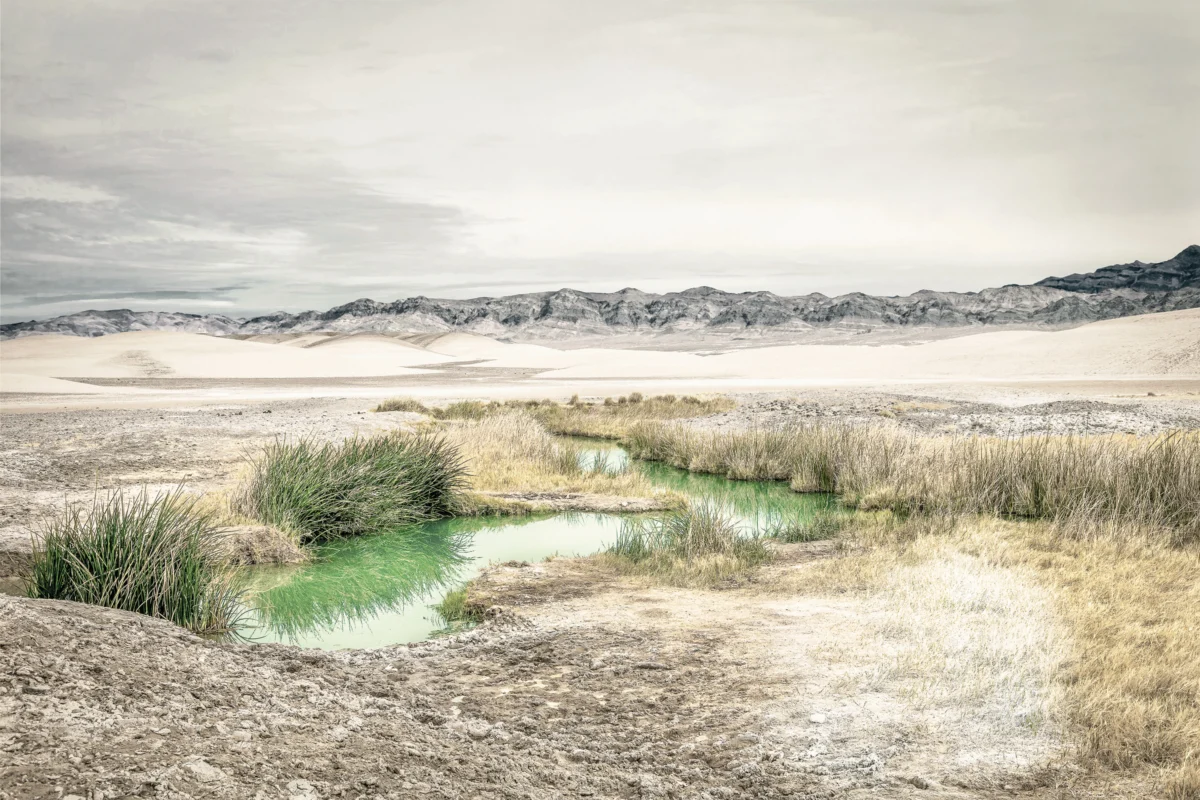
In the face of such widespread loss, the importance of documenting and raising awareness becomes paramount. A dedicated photographic project, "Hidden Waters," meticulously captures the ethereal beauty and stark vulnerability of these desert springs, acting as a crucial witness to their quiet disappearance. Through a distinctive artistic approach, the project subtly desaturates the surrounding parched landscape while allowing the spring itself to glow with a slightly brighter hue, visually emphasizing the profound contrast and the magnetic pull of water in an otherwise desolate environment. This deliberate aesthetic aims to translate the complex science of springs into an experience that can be felt emotionally, rather than merely understood intellectually. This approach echoes the philosophy of the naturalist Alexander von Humboldt, who believed that art serves as a vital bridge, fostering an emotional connection to nature that data alone cannot fully achieve.

The insidious nature of this decline means that each successive generation is born into a landscape of diminished abundance, often accepting the scarcity as a new normal, unaware of the vibrant ecosystems that once thrived. The silence that now blankets many desert springs, where the calls of frogs once resonated, serves as a poignant reminder of this generational amnesia. While some springs may never fully recover their former glory, the act of making their decline visible through initiatives like "Hidden Waters" refuses to let them slip quietly into absence. It serves as a collective memory, a powerful call to recognize, protect, and restore these irreplaceable desert jewels before their vital pulse is extinguished forever. Dairy Spring in Arizona’s Colorado Plateau, where Mormon pioneers in the late 1870s and 1880s once drew water for a cooperative dairy, stands as a testament to both historical utility and the ongoing vulnerability of these precious hydrological sites.