Johny Prima
The nascent state of California, barely a day after its admission to the Union in September 1850, became the target of a swift and calculated legislative maneuver initiated by U.S. Senator John C. Frémont. A former explorer and military officer who had recently relocated from Savannah, Georgia, Frémont wasted no time in submitting a series of 10 bills to the U.S. Senate, seeking to transfer millions of acres of Indigenous land to the newly formed state. This aggressive legislative push, coming on the heels of the California Gold Rush, underscored the profound economic and political pressures driving the rapid expansion of American settlement into the Pacific West, often at the direct expense of Native populations.
Among these proposals, one bill, which ultimately passed, was particularly insidious in its intent: it aimed to dispossess California Indians by "providing for the extinction of their territorial claims in the gold mining districts." This legislation laid the groundwork for an unprecedented assault on the land rights of California’s Indigenous peoples. Critically, these communities held legitimate title to their ancestral territories, rights that had been recognized and secured under the legal frameworks of Spain, the first colonial power in California, and subsequently by Mexico. Frémont himself, in a revealing acknowledgment to his Senate colleagues, stated, "The Spanish law clearly and absolutely secured to Indians fixed rights of property in the lands they occupy, beyond what is admitted by this Government in its relations with its own domestic tribes." Despite this explicit recognition of Native title, the Senate proceeded to pass the bill, effectively nullifying centuries of established land tenure and paving the way for widespread land grabs.
Historian Benjamin Madley, author of the acclaimed work An American Genocide: The United States and the California Indian Catastrophe, highlights the profound implications of Frémont’s actions. Madley points out that Frémont’s statement effectively acknowledged that Native title had remained intact under Spanish, Russian, and Mexican colonial rule in California. This awareness of pre-existing Indigenous land rights and their legal ramifications was a significant concern for U.S. legislators at the time, as it presented a complex challenge to the American doctrine of "discovery" and the concept of terra nullius (empty land) often used to justify territorial expansion.
The proposed solution to this inconvenient legal truth was a series of treaty negotiations. Between 1851 and 1852, a concerted effort led to the signing of 18 treaties with 119 representatives from various California tribes. These agreements promised the establishment of 19 reservations, encompassing approximately 7,488,000 acres—roughly 7.5% of California’s total land area—as a means to secure Indigenous lands and livelihoods. However, these promises proved hollow. The U.S. Senate, yielding to intense pressure from land-hungry settlers and powerful political interests, failed to ratify any of these treaties. This deliberate inaction left California’s Indigenous populations vulnerable and without legal protection for their lands, opening the door to further encroachment, violence, and displacement. Instead of the promised extensive reservations, Congress authorized only seven temporary military reservations, totaling a mere 125,000 acres, with none exceeding 25,000 acres. By the late 1860s, all but two of these meager allocations were abandoned, intensifying the hardship faced by Native communities. This pattern of unratified or broken treaties was not unique to California, mirroring similar betrayals across the American West and contributing to the systematic dispossession of Indigenous peoples nationwide.

The devastating consequences of this historical injustice resonated for decades. It was not until nearly 80 years later, in 1928, that Congress passed the California Indians Jurisdictional Act. This landmark legislation authorized the California Attorney General to sue the federal government in the U.S. Court of Claims on behalf of California Indian people, seeking compensation for the stolen land. Crucially, the act imposed severe limitations: it did not empower Indigenous communities to control the litigation process or select their own legal representation, effectively denying them agency in their own pursuit of justice.
In the early 1940s, a prominent figure named Earl Warren, who would later serve as Chief Justice of the U.S. Supreme Court and deliver the majority opinion in the landmark Brown v. Board of Education case, argued on behalf of California Indian people. Despite his efforts, the initial settlement reached in 1953 offered a paltry $150 to each of approximately 33,000 individuals. This meager sum reflected a radical undervaluation of the land, further diminished by the deduction of substantial legal fees and "offsets"—expenses the state of California claimed it had incurred to "care for the Indians." This concept of offsets, essentially charging Native people for their own subjugation, was a common tactic employed by the U.S. government to reduce its financial obligations in land claims cases. Related legislation, the Indian Claims Commission Act of 1946, established a mechanism for tribal nations across the country to argue for compensation for seized lands. However, the commission was expressly forbidden from returning land, limited instead to awarding monetary compensation based on the land’s market value at the time it was taken, rather than its contemporary worth or the true cost of intergenerational loss.
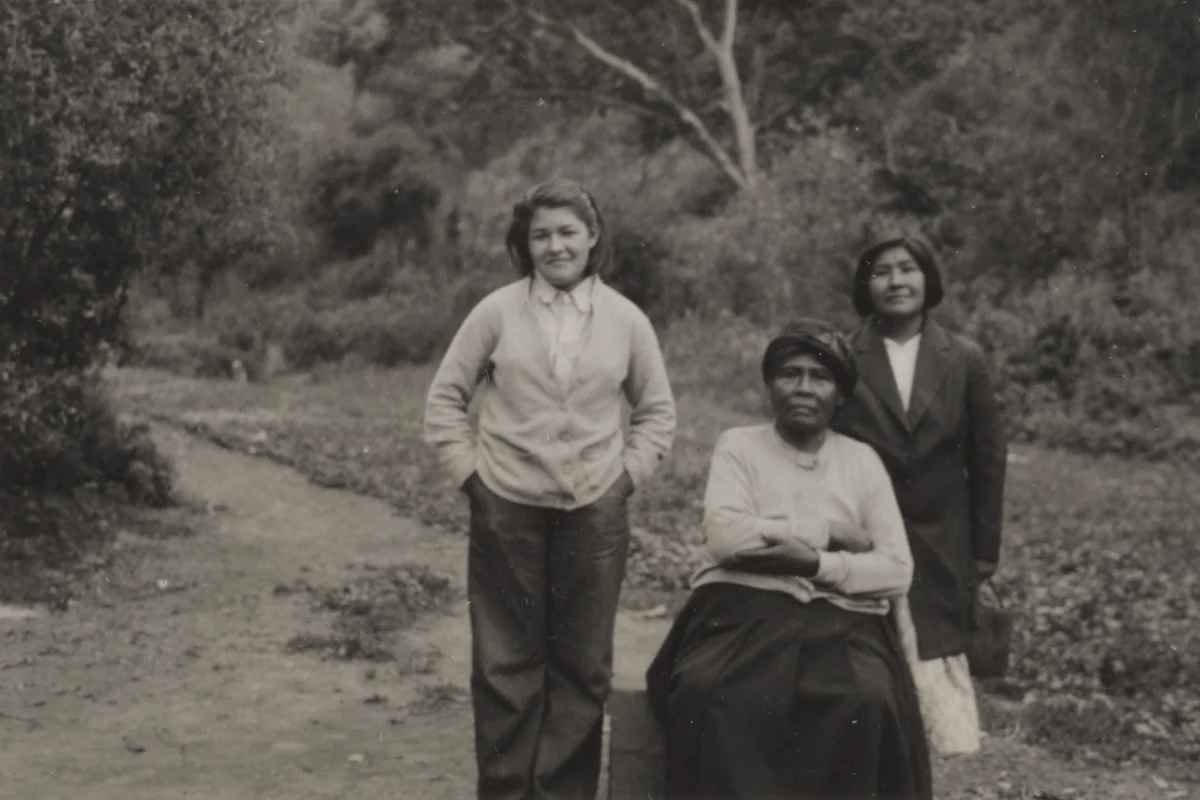
The legal battle, known by its docket number K-344, dragged on for nearly 30 years, a testament to the protracted and arduous path to even partial redress. Ultimately, California Indian families received final payments ranging between $600 and $700. The story of my own family, the Herreras (née Forsting), encapsulates this enduring struggle. My grandmother, Anna Herrera, born in 1921 as a Salinan Indian, grew up in a time when Indigenous people were not yet recognized as citizens in their own homeland. She recounted memories of her mother, grandmother, great-grandmother, aunts, and uncles living in Toro Creek, a vibrant village nestled in the oak country between what is now Atascadero and Morro Bay on California’s central coast. Their lives were upended when, in her teenage years, the Marre Land and Cattle Company initiated a years-long campaign that eventually led to their forced eviction.
Years after my grandmother’s passing, I discovered a poignant letter among her belongings, dated September 1972 and addressed to "ALL CALIFORNIA INDIANS." It was an invitation from a group called California Indians for a Fair Settlement, urging her to attend a meeting to discuss a forthcoming check from the federal government. The U.S. had agreed to pay California Indians $29.1 million for the land taken in 1853, an amount that translated to a mere 47 cents per acre. The letter starkly reminded recipients that some of this land, particularly gold-rich territories, had been valued at $20 an acre at the time, with timber and mineral rights adding significantly more. "What do you think California Indian land is worth?" the letter challenged, a question that resonated deeply with the profound injustice of the settlement. My grandmother never spoke of the letter, the settlement, or the village from which her family was forcibly removed, leaving a silence that spoke volumes about the pain and unresolved trauma. Understanding how California Indian land could be valued at less than the price of a postage stamp requires delving into the forgotten history of those unratified treaties.
It was against this backdrop of historical grievance and the ongoing fight for recognition and reparations that the Indigenous LandBack movement, now gaining significant global attention as #LandBack, began to take root in California nearly a century ago. By allowing California Indian families the right to sue for land lost after the 18 unratified treaties, state leaders offered a glimmer of acknowledgment for the harm inflicted, presenting a fragile opportunity for reconciliation.

Fast forward to March 2026, when the California Natural Resources Agency issued a press release celebrating a groundbreaking policy aimed at returning 7.5 million acres to the stewardship of tribal nations. The announcement declared the "state’s first-ever Tribal Stewardship Policy establishes statewide framework for tribal access, collaboration, and ancestral land return." The agency explicitly stated that this acreage was representative of the land promised for reservations under the 18 unratified treaties with California Indians. Over the preceding two years, more than 7.5 million acres had indeed become part of California’s symbolic "LandBack pledge." Notable examples include the Yurok Tribe in Northern California, the Washoe Tribe, and the Southern Sierra Miwuk, who reclaimed land bordering the iconic Yosemite National Park. This land, previously held by the Pacific Forest Trust nonprofit, demonstrates a growing, albeit complex, trend of land restoration.
The Yurok, Washoe, and Klamath tribes, among others, offer powerful narratives of land return, contributing to the broader #LandBack movement across Indian Country. However, it is crucial to remember that nearly a century ago in California, Native people were compelled to file a lawsuit not to reclaim their ancestral territories, but merely to be fairly compensated for them. Neither true land return nor equitable compensation fully materialized.
The California Indians Jurisdictional Act of 1928, the legal bedrock for these claims, defined "the Indians of California" as anyone able to trace descent from an individual living in the state on June 1, 1852. The subsequent lawsuit, K-344, sought compensation for the land that would have been allocated under the 18 unratified treaties. In 1937, a Government Accounting Office report meticulously detailed every dollar the state claimed to have spent "for the benefit of" California Indians between 1852 and 1932. These alleged expenses, ranging from funding schools and hospitals to surveying reservations that were never established, formed the basis of the "offsets" that California demanded be subtracted from any federal compensation. These offsets were astonishingly broad, encompassing everything from the prosecution of kidnappers (during a documented Indian child-kidnapping and indenture trade in the 1850s and ’60s) to Indian Commissioners’ salaries and the cost of enrolling every California Indian for compensation. The proposed settlement amounted to $17,816,624.48, but after deducting $12,650,761.02 in offsets, the net award plummeted to a mere $5,165,863.46. Disturbingly, the report casually noted that it did not include the money the U.S. reimbursed California for "suppressing and repelling Indian hostilities"—reimbursements, in essence, for the state militias that were paid to hunt and kill Native people, a grim detail recorded in a separate ledger.
By the time the case reached its final hearings in San Francisco in 1955, the core dispute had evolved into a philosophical battle over how to quantify a people’s relationship to their land. Government expert witnesses championed the "ecological theory," an argument positing that a tribe’s true territory could be mathematically calculated by mapping the areas that supplied the majority of its food, deeming all other areas secondary and less deserving of compensation. Some government witnesses asserted that 90% of subsistence was derived from a mere 5% to 20% of a tribe’s claimed land, a contention designed to drastically reduce the amount of land recognized as "owned" by California Indians and, consequently, shrink the payout. However, this specious argument was meticulously dismantled by anthropologists Alfred Kroeber and Robert Heizer. When Kroeber was pointedly asked how much land Indigenous people in California owned, he responded unequivocally: "All of it." In 1959, the three commissioners unanimously agreed, rejecting the flawed ecological theory. Yet, it would take another 13 years, until 1972, for letters like the one my grandmother received to reach households across the state, forcing individuals to grapple with whether 47 cents an acre constituted an acceptable form of justice.
In the 1960s, the Washington D.C.-based law firm Wilkinson, Cragun and Barker actively campaigned throughout California, holding meetings to persuade tribal leaders and citizens to accept the settlement money. They warned of the risks of prolonged litigation and the potential for an even smaller payout. While most California Indians reluctantly accepted the offer, it was met with widespread dissatisfaction over the grossly undervalued compensation. At a meeting in Eureka in 1964, Michael Rogers, an authorized representative of the Klamath River from the Witchback Hoopa Valley Reservation, passionately contested the settlement amount. "The real issue today is that these attorneys are here to ask you to sell the rest of the state of California for 47 cents," he declared. "Now they state that 47 cents comes from the price of 1853… Well, in 1853, if land was selling for 47 cents an acre, at that time gold was only worth $16 an ounce. Today, the price of gold is $35, and that 47 cents would be equal to $1 and a quarter, which Congress said that the Indians could sue for would be the limit."

Ultimately, the settlement stood. The lawyers convinced the California Indians to accept the offer, resulting in my grandmother, like tens of thousands of others, receiving her share—approximately $688. Tragically, her mother, Felista Forsting; her grandmother, Maria Severiana Bailon; and her uncles, Jose Bailon and Ramon Roses, all of whom were part of the 1928 lawsuit and named on the judgment rolls, passed away without ever receiving a single penny of compensation for their stolen ancestral lands.
Half a century later, the state of California has shifted its rhetoric from "settlement" to "stewardship," embracing the language of collaboration and ancestral land return. However, the fundamental power dynamic often remains unchanged: California largely dictates what to give back, when, and to whom, echoing the same governmental authority that decided what to take in 1852. While the 7.5 million acres mentioned in the recent Tribal Stewardship Policy represents a significant step, it pales in comparison to the estimated more than 75 million acres Indigenous people lost across California. No policy, apology, or act of stewardship, however well-intentioned, can fully compensate my family or countless others for the profound spiritual, cultural, and material losses endured through generations of dispossession. The long shadow of those unratified treaties continues to shape the landscape of justice in California.