Rocky Gerung
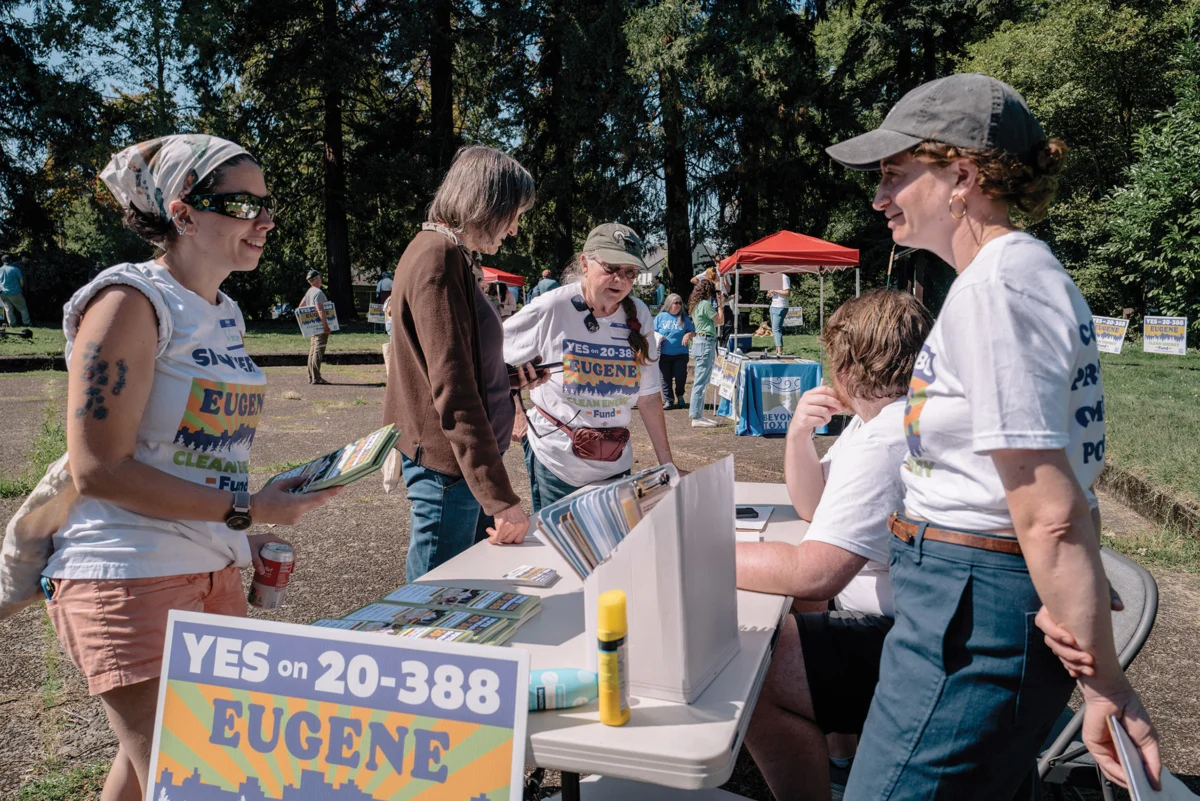
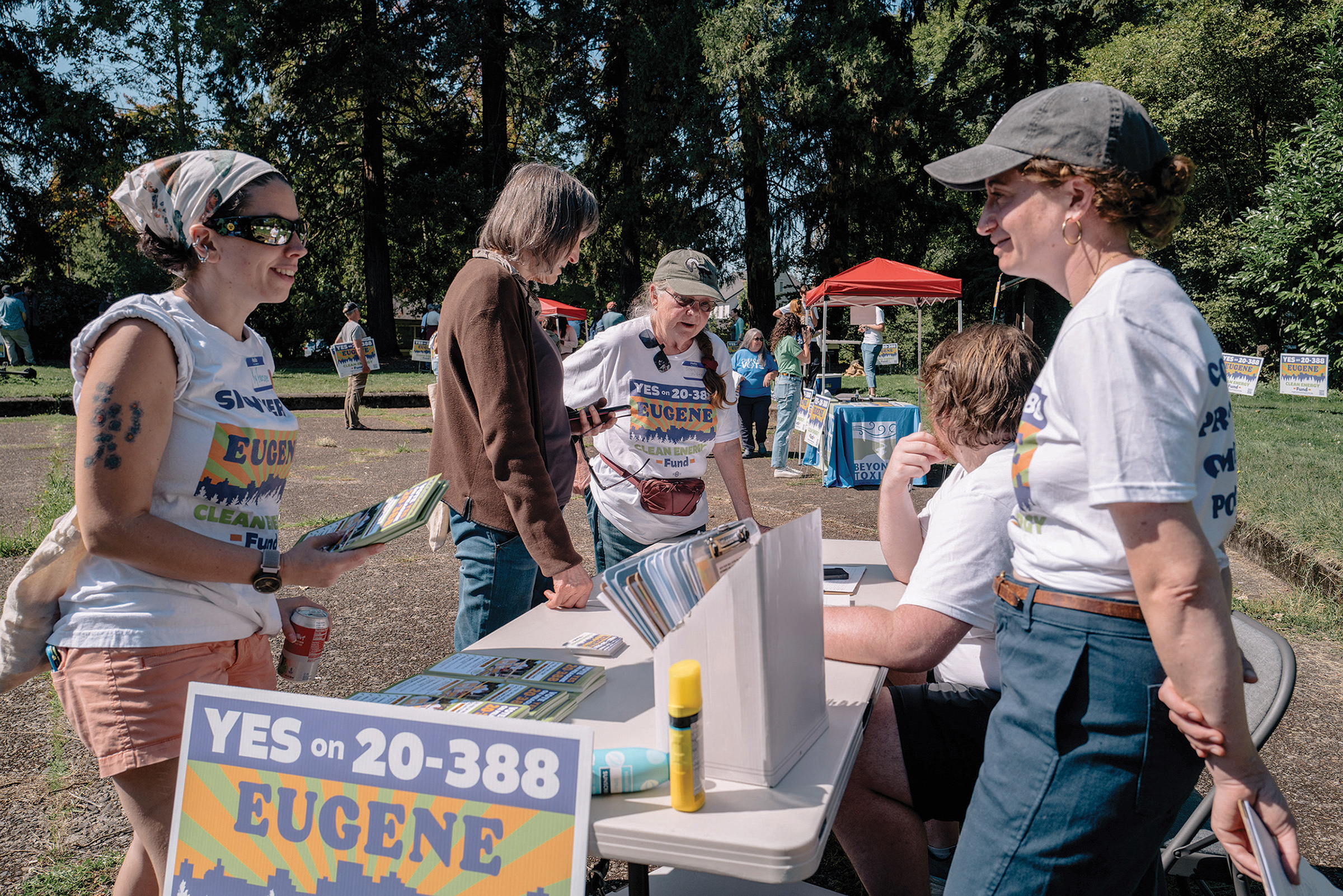
On a humid July day, a determined group of volunteers marched from the Eugene Sierra Club office to City Hall, their chants echoing the urgent call: "Climate change is here to stay, and billionaires have got to pay!" They carried five bankers’ boxes filled with approximately 14,000 signatures, a powerful testament to public support for placing the Eugene Clean Energy Fund on the November ballot. If approved by voters, this landmark initiative promises to generate millions of dollars dedicated to vital climate-resilience projects throughout the city.
The proposed measure would establish a mandatory 2% retail license tax on large corporate retailers, a strategy designed to tap into the vast profits of major companies without imposing a sales tax on Oregon residents, as the state currently lacks such a levy. This tax would specifically target corporations with national gross profits exceeding $1 billion and local profits of at least $500,000, encompassing major players like big-box retailers such as Walmart and Target, e-commerce giants like Amazon, and financial institutions including Chase and Wells Fargo. Volunteers reported that many residents found the concept to be a straightforward solution, with one signature collector noting the overwhelming public sentiment in favor of the initiative.
Aya Cockram, co-leader of the campaign and an organizer with the Breach Collective, articulated the campaign’s core message to the crowd gathered outside City Hall: "In a country that has seen its first trillionaire, it is far past time to make ultra-wealthy corporations pay their fair share, so that our communities can become more livable and resilient." This sentiment reflects a growing global movement to hold large corporations accountable for their environmental impact and to redirect a portion of their profits toward community-focused solutions.
The Eugene Clean Energy Fund is directly inspired by a successful similar measure implemented in Portland in 2018. Portland’s 1% tax on large retailers has generated over $1 billion to date, funding a wide array of climate initiatives. These have included retrofitting homes for energy efficiency, expanding urban tree canopy, and developing community solar projects. The city of Portland estimates that projects approved in 2025 alone will achieve a reduction of approximately 76,000 metric tons of greenhouse gas emissions, simultaneously improving air quality, lowering energy bills for residents, and enhancing vital green spaces.
Advocates for the Eugene initiative hope it will provide the necessary financial impetus for the city to achieve its ambitious 2016 goal of reducing community-wide emissions by 7.6% annually. Current data indicates a less-than-ideal progress, with only a 10% total drop in emissions recorded between 2014 and 2021, according to city spokesperson Marion Suitor. This sluggish progress underscores the urgent need for dedicated funding streams to accelerate climate action.
Compounding the challenge, Eugene’s sustainability efforts face significant financial constraints. The city’s sustainability office, which had planned to hire a third full-time staffer in 2026, saw the position eliminated due to budget cuts. A recent assessment by the city’s financial analyst revealed that, amidst rising inflation and dwindling state and federal funding, Eugene must identify $5 million in annual budget reductions to avert a financial crisis. "Any of these (climate) programs that we’re talking about, you can assume are not funded, or underfunded to the extreme right now," stated Dylan Plummer, a campaign advisor with the Oregon Sierra Club, highlighting the precarious financial state of critical environmental programs.
The proposed structure of the Eugene Clean Energy Fund allocates significant portions of its revenue to tangible climate solutions and community benefits. Ten percent of the funds are designated for green infrastructure development, while up to 30% will support clean energy-related job training and apprenticeships. This focus on workforce development has garnered endorsements from several local labor unions, signaling a broad coalition of support for the initiative.

Joel Iboa, executive director of the Oregon Just Transition Alliance, a co-lead of the campaign, pointed to the recent city approval of an Amazon distribution center as a prime example of why such a fund is necessary. While Amazon commits to local hiring, the majority of its revenue is unlikely to recirculate within the Eugene community, and the increased activity of delivery trucks will likely contribute to rising carbon emissions. "This is money that real people have helped make, and what we are doing is getting a small portion of that back and reinvesting it in the communities that have made that wealth possible," Iboa emphasized, framing the tax as a mechanism for wealth redistribution and community empowerment.
The largest share of the fund’s revenue, up to 60%, is earmarked for renewable energy and efficiency programs, with a crucial stipulation that half of this allocation must directly benefit under-resourced communities. Emily Matlock, communications director for the local environmental justice organization Beyond Toxics, explained how this funding could significantly expand their work in West Eugene. This area, characterized by concentrated industrial pollution and a high prevalence of low-income housing, often suffers from poor indoor air quality due to older, poorly insulated homes and the pervasive influence of industrial emissions. The fund could enable Beyond Toxics to provide essential resources like air purifiers and air conditioners to residents who cannot afford them, mitigating the health impacts of environmental injustice.
In neighborhoods like Trainsong, which is bordered by active railroad lines and industrial operations, residents contend with the legacy of toxic chemicals in the soil. Matlock noted that even necessary remediation efforts could inadvertently spread contaminants. The Clean Energy Fund could empower homeowners in such areas to undertake crucial upgrades, such as replacing old insulation and windows, and installing energy-efficient heat pumps that also function as air filtration systems, thereby preventing existing pollution from becoming further entrenched. Beyond these direct interventions, advocates envision the fund supporting pilot projects, including the establishment of resilience hubs to provide community members with shelter and resources during extreme weather events, and the development of small-scale solar power generation initiatives. A dedicated 5% of the fund is set aside for future innovation, offering flexibility to adapt to emerging technologies and community needs. "The sky is really the limit, and there is an opportunity for us to be on the cutting edge of the transition to green energy, and ensuring that it’s done in a way that supports our front-line communities," Plummer added, underscoring the initiative’s potential for transformative change.
The Eugene campaign draws heavily on the experience of Portland’s initiative, but organizers are mindful of recent challenges that have arisen in the Rose City. Portland’s Clean Energy Fund, initially projected to generate between $30 million and $60 million annually, has instead yielded closer to $200 million per year, accumulating over $1 billion cumulatively. This unexpected influx of funds has, for some, created a perception of surplus, leading to contentious proposals for its reallocation. In August, a closely contested ballot initiative aimed at diverting 25% of Portland’s Clean Energy Fund to the police department narrowly failed to garner sufficient signatures for inclusion on the November ballot. The campaign, supported by the Portland Police Association, would have channeled millions of dollars to the department without specific climate-related conditions. Cherice Bock, climate policy director at 350 PDX, which was instrumental in passing Portland’s fund, stated that such proposals "don’t have anything to do with climate change, and they’re not even pretending it does," highlighting the potential for diversion of funds from their intended environmental purpose.

Adding to the complexity in Portland, Tom Dundon, the billionaire owner of the NBA’s Portland Trail Blazers, has indicated his intention to keep the franchise in the city contingent upon municipal funding for arena renovations. Mayor Keith Wilson has expressed openness to utilizing Clean Energy Fund dollars for this project, stating in a July press release, "We’ll renovate green, cut carbon, and do it the Portland way." In mid-August, the City Council committed $120 million for the arena renovations, with the funding sources yet to be definitively confirmed. Bock, however, expressed skepticism about the climate benefits of renovating the already LEED-certified Moda Center, suggesting that such expenditures might not align with the fund’s core objectives. She further cautioned against the misconception of a surplus of clean energy funds, referencing a 2023 city analysis that estimated the total cost of fully implementing Portland’s climate plan at a staggering $50 billion.
Eugene’s Clean Energy Fund initiative officially qualified for the ballot on August 5th, a date marked by the unfolding of Oregon’s most severe wildfire season on record. The skies were choked with smoke and smog as residents experienced their second consecutive day of hazardous air quality, with particulate matter and ozone levels reaching an air quality index of 187. This environmental crisis was exacerbated by extreme climate-driven drought and significant cuts to federal funding for critical services, including Forest Service budgets and emergency firefighting assistance. In this context of escalating climate impacts, the ballot initiative represents a crucial opportunity for local action. Iboa described such ballot measures as "a love letter to the community," signifying a collective assertion by residents: "If no one else will do this for us, we’re going to do it for us."