Roger Danuarta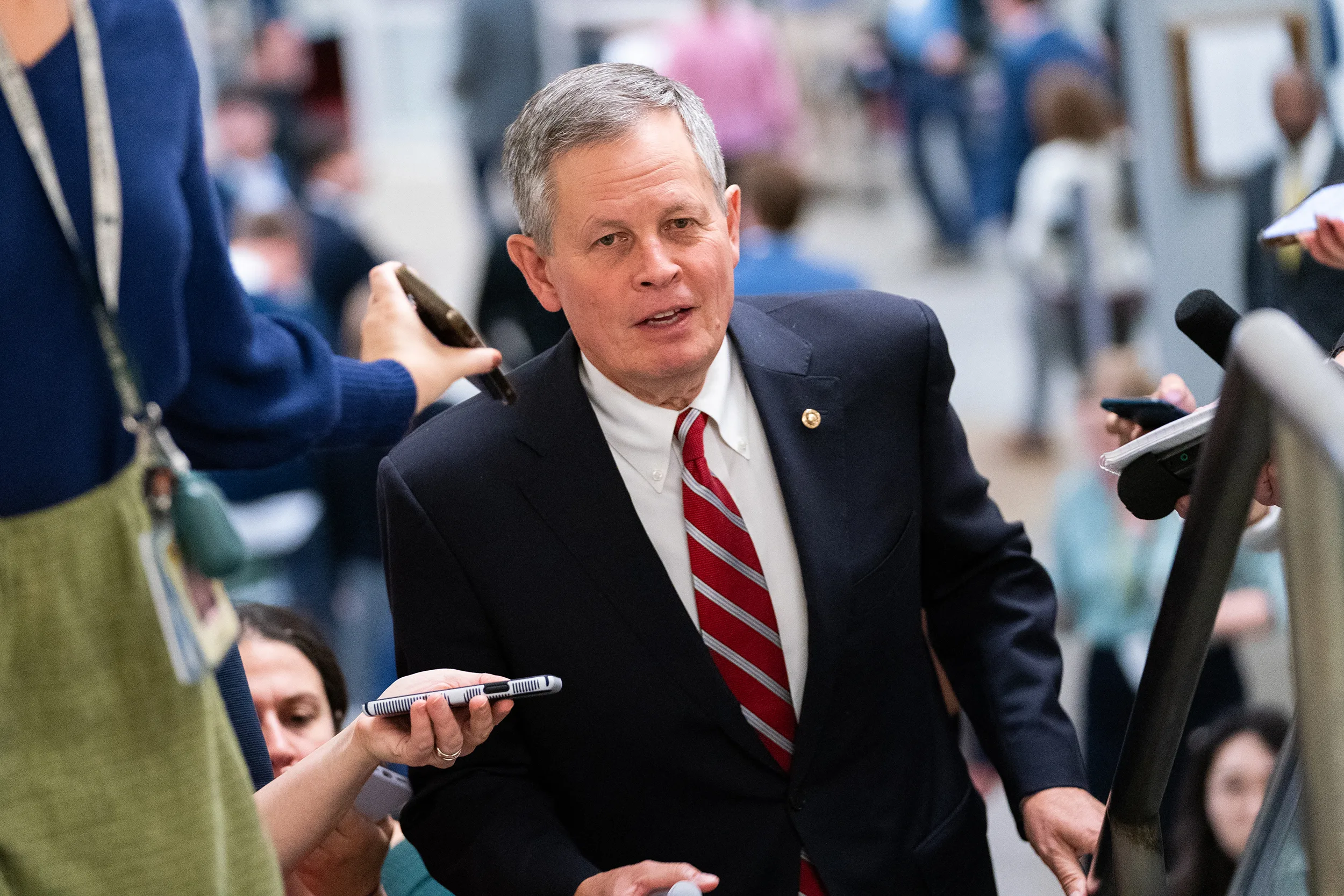
A political tremor of historic proportions recently rocked Montana, leaving veteran observers stunned and fundamentally altering the battlegrounds for control of the U.S. Congress. In a week that Mike Dennison, a seasoned political journalist, called the most surprising in his four decades covering the state, two well-positioned Republican incumbents — Senator Steve Daines and Representative Ryan Zinke — abruptly announced their departures from upcoming re-election bids. Their simultaneous withdrawals, mere days and even minutes before the crucial March 4 filing deadline, have plunged half of Montana’s four-seat congressional delegation into uncharted territory, creating open races that could prove pivotal in a tightly contested national election cycle.
Dennison’s initial disbelief, when his wife informed him of Senator Daines’s withdrawal, underscored the sheer improbability of the situation. Daines, a two-term incumbent, a prominent figure in the Republican Party, and a close ally of former President Donald Trump, had been widely considered a near-certain victor in his re-election campaign. His decision to pull out just three minutes before the deadline, followed by the revelation that he had orchestrated a handpicked successor, sent shockwaves through the state and Washington D.C. This came just two days after Representative Zinke, another formidable Republican incumbent, announced his own decision not to seek re-election, citing health reasons. Adding to the week’s political drama, Senator Tim Sheehy, not up for re-election, became embroiled in a physical altercation on Capitol Hill, further spotlighting the state’s tumultuous political environment.
"I really can’t recall anything like two incumbents who are in an excellent position to get reelected pulling out days before the end of the filing deadline," Dennison remarked, highlighting the unprecedented nature of these events in Montana’s political history. "It’s pretty much unheard of."

The immediate ramifications extend far beyond the Big Sky Country. With the Republican Party currently holding a slim majority in the U.S. House of Representatives, Democrats need to flip just three seats to seize control, a prospect they view with increasing optimism. While the Senate, requiring a flip of four seats, presents a steeper challenge, the sudden opening of a reliably Republican Senate seat in Montana injects an unforeseen element of possibility. Political analysts, who a week prior would have dismissed Montana as a potential Democratic gain, now acknowledge a significantly improved landscape for the opposition. This shift guarantees that these races will attract considerable national attention and a deluge of campaign finance, with one political scientist forecasting that this will become the most expensive midterm election in Montana’s history.
Representative Ryan Zinke, a former Navy SEAL and Secretary of the Interior, announced his decision on March 2, citing health concerns stemming from decades of military service. He emphasized the need for full-time representation, stating that his required surgeries would risk "uncertain absence and missed votes." Zinke’s western U.S. House District, which encompasses the more liberal urban centers of Missoula and Bozeman, proved to be Montana’s closest statewide contest in 2024, with Zinke narrowly defeating his Democratic challenger by a mere 7%. This history makes the open seat a prime target for Democrats hoping to expand their congressional footprint.
The Republican field for Zinke’s former seat quickly filled with prominent contenders. Aaron Flint, a popular radio talk show host, quickly secured the coveted endorsement of former President Trump, signaling the national party’s interest in maintaining control. Al "Doc" Olszewski, a surgeon and former state senator, represents a familiar face, having lost to Zinke in the 2022 primary by fewer than 2,000 votes. Christi Jacobsen, Montana’s current Secretary of State, brings statewide name recognition and experience to the race. On the Democratic side, a diverse group of candidates has emerged, including Ryan Busse, a former firearms executive who transitioned into a gun safety advocate after a previous gubernatorial bid; Sam Forstag, a wildland firefighter and union leader; Russell Cleveland, a U.S. Navy veteran; and Matt Rains, a U.S. Army veteran and rancher. The depth of the Democratic bench for this potentially competitive district suggests a concerted effort to capitalize on the opportunity presented by Zinke’s exit.
The most dramatic political maneuver came two days after Zinke’s announcement, when Senator Daines, a 13-year veteran of Congress, executed his abrupt withdrawal. In a video message, Daines announced his departure from the Senate race, citing a desire to spend more time with his wife and seven grandchildren. However, many political insiders speculate that Daines’s political career is far from over, with whispers of a potential future role in a Trump cabinet or a run for the Montana governor’s office. Daines himself explained the last-minute timing as a strategic move to preempt potential Democratic challengers, such as former Senator Jon Tester, from entering the race and transforming it into an "expensive political bloodbath." Tester, however, has publicly denied any intention of joining the race.

The controversy deepened with the revelation of Daines’s meticulously planned succession. Kurt Alme, the state’s U.S. Attorney, filed his Senate candidacy just five minutes before Daines formally withdrew his name from the ballot. Alme swiftly received endorsements from both Daines and former President Trump, underscoring the coordinated nature of the transition. This secretive, last-minute maneuver, effectively shutting out other potential candidates from entering the race, ignited a firestorm of criticism from across the political spectrum. Observers decried the process as an affront to democratic principles. An op-ed in The Daily Montanan sharply criticized the move: "Democracy usually involves voters, primaries, debates, competition. But apparently, we’re trying something new now — succession planning." Another opinion piece lamented, "Eight minutes. That is what Montana voters got. Eight minutes between the moment Kurt Alme’s name appeared on the filing system and the moment the window slammed shut forever. The people of Montana deserve a Senate race where they — and not a coordinated group of insiders — get to decide who wins."
Lee Banville, director of the University of Montana School of Journalism, noted that a key question now is whether this perceived backroom dealing will "sow more division within the Republican Party, or is it just a momentary blip that will fade in the next couple of weeks or months?" Such last-minute candidate switches are not entirely without precedent, as a Democratic congressman from Illinois similarly announced his retirement after a filing deadline last fall, leaving only his top aide on the ballot, a move that also drew widespread condemnation.
Despite the controversy, the Senate race in Montana remains a formidable challenge for Democrats. Kurt Alme, with the backing of the state’s Republican establishment and the former president, is positioned strongly. The most prominent challenger to Alme currently is Seth Bodnar, the former president of the University of Montana, who entered the race as an independent candidate the day before Daines’s announcement. Bodnar faces a significant hurdle, needing to gather over 13,000 signatures to secure a place on the official ballot. His candidacy reflects a growing national trend of left-leaning independents seeking office in traditionally red states, with similar movements observed in Utah and Idaho. However, Montana’s political history presents a steep climb for Bodnar; no third-party candidate has ever won a major statewide race in Montana. Adding to his challenges, while he allegedly has the tacit support of former Senator Jon Tester, many Democrats express concern that Bodnar’s presence will split the non-Republican vote, ultimately aiding the Republican candidate.
Further complicating the state’s political narrative was Senator Tim Sheehy’s involvement in a scuffle on Capitol Hill. Sheehy intervened to assist Capitol Police officers in removing a U.S. Marine protesting the war in Iran during a committee hearing. The altercation resulted in the protestor’s arm being broken. Sheehy defended his actions, stating he "decided to help out and deescalate the situation" and that the "gentleman came to the Capitol looking for a confrontation, and he got one." While this incident may not have direct national political consequences in the same vein as the incumbent withdrawals, it certainly captured public attention, with "Sheehy" briefly becoming a more popular search term than "Zinke" or "Daines" in Montana. The event highlights the increasingly volatile climate of political discourse and the actions of public figures within it.

As the dust begins to settle on this extraordinary week, the long-term impact on Montana’s political landscape and its role in the national election remains to be seen. Banville suggests that most everyday Montanans are likely not following the intricate political machinations closely, and it will take time for voter sentiment to coalesce. What is clear, however, is that a seemingly quiet election year has been dramatically transformed, making Montana a crucial state to watch as the nation heads towards the polls. The twin departures of two powerful incumbents have not only reshaped local races but have also injected a fresh wave of uncertainty and potential opportunity into the broader struggle for control of the U.S. Congress.