Roger Danuarta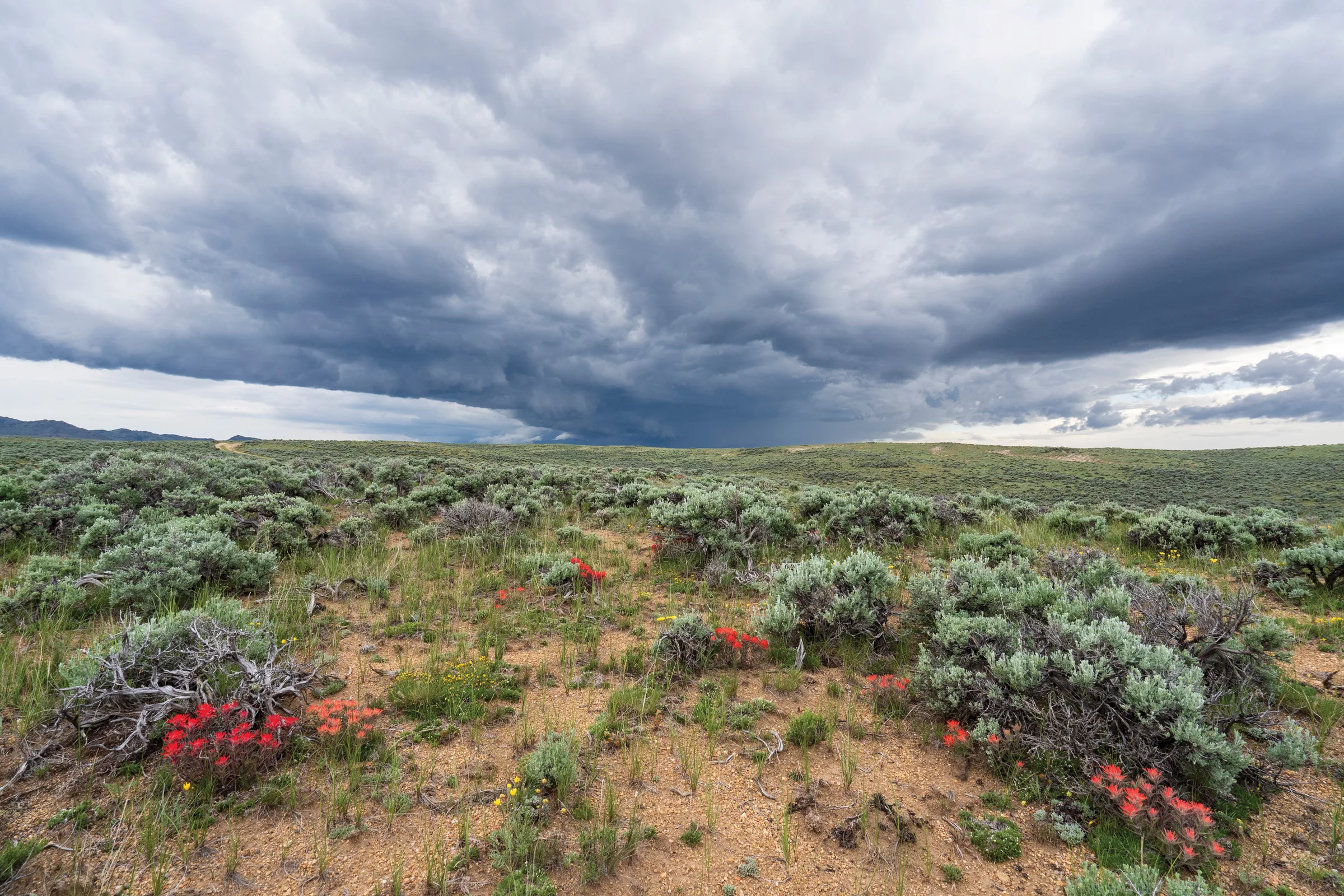
In the vast, undulating sagebrush steppe of western Wyoming, an extraordinary annual migration unfolds each summer as late June transitions into early July. Within a region informally known as the Golden Triangle, sage grouse embark on a critical journey. Mothers and their broods, comprising gangly, semi-flightless chicks, abandon the parched, unforgiving desert expanses for higher, greener pastures. Driven by an innate search for burgeoning wildflowers and a bounty of skittering beetles, these young birds undertake a remarkable trek, walking upwards of 20 miles across the rugged terrain. This perilous journey underscores the vital importance of an intact landscape, allowing them the space to forage and mature into the competent adult fliers that effortlessly navigate the high plains.
This 280,000-acre expanse, predominantly managed by the Bureau of Land Management (BLM), represents an ecological marvel, a living testament to the wild heart of the American West. It boasts the highest concentration of sage grouse found anywhere on Earth, a distinction largely attributed to the undisturbed room these iconic birds have to move, breed, and raise their young. But the Golden Triangle’s significance extends far beyond the sage grouse. Each winter, over a thousand elk find sustenance in its high-elevation landscape, relying on the cured grasses, dried wildflowers, and resilient shrubs. Pronghorn and mule deer also depend on this area, either as crucial wintering grounds or as indispensable stopovers along their epic migrations—journeys recognized as the longest documented for these species in the Lower 48 states.

Tom Christiansen, a retired Wyoming Game and Fish Department biologist with over three decades of experience in the region, aptly describes the Golden Triangle as "the best of the best." Its unique topography features perennial and intermittent streams that emerge from geological fissures, carving meandering paths through the hills. These water sources nourish wet meadows and irrigated pastures even at higher elevations, fostering a biodiversity rarely seen. Crucially, the land has, to date, remained relatively untouched by pervasive invasive species like cheatgrass, which has degraded vast tracts of sagebrush habitat elsewhere across the West, further cementing its superlative ecological status.
Yet, the future of this irreplaceable landscape and its myriad inhabitants now hangs precariously in the balance. The Golden Triangle stands as one of only a handful of places in oil and gas-rich southwestern Wyoming that is not currently available for fossil fuel leasing. However, the existing management plan that has afforded it protection is facing unprecedented challenges. Conservation groups nationwide are expressing profound alarm, fearing that this critical area may soon be opened to industrial energy development. This apprehension is fueled by the BLM’s expedited efforts to rewrite the rules governing the region, a broader trend of congressional intervention overturning recently approved land-use plans across the West, and the explicit push for "energy dominance" by the current administration. As Christiansen lamented, "There used to be a lot more of the best. But this is about the last of it."
The precariousness of the situation was starkly highlighted in October when the BLM announced that nearly 20,000 acres, including parcels within the Golden Triangle, could be available for oil and gas leasing. This move caused immediate consternation among conservationists, as the Golden Triangle is explicitly off-limits to drilling under the BLM’s own current management plan. While the BLM subsequently reversed course two months later, with Wyoming public affairs leader Micky Fisher stating the parcels were never intended for leasing and that the initial announcement was merely to gauge industry interest before filtering out unavailable areas, the initial proposal itself served as a potent warning. Typically, the agency would remove protected parcels from consideration before making such public announcements, making this sequence of events highly unusual and unsettling.

The framework for how the BLM manages the vast public lands under its purview is enshrined in comprehensive Resource Management Plans (RMPs). These voluminous documents serve as blueprints, guiding local field staff on how to respond to diverse requests ranging from cattle grazing and trona mining to oil and gas drilling and the development of new recreational trails. The creation of an RMP is an exhaustive, agency-led process, meticulously designed to incorporate public input through countless meetings, discussions, and extensive public comment periods responding to environmental impact statements. Such a process often spans years, if not a decade, to achieve consensus and finalization. The current RMP for the Rock Springs area, encompassing the Golden Triangle, was completed in late 2024, a culmination of over 13 years of arduous deliberation and public engagement.
However, despite its recent finalization, the BLM announced in October that it would undertake an expedited overhaul of significant portions of this plan within a single year. This rapid revision of a freshly approved RMP is highly uncommon and has been met with strong criticism. Julia Stuble, The Wilderness Society’s Wyoming state director, articulated the sentiment of many, describing the swift revision as "disrespectful of the communities that have put a lot of time and effort into this."
A BLM news release attributed these potential changes to President Donald Trump’s "Unleashing American Energy" executive order. This directive explicitly instructs federal agencies to "reassess policies that may unnecessarily restrict access to domestic energy and mineral resources." The release specifically highlighted the reexamination of Areas of Critical Environmental Concern (ACECs)—designations intended to protect special resource values, such as the Golden Triangle—to ascertain if their existing protections remain warranted under the administration’s energy-centric agenda.

Conservation groups acknowledge that certain stipulations on drilling can help mitigate negative environmental impacts. For instance, the BLM can designate specific areas as open to leasing with "no surface occupancy" (NSO) requirements. This allows companies to access underground oil and gas deposits through advanced technologies like horizontal drilling, wherein a single well pad can connect to a dozen wells extending miles beneath the surface, thereby minimizing the surface footprint and reducing the need for numerous dispersed well pads. However, implementing such protective stipulations is becoming increasingly difficult. Historically, BLM field staff possessed the flexibility to add these restrictions during the leasing phase. Now, due to the 2025 "Big Beautiful Bill"—a legislative measure with wide-ranging implications—these stipulations must be explicitly written into the management plan before an area is leased. This shift effectively removes a critical layer of environmental protection and local control, making it far harder to safeguard sensitive habitats once an area is opened for development.
The ecological consequences of unchecked development are well-documented. Hall Sawyer, a prominent Wyoming biologist, has long studied these impacts. A paper he authored in 2017 provided compelling evidence that mule deer herds in the Pinedale Anticline—another sagebrush-covered landscape less than 50 miles from the Golden Triangle that underwent significant energy development—declined by nearly 40% after the onset of drilling. Sawyer’s conclusion is stark: "If it’s important habitat, don’t lease it, because after that you lose control over being able to protect the resource." Once an area is leased and subsequently developed, wildlife invariably bears the brunt of the impact.
The threat of leasing and drilling in the Golden Triangle is not an isolated incident but rather indicative of a broader pattern wherein Congress and the current administration are pushing beyond established historical norms in public land management. David Willms, the National Wildlife Federation’s associate vice president of public lands, points to the increasingly aggressive use of the Congressional Review Act (CRA) by House and Senate Republicans in late 2025. This legislative tool allows Congress to overturn recently finalized federal regulations or rules with a simple majority vote. Republicans utilized the CRA to discard, in whole or in part, the newest versions of five resource management plans across the West, including one in North Dakota, another in Alaska, amendments in Wyoming and Montana, and a record of decision in Alaska. Furthermore, House Republicans also employed the CRA to initiate the reversal of a mineral lease withdrawal near the Boundary Waters Canoe Area Wilderness in Minnesota and are reportedly considering its use to overturn the resource management plan for Grand Staircase-Escalante National Monument in Utah.

When management plans are overturned in this manner, they typically revert to older versions, some of which are decades old. This means that crucial new scientific understanding—for example, on the precise routes of wildlife migrations or the effectiveness of modern energy-development stipulations designed to lessen impact—is entirely ignored. These outdated plans also offer little to no real insight into how the land will be managed in a future increasingly shaped by the profound challenges of climate change, burgeoning data centers, and escalating recreational pressures. This political ping-pong creates immense instability and uncertainty. If Republican administrations continue to rewrite or overturn established management plans, future Democratic administrations are highly likely to remake them in turn, perpetuating a cycle of policy whiplash.
This constant flux carries a profound risk: local communities, who invest years of their time and expertise in shaping these plans, will eventually grow "burnt out," as Willms cautions. If these dedicated citizens disengage, the planning process risks being dominated by directives emanating solely from Washington D.C., rather than reflecting the nuanced needs and values of the people and ecosystems on the ground. This outcome is precisely what local stakeholders wish to avoid, emphasizing the importance of their direct involvement in shaping their shared future.
For anyone who cherishes the ecological future of the Golden Triangle—and indeed, for the survival of the sage grouse and countless other species racing towards greener pastures—sustained engagement remains paramount. The potential loss of these ecological superlatives, this "best of the best," is not yet a foregone conclusion. The fate of this vital Western treasure ultimately hinges on the unwavering commitment of its stewards and advocates.