Roger Danuarta
When weary Mormon pioneers, led by Brigham Young, traversed the formidable Wasatch Mountains in July 1847 and first laid eyes upon the shimmering expanse of the Great Salt Lake, they were met with a sight that seemed almost miraculous in the arid Western landscape. This was no desert mirage, but a vast body of saline water, fed by the pristine freshwater runoff from the abundant snowpack of Utah’s towering ranges, notably the Wasatch and Uintas. From alpine valleys, frolicking creeks converged into a significant river, which they aptly named the Jordan, before emptying into the gigantic salty basin. Young, surveying the scene, famously declared with a sense of destiny: "It is enough. This is the right place." On that very spot, they founded Great Salt Lake City, a name later shortened in 1868, and immediately embarked on an ambitious endeavor to dam and divert the vital creeks, transforming the parched land into a thriving irrigated "Zion."
The Great Salt Lake stands as the largest natural lake west of the Mississippi River and the most expansive saltwater lake in the Western Hemisphere. Historically, its surface area fluctuated dramatically with annual precipitation, typically spanning between 1,700 and 2,000 square miles before the advent of large-scale river diversions in the 20th century. This vast inland sea represents a critical nexus in the Pacific Flyway, an immense migratory bird highway connecting South America to the Arctic. Each year, it hosts over 10 million migrating birds, encompassing more than 230 distinct species. Its ecological importance for avian life remains paramount: the lake provides essential habitat for up to 60% of the world’s Wilson’s phalaropes, approximately a quarter of North America’s snowy plovers and northern pintail ducks, 10% to 20% of its American white pelicans, and a staggering 50% to 90% of its eared grebes, which congregate there in late summer to molt and feast on the lake’s abundant brine shrimp, preparing for their arduous southward migration.
This unique and inherently fragile ecosystem relies entirely on consistent freshwater inflows to sustain its brackish wetlands, veritable hotspots of biodiversity. The lake’s continued degradation, let alone its potential disappearance, would unleash catastrophic consequences, not only for the myriad bird populations across the entire Western Hemisphere but also for Utah’s diversified local economy, which it supports to the tune of $1.9 billion annually. Furthermore, the respiratory health of nearly 2.7 million residents inhabiting the burgeoning four-county megalopolis known as the Wasatch Front – home to the vast majority of Utah’s 3.5 million people – hangs precariously in the balance. Despite these stark warnings and the undeniable value of this natural wonder, critics contend that the state of Utah is recklessly accelerating its demise.
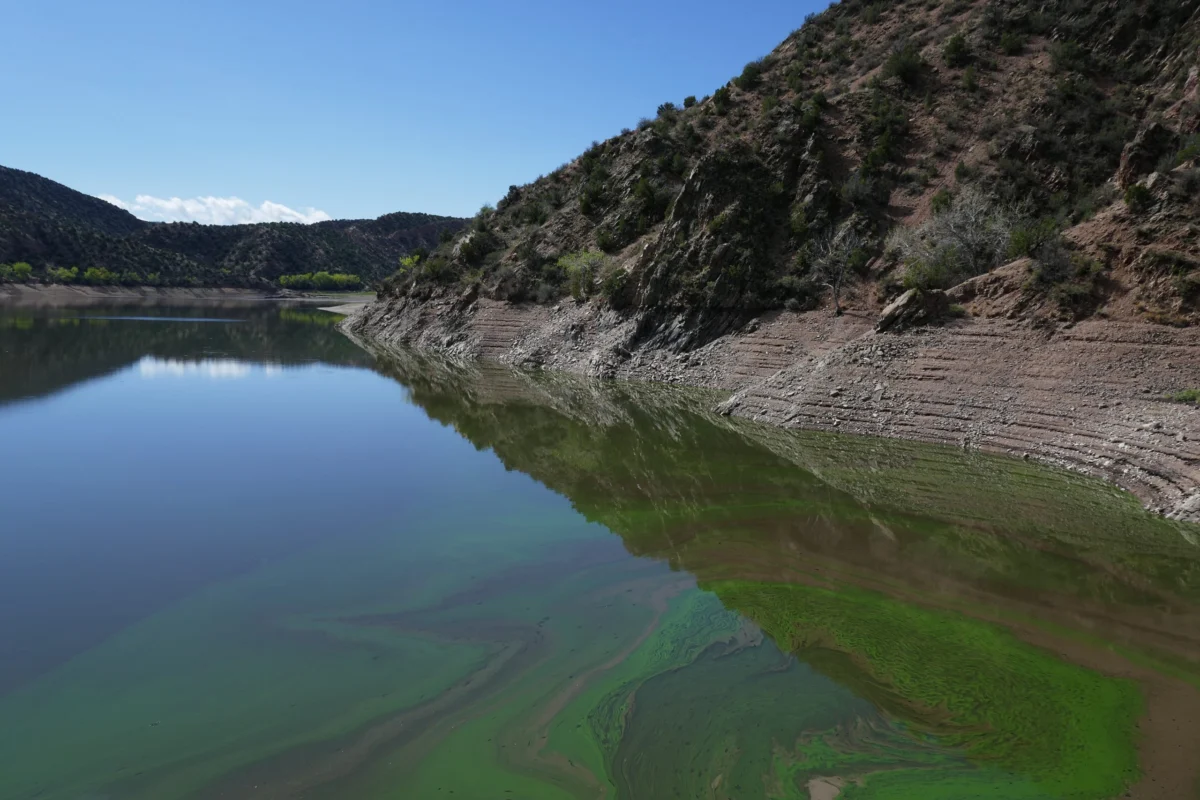
The Great Salt Lake receives its lifeblood from three primary rivers: the Jordan, Weber, and Bear. Alarmingly, each of these crucial waterways is now extensively diverted before its waters can reach the lake. Overall, the volume of freshwater inflows has plummeted by approximately 40% since the late 1980s, leading to an alarming 64% reduction in the lake’s overall water volume. Since the 19th century, the lake level has dropped a staggering 11 feet. This shrinking footprint, now barely half of its historical average, carries multiple devastating effects. Firstly, it drastically increases the lake’s salinity, pushing delicate ecosystems to their breaking point. Secondly, it has exposed close to a thousand square miles of dry lakebed, known as playa, to the region’s fierce winds. These winds whip up colossal dust storms, laden not only with naturally occurring heavy metals but also with toxic compounds derived from intensive mining and mineral extraction activities surrounding the lake. A sobering 2020 study published in the journal Atmospheric Environment revealed that air pollution, with a rapidly increasing proportion directly linked to these severe dust storms, is responsible for an estimated 2,480 to 8,000 premature deaths each year, shortens average life expectancy by up to 3.6 years, and imposes an annual economic burden on Utahns ranging from $750 million to $3.3 billion. The Wasatch Front, despite being one of the fastest-growing regions in the United States, is experiencing a concerning trend of residents considering relocation due to the rapidly deteriorating air quality.

In 2022, the Great Salt Lake reached its lowest recorded level in history, shrinking to a mere 888 square miles. As the frequency and severity of the dust storms became impossible to ignore, and public pressure for a viable solution mounted, Utah Governor Spencer Cox’s primary public response was to urge Utahns to pray for rain. However, the lake’s precipitous decline is not an "act of God" or solely attributable to a lack of precipitation, though decreased river flows exacerbated by global warming are undeniably making the situation worse. The overwhelming culprit is the unsustainable overuse of water, a direct consequence of decades of policy decisions by Utah politicians, including Governor Cox, and the public institutions ostensibly tasked with safeguarding the state’s invaluable water resources. Many argue that these entities have collectively failed to heed Brigham Young’s prescient declaration: "It is enough."
Despite its inherently arid climate, Utah paradoxically holds the unenviable distinction of having the nation’s second-highest per-capita water use, trailing only its neighbor, Idaho. A disproportionate amount of municipal water is allocated to outdoor landscaping, watering lawns, golf courses, sidewalks, driveways, and even streets. A remarkable 60% of household water consumption goes towards maintaining outdoor aesthetics, significantly higher than the national average of 30%. Much of this extravagant landscaping consists of vast swaths of Kentucky bluegrass, a species requiring a substantial 24 to 30 inches of water over its growing season—equivalent to two or more feet of water simply to keep it green. Urban Utah, or more accurately, suburban Utah, characterized by sprawling single-family homes outside downtown Salt Lake City, presents a mirage-like green expanse in the desert, resembling an irrigated "Kentucky beyond the 100th Meridian."
This pervasive "greensward" is sustained by a web of perverse policy incentives, chief among them the deliberate obfuscation of water’s true cost. Utah boasts some of the cheapest municipal water rates in the U.S., leading residents to waste water because it appears to cost them very little. However, this perception is misleading. Utah relies more heavily on property taxes to fund its water infrastructure than any other Western state. A significant portion of these taxes—levied on homes, businesses, vehicles, and other property—is channeled directly into financing water diversion and delivery projects, effectively subsidizing and masking the true economic cost of water consumption. In many water districts, property taxes constitute a larger share of revenue than actual water sales, with some rural districts deriving 75% to 100% of their income from these taxes, rendering the true expense virtually invisible to the end-users.
This artificially high water usage, in turn, is frequently cited to justify the purported "need" for even more water projects. Shockingly, despite the undeniable evidence of the Great Salt Lake’s shrinking and its dire consequences, the state is actively pursuing plans to divert an additional 200,000 acre-feet of water annually from the Bear River through a massive 90-mile pipeline. The primary stated purpose for this colossal undertaking is to irrigate yet more suburban lawns. To put this into perspective, 200,000 acre-feet is more than the entire annual water consumption for the four million residents of Los Angeles. This water is demonstrably not needed, and the staggering cost—billions of dollars over decades—will ultimately be borne by future generations of Utah taxpayers. If the controversial Bear River Development project proceeds, environmentalists and conservationists warn it will effectively seal the fate of the Great Salt Lake. The question then arises: how do Governor Cox and other elected officials expect to advance such a potentially catastrophic plan? The answer, many argue, lies in the state’s deeply dysfunctional institutional framework.
Even more opaque than the hidden cost of water is the intricate web of vested interests that actively promote and profit from these monumental water projects. This network includes legislators, often with direct business interests in the project zones, as well as water district employees, powerful lobbyists, and project contractors. By law, water districts possess an unrestricted ability to lobby and fund lobbying efforts, operating largely shielded from public scrutiny. The Water District Water Development Council, effectively the lobbying arm of the state’s water industry, enjoys an exemption from all open government laws requiring transparent meetings and minutes—a level of protection afforded to very few other entities in Utah.

This institutional opacity traces its roots back to 1951, when the Utah Legislature enacted the Water Conservancy District Act. This legislation enabled the creation of independent water conservancy districts, most of which do not sell water directly to consumers but instead deliver wholesale water to cities or other retail suppliers. Crucially, these districts possess the authority to issue bonds and levy property taxes, even in the absence of approved project expenditures. Furthermore, these taxes are never required to "sunset," accumulating instead in vast slush funds that become attractive targets for project proponents and lobbyists, perpetuating a cycle of funding without commensurate accountability.
Adding another layer of concern to this already compromised system, in February of the past year, the Utah Legislature passed and Governor Cox signed HB 392 into law. This legislation effectively allows the state to undermine lawsuits aimed at curbing its actions through blatant "judge-shopping." At its sole and absolute discretion, the state can remove a case from a particular district judge and reassign it to a hand-picked three-judge panel, all while remaining immune from any challenge or judicial review. This legislative maneuver severely cripples the ability of vital advocacy groups, such as the Utah Rivers Council, which has diligently fought for years to block unnecessary water projects in the state, to effectively defend the rapidly diminishing Great Salt Lake.
This pervasive mismanagement and deliberate obfuscation, which many equate to systemic corruption, forms a perilous recipe for the destruction of not only the irreplaceable Great Salt Lake but also all interconnected water resources and water-dependent ecosystems throughout Utah. The very foundation of sustainable resource management, understood by the early pioneers, appears to have been abandoned. One can only imagine Brigham Young, contemplating the unfolding crisis, turning over in his grave.